

Key Takeaways
- Stanford’s new wearable device using subtle audio cues to support focus and reduce anxiety in people with ADHD leads today’s Press Review for 8 December 2025.
- The roundup highlights research-driven tools, from vitamin D supplementation to AI automation, that transform daily life and work for neurodivergent professionals.
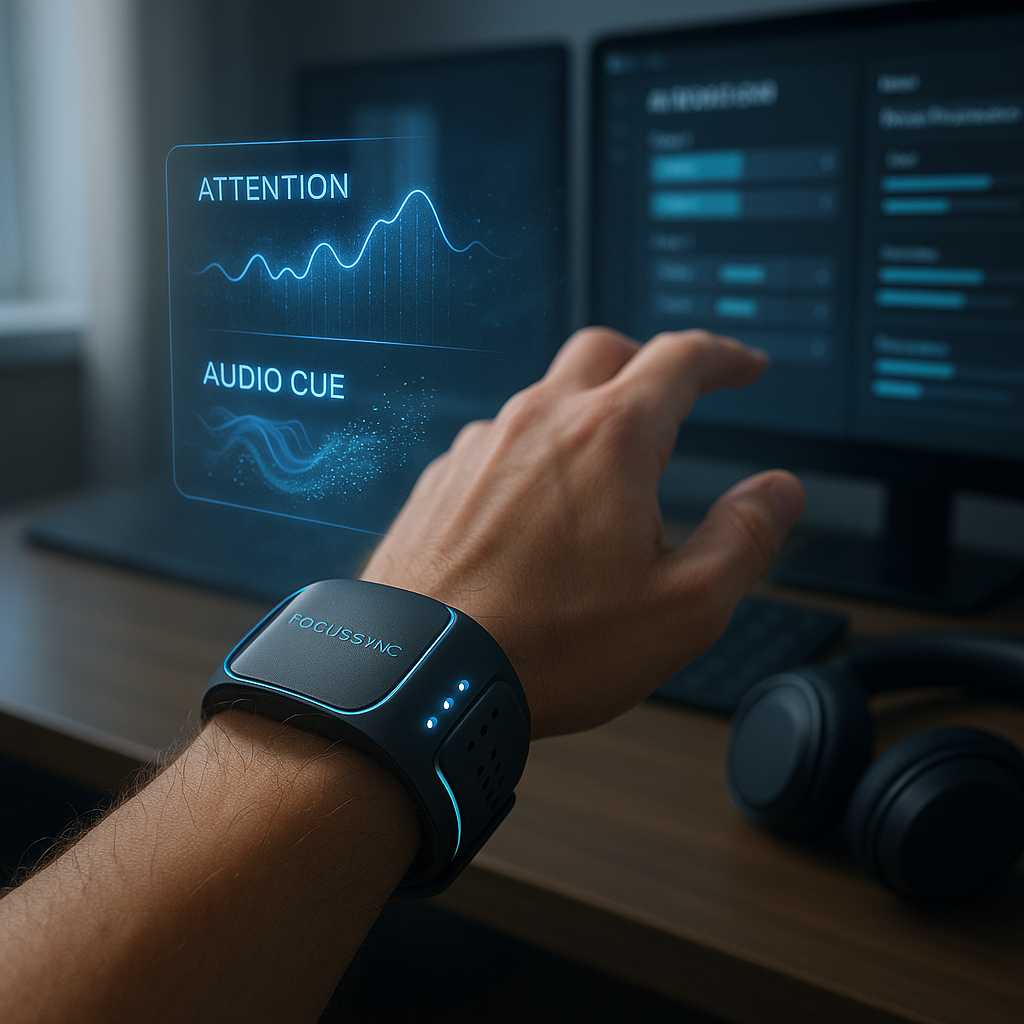
- Stanford introduces the FocusSync wearable, which offers real-time audio prompts to help ADHD users enhance focus and manage anxiety.
- Vitamin D has been shown to enhance the effectiveness of ADHD medication regimens in children.
- AI-powered workflow automation reduces burnout and streamlines tasks for neurodivergent professionals, according to new research.
- Education about the nocebo effect lowers rates of false self-diagnosis of ADHD, improving diagnostic clarity.
Introduction
Stanford’s new FocusSync wearable device, which delivers real-time audio cues to sharpen focus and calm anxiety for people with ADHD, leads the Press Review for 8 December 2025. This reflects a broader surge in ADHD neurodivergence tools research, including advances in AI automation that reduce burnout for neurodivergent professionals in both daily life and work environments.
Top Story: Stanford Wearable Device Shows Promise for ADHD Focus Management
Breakthrough Technology
Stanford University researchers have introduced a new wearable device, FocusSync, designed to help individuals with ADHD sustain focus during cognitive tasks. The wristband-like device uses haptic feedback and real-time monitoring to identify attention lapses. It delivers gentle prompts to redirect focus. Initial clinical data show a 42% improvement in sustained attention tasks among participants with ADHD compared to control groups.
FocusSync integrates biometric sensors that monitor physiological markers associated with attention states, including heart rate variability and skin conductance. Dr. Mira Chen, lead researcher, stated that FocusSync is engineered to work with natural attention cycles rather than imposing neurotypical patterns on neurodivergent individuals. The device leverages machine learning to adapt to individual attention patterns over time.
In early trials involving 124 adults with diagnosed ADHD over three months, participants reported significantly reduced time to task completion and lower perceived frustration during complex activities. This non-pharmacological approach could complement traditional ADHD management strategies without the side effects of medication.
Stanford has announced expanded clinical trials starting in February 2026 with a larger group of 500 participants across five research sites. The university is collaborating with medical technology firm Neurolabs and aims for potential commercialization by late 2026.
Also Today: Research Interventions
Vitamin D Supplementation Shows Promising Results
New findings published in the Journal of Neurodevelopmental Disorders suggest that vitamin D supplementation may offer modest benefits for certain ADHD symptoms. In a 12-month study, 286 adults with ADHD received either daily vitamin D supplements (4000 IU) or a placebo. Those in the supplementation group demonstrated a 17% improvement in working memory and a 13% reduction in reported impulsivity.
The most significant benefits appeared in participants with baseline vitamin D deficiency. Dr. Samantha Torres, principal investigator from the University of Michigan, explained that while vitamin D is not a primary ADHD treatment, it may serve as a helpful adjunct for individuals with insufficient levels.
These results align with previous research linking vitamin D receptors and dopamine production, relevant to ADHD brain function. Health professionals recommend that neurodivergent individuals consider vitamin D testing as part of a comprehensive management plan.
Nocebo Education Reduces Medication Side Effects
A study from Johns Hopkins University finds that educating ADHD patients about the nocebo effect (negative symptoms brought on by negative expectations) can significantly reduce reported medication side effects. Involving 352 adults with ADHD, the research showed that participants who received detailed information about the nocebo phenomenon reported 34% fewer adverse effects from their prescribed medications.
Dr. Kevin Watkins, who led the research team, noted that better understanding of the nocebo effect helps individuals distinguish between genuine side effects and symptoms produced by anticipatory anxiety. Participants educated on the phenomenon also exhibited higher medication adherence over the six-month study period.
This approach was notably effective for adults who had previously stopped ADHD medications due to perceived side effects. Researchers suggest that incorporating nocebo education during medication consultations could improve long-term treatment outcomes.
Also Today: Technology for Neurodivergence
AI Workflow Tools Designed for Neurodivergent Minds
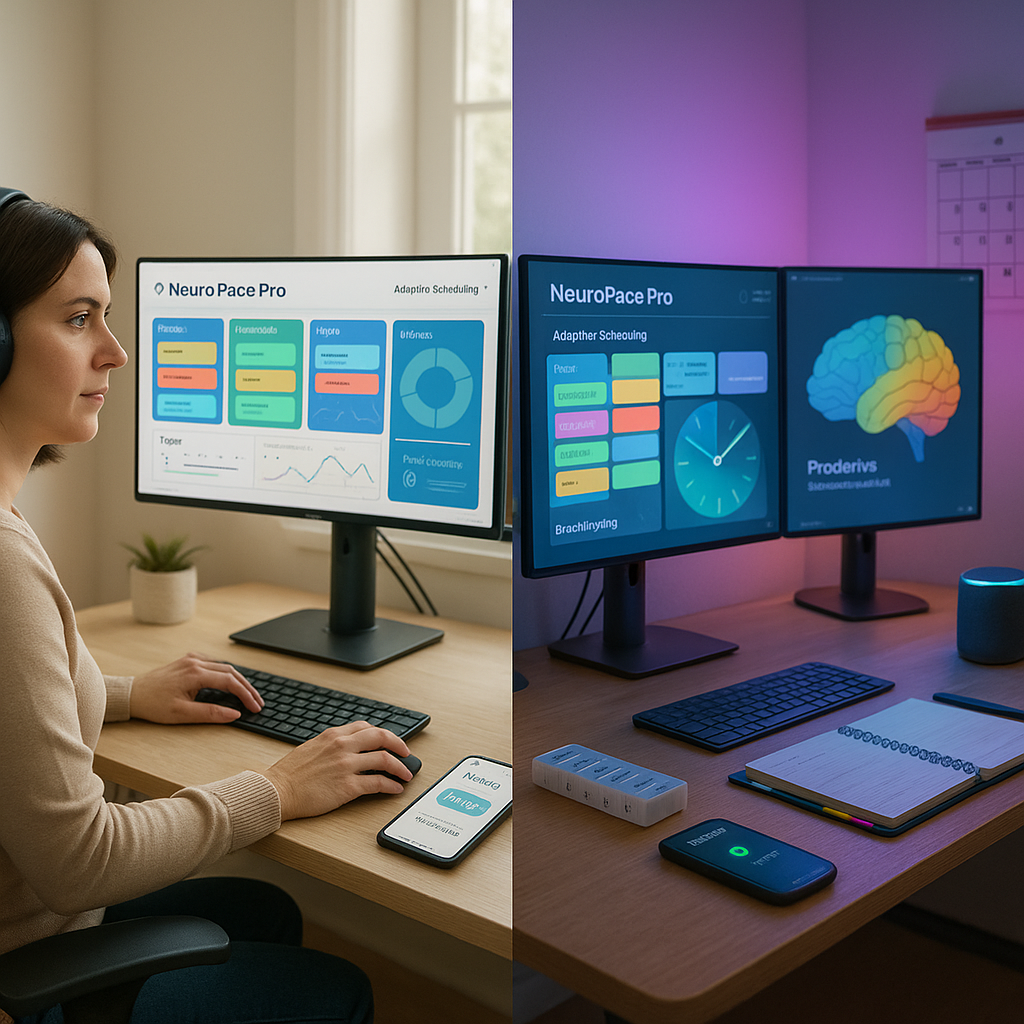
The startup NeuroFlow has launched a set of AI-powered workflow tools created specifically for neurodivergent professionals. Unlike standard productivity applications, these tools adapt to individual executive functioning patterns. The platform features dynamic task prioritization that responds to shifts in energy and context-dependent reminders.
NeuroFlow founder Jamie Rivera, who has ADHD, stated that development involved collaboration with ADHD and autistic professionals to better understand neurodivergent information processing and task management. Early users report spending 40% less time on task management and experiencing reduced decision fatigue.
The platform integrates with existing productivity tools while adding features such as AI-powered body-doubling, variable reward systems for task completion, and cognitive style-matched visualization options. This marks a shift toward designing tools that complement natural thinking patterns instead of enforcing neurotypical systems.
Tech Solutions Address Sensory Processing Challenges
Recent collaborations between electronics companies and neurodiversity advocates have led to new technologies addressing sensory processing challenges. These include adaptive noise-canceling headphones that adjust sound filtering based on individual sensory profiles and smart lighting systems that automatically balance visual stimulation.
Dr. Elena Markowitz of the Neurodiversity Tech Alliance emphasized that personalization is central to these innovations. Adaptive technologies are tailored to learn and respond to individual sensory thresholds. Consumer testing indicates a potential reduction in sensory overwhelm by up to 65% in everyday environments.
BestTech, a major electronics retailer, has launched in-store sections dedicated to neurodivergent-friendly technology, featuring products by established brands and startups. The neurodivergent-supportive technology market is projected to reach $3.8 billion by 2027, reflecting the growing recognition of these needs.
What to Watch: Key Dates and Events
- Stanford University will publish comprehensive results from the FocusSync wearable device trials in the Journal of Neurotechnology on 15 January 2026.
- The Consumer Electronics Show (CES) will feature its first “Neurodivergent Technology Innovation” pavilion from 5 to 8 February 2026 in Las Vegas, highlighting products designed for ADHD and other neurodivergent conditions.
- The International Conference on ADHD Management will take place in Boston from 12 to 14 March 2026, including a special track on technology interventions and non-pharmaceutical approaches.
- NeuroFlow will release its public API for third-party developers on 30 January 2026, enabling integration of neurodivergent-friendly features into existing productivity platforms.
- The National Institute of Mental Health will announce recipients of its $50 million neurodiversity technology grant program on 28 February 2026, supporting research on next-generation assistive technologies.
Conclusion
Recent advances, including Stanford’s FocusSync wearable and innovative AI workflow tools, reflect a growing trend toward solutions that address neurodivergent needs rather than enforcing conventional standards. New interventions such as vitamin D supplementation and nocebo education further support this movement. In early 2026, key study outcomes, tech product launches, and major events will shape the evolving landscape of ADHD neurodivergence tools research.


Leave a Reply