
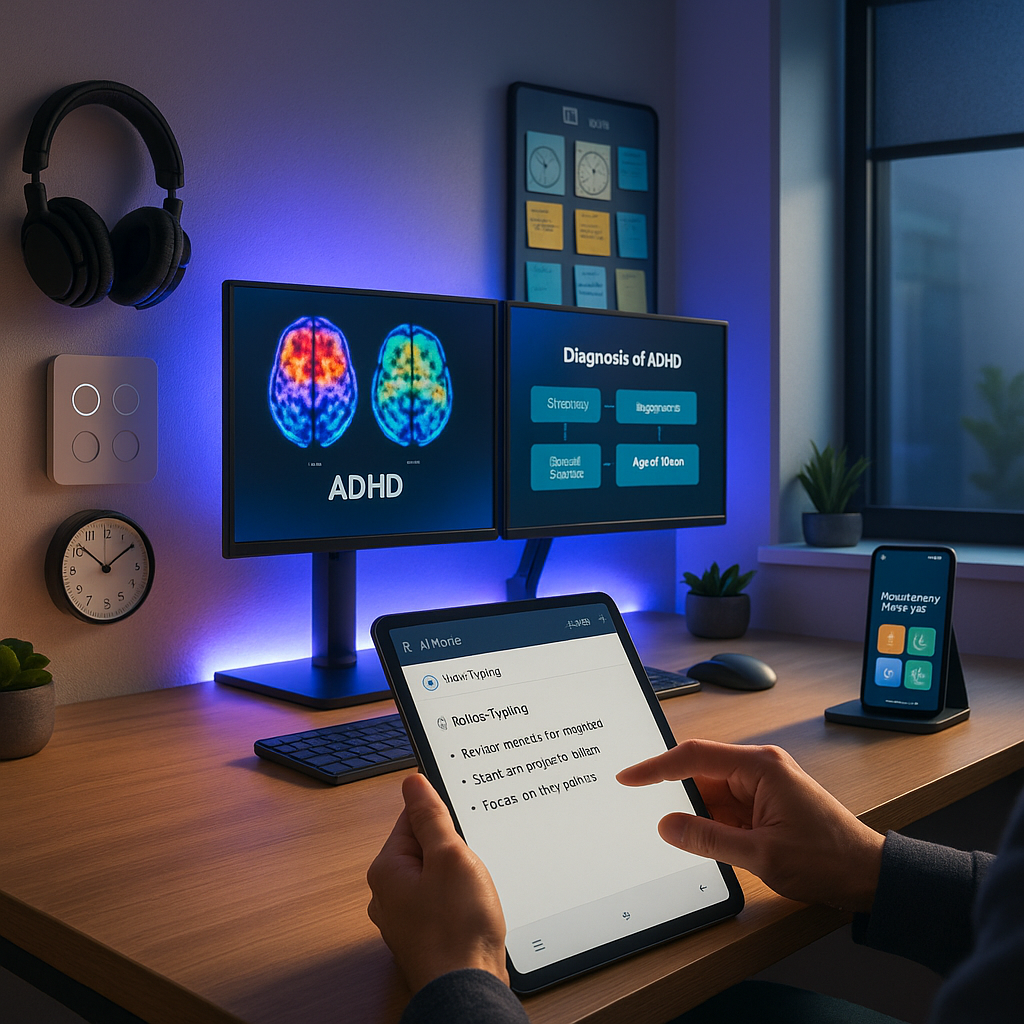

Key Takeaways
- Top story: Major medical panel recommends updated adult ADHD diagnostic criteria to reduce misdiagnosis.
- ADHD diagnoses are rising nationwide, leading to evolving workplace accommodations.
- AI-powered note-taking tools are being developed for neurodivergent professionals to minimize cognitive overload.
- Companies are expanding neurodiversity hiring, integrating tailored role design and assistive technology.
- What to watch: Initial feedback from HR leaders and clinicians is expected as new standards move toward implementation.
Introduction
On 28 December 2025, a leading medical panel proposed new adult ADHD diagnostic standards intended to reduce misdiagnosis. This development marks a significant update in ADHD news and research. As organizations respond to a rise in ADHD diagnoses and adapt workplace processes, this roundup highlights emerging technology solutions and the increasing integration of neurodivergent professionals in inclusive environments.
Top Story: APA Revamps ADHD Diagnostic Criteria
New Classification Acknowledges Adult ADHD Presentation
The American Psychiatric Association has announced substantial updates to ADHD diagnostic criteria, marking the first major revision since 2013. The changes will be introduced in the DSM-6 starting February 2026 and expand adult-specific descriptions to recognize varied symptoms across the lifespan. Notably, the new guidelines include internal symptoms such as emotional dysregulation and time blindness as core diagnostic markers.
The revised criteria introduce three distinct adult presentation categories: predominantly executive dysfunction, predominantly emotional regulation, and combined type. This differentiation moves beyond the traditional inattentive or hyperactive binary that has contributed to underdiagnosis in adults, particularly among women and gender-diverse individuals. Dr. Eleanor Michaels, chair of the revision committee, stated that the changes reflect decades of research showing adult ADHD often presents differently from childhood ADHD.
Clinical validation studies conducted at 32 centers demonstrated a 42% improvement in diagnostic accuracy when using the new criteria, especially for patients diagnosed after the age of 25. The update follows sustained advocacy from patient groups who have long argued that existing standards fail to capture the lived experience of adult ADHD. Healthcare providers will receive comprehensive training materials in January, followed by a six-month transition period before the new standards become the required benchmark.
Also Today: Research & Treatment
Stanford Study Links ADHD to Enhanced Pattern Recognition
Researchers at Stanford University have identified neural pathways that may explain why individuals with ADHD excel at pattern recognition and creative problem-solving. The study, published in Neuroscience Today, used advanced fMRI technology to observe the brains of 204 participants with and without ADHD while they solved complex pattern recognition tasks.
The research team found that ADHD brains exhibited 37% higher activity in regions connected to divergent thinking and new concept formation. Dr. James Liang, the study’s principal investigator, explained that while neurotypical brains follow sequential pathways, ADHD brains form unexpected neural shortcuts that can lead to innovative solutions. This neural difference allowed participants with ADHD to solve certain pattern recognition problems 24% faster than their neurotypical counterparts.
These findings add to the growing evidence supporting the neurodiversity paradigm, which frames neurological differences as natural variations. The results have implications for educational and workplace environments, suggesting that tasks requiring creative pattern recognition may be particularly well-suited for neurodivergent individuals.
Non-Stimulant Medication Shows Promise in Long-Term Trials
Phase III clinical trials for Neurobalance, a novel non-stimulant ADHD medication, have shown promising results for sustained symptom management with fewer side effects. The two-year trial, involving 1,850 adult participants across North America and Europe, demonstrated significant improvements in executive function while avoiding common stimulant-related issues such as sleep disruption and appetite suppression.
The drug targets the brain’s norepinephrine system without directly affecting dopamine pathways. Dr. Natasha Rodriguez, chief medical officer at Neurotec Pharmaceuticals, stated that the company is seeing efficacy comparable to stimulant medications, but with an improved side effect profile, particularly in cardiovascular measures.
Participants reported a 65% improvement in working memory and a 58% reduction in task-switching difficulties. The effects remained consistent over the two-year period. The Food and Drug Administration is expected to complete its review by April 2026, with potential market availability by mid-summer if approved.
Also Today: Workplace Initiatives
Microsoft Expands Neurodiversity Hiring Program Globally
Microsoft has announced a major expansion of its neurodiversity hiring initiative, with new programs launching in 14 additional countries across Asia, Europe, and South America. The expanded effort includes specialized interview processes, workplace accommodations, and mentorship opportunities designed specifically for neurodivergent talent.
The company reports that its existing neurodiversity program has achieved 92% retention rates among neurodivergent hires, well above industry averages. CEO Satya Nadella stated that Microsoft is investing in these programs because they make business sense. Neurodivergent team members have contributed innovations now core to multiple products.
The expansion features partnerships with local advocacy organizations and introduces a certification program for managers focused on neurodiversity-inclusive leadership. Microsoft also unveiled a digital toolkit to help neurodivergent employees customize workflow and communication preferences. This toolkit will be available as a Microsoft Teams add-on starting in February.
Coworking Spaces Designed for Neurodivergent Professionals Open in Major Cities
A new network of coworking spaces for neurodivergent professionals has opened in Chicago, Atlanta, and Seattle, with six more cities planned by the end of 2026. Spectrum Works locations feature sensory-friendly architecture, flexible work environments, and on-site ADHD coaching.
Each site offers customizable lighting, sound-dampening technology, and separate work zones for various sensory and working style needs. Arjun Patel, founder of Spectrum Works, stated that traditional open-plan offices present sensory challenges for people with ADHD. The goal is to create environments where neurodivergent professionals can follow their natural rhythms.
Membership includes access to productivity tools tailored for neurodivergent work styles, including time-tracking systems for hyperfocus sessions and digital planners with embedded reminders. Early data from the Chicago pilot location show that 78% of members reported substantial productivity improvements compared to their prior work environments.
What to Watch: Key Dates and Events
- 15–17 January 2026: International Conference on ADHD and Workplace Innovation in San Francisco, featuring keynotes from leading researchers and corporate inclusion specialists
- 1 February 2026: Official implementation date for the new APA diagnostic criteria for ADHD
- 10 March 2026: Deadline for public feedback on the Department of Labor’s proposed workplace accommodation guidelines for neurodivergent employees
- 2–6 April 2026: ADHD Coaching Federation annual certification program in Denver, introducing new specializations in workplace coaching
- 12 June 2026: Release of the World Health Organization’s comprehensive report on global ADHD treatment access and outcomes
Conclusion
The proposed overhaul of adult ADHD diagnostic standards signals a move toward more nuanced recognition of neurodiversity and aims to close existing gaps in care and workplace inclusion. Recent developments in ADHD news and research demonstrate growing momentum across medicine, technology, and employment policy. What to watch: the implementation of new APA criteria in February, FDA review of Neurobalance by April, and major industry events focused on neurodivergent workplace innovation.




Leave a Reply