

Key Takeaways
- Dual neurodivergence shapes identity beneath the surface: Growing up with both autism and ADHD extends far beyond clinical labels. Early experiences of masking, feeling different, and developing coping strategies become the roots of an AuDHD individual’s adult self-image, influencing both professional and personal spheres.
- Hidden strengths emerge at the intersection: The combination of autistic pattern recognition and ADHD adaptability unlocks unique talents that go beyond simple compensation. Skills such as out-of-the-box problem solving, creative hyperfocus, and cross-disciplinary thinking can elevate performance in business, creative arts, education, and even scientific innovation.
- Workplace challenges demand authenticity, not just accommodation: Thriving professionally as AuDHD means more than having the right supports or productivity tools. It requires the ongoing negotiation of psychological safety. The ability to unmask, be authentic, and work in environments that see differences as value-adding assets rather than deficits is key.
- Intersectional identity goes beyond diagnosis: Dual neurodivergence does not exist in isolation. The experience is further shaped by race, gender, culture, and socioeconomic background, which influence access to diagnosis, the perception of strengths and challenges, and the types of barriers encountered in various industries including healthcare, law, and education.
- Diagnosis timing rewires self-acceptance: Whether someone learns they are AuDHD in childhood or adulthood fundamentally changes their journey. Early diagnosis can nurture a sense of belonging and self-understanding, while a later revelation often brings relief, but also the arduous task of reinterpreting a lifetime of misunderstood struggles.
- Self-acceptance grows through shared stories: Ultimately, growth comes from connection, not conformity. Sharing narratives with others who “get it” validates the nonlinear process of embracing dual neurodivergence as a wellspring for pride instead of secrecy or shame.
These insights offer a lens for a deeply personal (and widely relatable) exploration of what it truly means to live, work, and connect as someone with both autism and ADHD. Dive in for a firsthand narrative that transforms challenges into new frameworks for strength, authenticity, and lasting belonging.
Introduction
People often think of autism and ADHD as parallel lines: distinct, running side by side, rarely crossing. Living with both, known as AuDHD, offers an entirely new kind of landscape. Routines may clash with spontaneity, and the urge to fit in can mean camouflaging essential parts of yourself just to make it through daily life.
My experience as an AuDHD adult does not fit tidy diagnostic boxes or workplace checklists. It is a story of unravelling layers of identity, forging authenticity where masking used to substitute for belonging, and learning that my most valuable strengths are hidden at the very intersections that once made me feel out of place. Let’s explore what dual neurodivergence really feels like from the inside out. Understanding this intersection has redefined not just my career, but my deepest sense of community.
The Discovery Journey: Unmasking My Dual Neurodivergence
When I received my autism diagnosis at 32, my reaction was not instant relief or clarity. Instead, it was confusion. “But what about my ADHD?” I remember asking the specialist. She nodded knowingly, explaining that co-occurring autism and ADHD are far more common than diagnostic systems suggest, even if rarely identified at the same time.
For three decades, I moved through life with only half the picture. Teachers noticed hyperactivity and distractibility quickly, labeling me with ADHD. Yet that diagnosis missed other patterns entirely: the creative ways I coped with social complexity, my sensory sensitivities, and my deep longing for routine, even alongside irresistible impulses to chase novelty.
Learning I was also autistic finally made sense of these contradictions. Suddenly, my simultaneous love of consistency and adventure, intense hyperfocus paired with struggles around transitions, and oscillation between social eagerness and exhaustion ceased seeming like paradoxes. These qualities were integral to how my unique brain approached the world.
This realization sent me into a period of deep personal reflection. I revisited old memories—childhood play, school challenges, friendship mishaps—seeing them now through a dual-neurodivergent lens. What I had internalized as personal weakness or social ineptitude became understandable reactions to a world structured for different kinds of minds.
Looking back, the clues stand out clearly. I was the kid who could monologue for hours about dinosaurs or personal projects but shy away from eye contact. I breezed through academic subjects that intrigued me but melted down over uncomfortable clothing or loud noises. I made friends quickly, yet struggled to keep them. Autism was always there, quietly hidden behind more visible ADHD behaviors that adults noticed first.
Childhood Patterns: The Earliest Clues
My elementary years were marked by visible contradictions that puzzled teachers, friends, and even my family. I was the disruptor in some classes, the reserved kid requiring encouragement in others. “Bright but inconsistent” was a common refrain on report cards. Yet inconsistency is an illusion when viewed through the AuDHD framework.
In third grade, I hyperfocused on ancient Egypt, learning to write hieroglyphics and creating detailed tomb blueprints at recess. My teacher praised my “special interest” but also sent notes home about my inability to sit still for math. No one made the connection that this was the flip side of the same neurodivergent coin.
Sensory challenges—lights, sounds, textures—were constant companions. I avoided certain fabrics, clapped my hands over my ears during fire drills, and regularly misjudged the space around me. Adults chalked these up to fidgeting or carelessness, not realizing their neurological origin.
Social interaction was the hardest paradox. I wanted friends desperately but felt lost in groups. My efforts to connect often became long-winded info-dumps about whatever captivated me. Inevitably, when friendships faltered, I retreated to solitary interests where I felt safe and in control.
These early experiences created a core identity confusion. Was I an extrovert who needed space, or an introvert craving hangs? Gifted or struggling? Both, in fact. The seamless, unique interaction between autism and ADHD wasn’t just “double-diagnosis;” it produced an experience all its own, one that would shape my future relationships and career decisions.
Recognizing the depth and complexity behind these experiences was crucial as I entered adulthood and moved into professional spaces.
Professional Identity: Finding My Path Through Dual Neurodivergence
My career path has never been linear, and for years, I saw this as a flaw. Only after understanding my AuDHD wiring did I realize it’s a natural pattern. Over fifteen years, I have worked in five different industries, each move propelled by ADHD’s love for novelty and autism’s hunger for deep mastery.
Early in my career, before I fully understood my brain, I struggled most with the invisible obstacles. Office jobs became training grounds for exhausting levels of masking. I could dive into analytical tasks with absorbing focus but constantly tripped over nuanced social expectations or written rules that were never explained. I missed subtle calendar hints, took feedback too literally, and wore myself out acting “normal” in team settings.
Feedback from managers reflected these invisible battles. “You’re detail-oriented, but miss obvious things.” I could create flawless financial models yet forget a recurring meeting. None of this made sense to managers, so it made even less to me. My strengths and weaknesses seemed both extreme and unpredictable.
The traditional workday routine was a battleground between my autistic need for steady structure and ADHD’s time-blindness. Elaborate organizational systems satisfied my need for order, but ADHD’s craving for novelty left them abandoned within weeks. Open-plan offices amplified my sensory challenges, yet I valued the social aspect of having colleagues nearby.
Everything changed when I shifted to project-based consulting. Suddenly, my innate strengths (pattern recognition, creative problem-solving, and ability to see beyond industry norms) became highly desirable. In consulting, my perspectives were sought after specifically because they broke free from neurotypical conventions.
This career pivot allowed me to design workflows around my neurotype. I could create steady routines that satisfied autism’s need for predictability, but also enjoy ADHD-friendly changes in projects and challenges. I learned to schedule deep, focused work for peak productive times and build transition periods between major tasks, reducing burnout and overwhelm.
Even more transformative was integrating my neurodivergent identity into my professional self-concept. No longer separate “conditions” or private struggles, my dual neurodivergence became a toolkit:
- Autistic pattern-spotting paired with ADHD’s creative leaps fostered unique problem-solving, ideal for consulting, product innovation, or educational reform.
- Hyperfocus let me gather expertise in specialized fields, while interest-driven attention connected me to a wide range of industries (from marketing to IT, healthcare, and the creative arts).
- Sensory sensitivity honed my awareness of detail, whether in design or client interactions.
- A direct communication style (autism) mixed with ADHD-driven enthusiasm made me a clear and passionate explainer, bridging gaps between teams and stakeholders.
While executive function, emotional regulation, and sensory overload remain ongoing challenges, building my work life around my actual brain architecture turned once-crippling obstacles into foundations for long-term sustainability and impact. This process mirrored and reinforced my journey toward deep self-acceptance.
The Self-Acceptance Journey: Embracing My Neurodivergent Identity
Fully accepting my dual neurodivergence (and myself) meant confronting years of internalized stigma. My inner dialogue had long insisted I was “too much” or “too different.” Diagnosis brought language and frameworks, but acceptance came only with time and shared experience.
My journey began with research and education. I read widely: scientific journals, memoirs, online communities. I found people telling stories that closely mirrored my own, and their validation was like oxygen. For the first time, I was not alone in my confusion or my brilliance.
However, head knowledge is different from heart knowledge. I cycled through grief for childhood support I never received, anger toward systems that missed obvious signs, and anxiety about what the future might hold. I doubted whether I truly “qualified” as autistic or wondered if my ADHD traits were just failures of will.
The shift came as I began to see neurodivergence not merely as something to manage, but as core to who I am. Rather than someone with “conditions,” I began to recognize myself as an AuDHD person, running a different operating system. This reframing shaped every day:
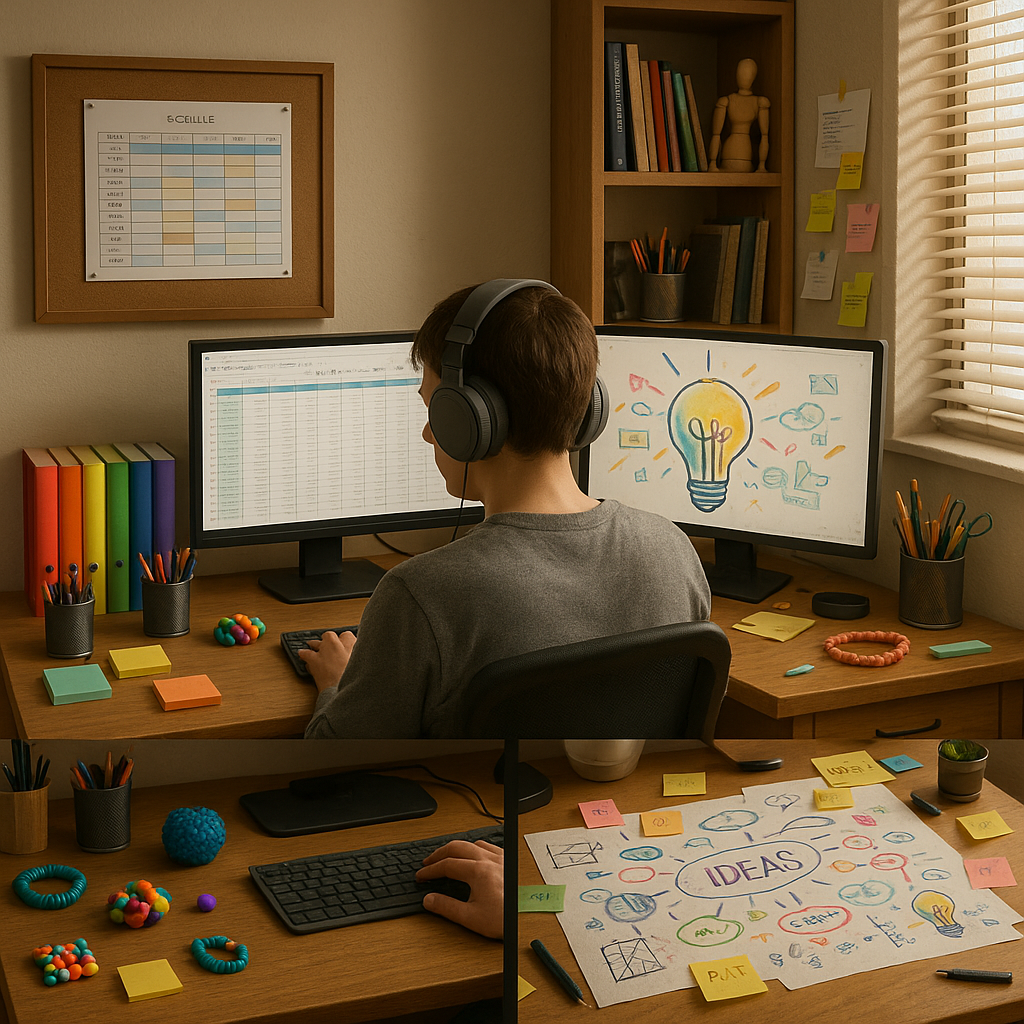
- I curated a sensory-friendly living space, with adjustable lighting, soft textures, and quiet nooks, supporting my nervous system before overwhelm hit.
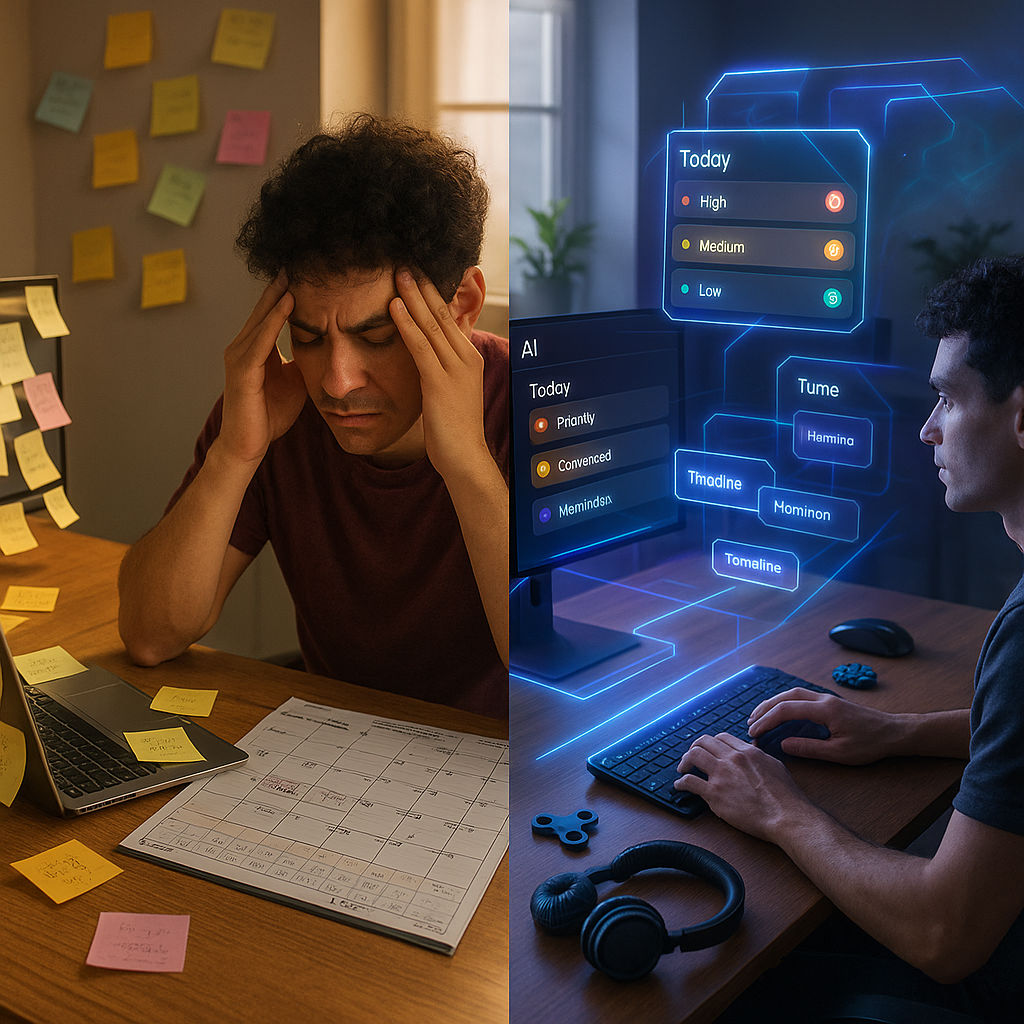
- I leaned on external structures like digital reminders for ADHD, while baking flexibility into my routines so I could improvise rather than implode.
- I prepared self-advocacy scripts for meetings and emails, and learned it was not just safe (but beneficial) to set social boundaries.
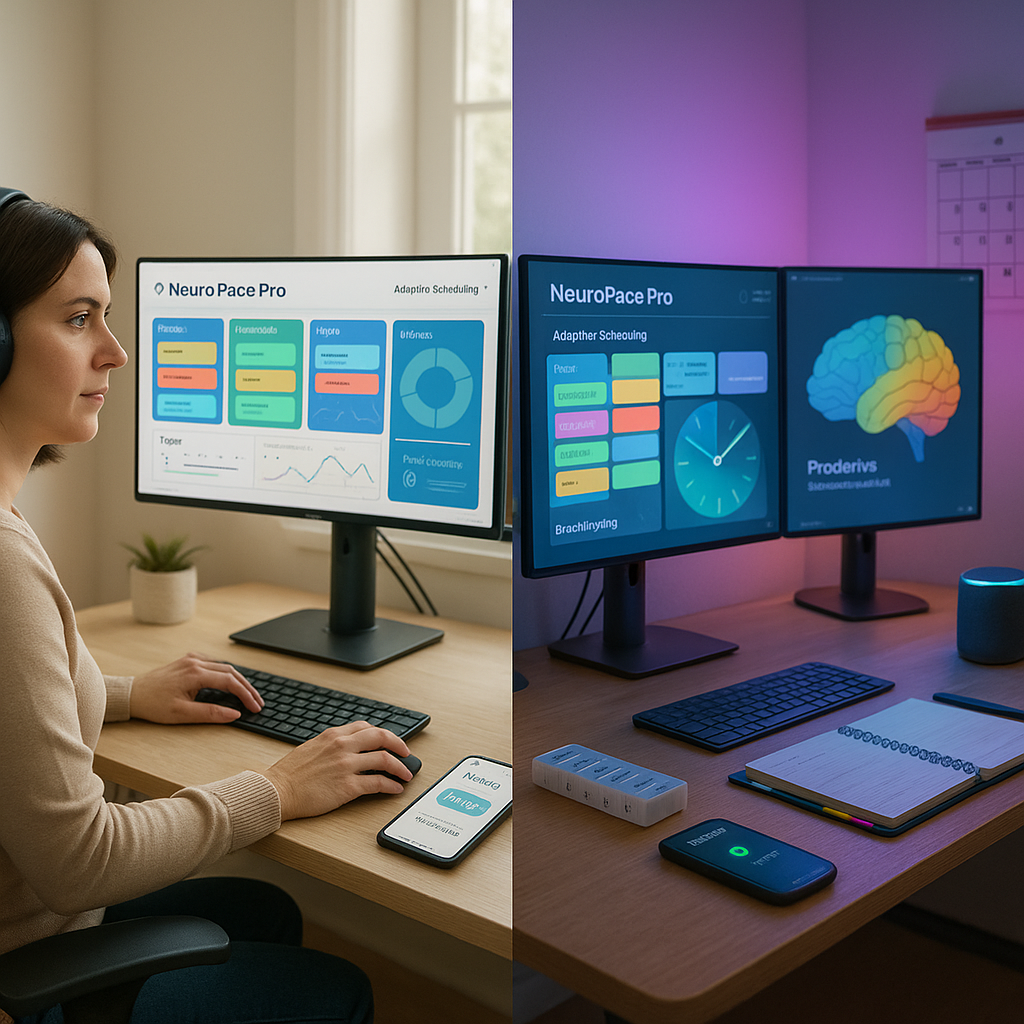
- I adopted tools and technology (from productivity apps to AI-powered reminders), using them not as crutches but as extensions of my strengths.
Learning to express my needs to others was particularly daunting. After years of masking, vulnerability felt risky. Yet genuine connection required honesty about my neurotype. I began disclosing selectively—to friends, clients, and trusted colleagues. To my relief, most responded with empathy, insight, and support. Some even shared their own stories, building bonds where awkwardness once reigned.
Of course, setbacks persist. Some people dismiss dual neurodivergence as labels or fads. Healthcare and workplace systems often fail to recognize the ways autism and ADHD interact, especially when compounded by race, gender, or cultural background. Advocacy and self-acceptance remain ongoing work.
This pattern of progress, setback, and growth is echoed across industries. In healthcare, dual neurodivergent individuals may face diagnostic oversights. In finance or law, hidden differences can lead to underutilization of talent. Meanwhile, educators and marketers are beginning to recognize the power of neurodiverse approaches for curriculum design, customer insight, and inclusive learning.
Conclusion
Discovering and embracing my dual neurodivergence has unraveled a lifetime of contradictions. What were once sources of shame, confusion, or burnout now provide the foundation for self-advocacy, innovation, and true belonging. Integrating both autism and ADHD—not as separate categories, but as a unique identity—unlocked my real strengths in both life and work.
This journey reveals a universal lesson for neurodivergent professionals, creatives, and entrepreneurs: the path to authentic empowerment is not about squeezing into neurotypical molds or settling for surface-level accommodations. It is about understanding your operating system (your way of sensing, thinking, and creating) and using that knowledge to design environments where you can thrive.
As workplaces and communities become more inclusive, those who lead will be the ones who recognize the full value of diverse cognitive perspectives. The challenge ahead is not simply to “fit in” or ask for help, but to harness your unique wiring as leverage for growth, creativity, and meaningful impact. Whether in business, healthcare, education, or the arts, the future belongs to those bold enough to show up as themselves and to turn difference into advantage—for themselves and for the world around them.


Leave a Reply