

Key Takeaways
- Virtual ADHD assessments can significantly reduce diagnosis wait times, offering adults faster clarity.
- Flexible, hybrid, and virtual platforms enable users to manage sessions around their schedules, supporting professionals with demanding routines.
- AI-powered tools and remote testing improve accessibility, reaching individuals who cannot easily attend in-person clinics.
- Licensed clinicians remain central to virtual assessments, combining technology with empathy and lived experience.
- Demand for virtual ADHD care is expected to grow as more adults seek flexible, person-centered support.
Introduction
Hybrid and virtual care models are rapidly transforming adult ADHD diagnosis in the US and UK. These innovations shorten wait times and expand access, allowing more neurodivergent professionals to receive timely assessments. With telehealth platforms and AI-powered tools reducing barriers, digital-first care models seem poised for significant growth.
How Virtual and Hybrid Care Are Accelerating Adult ADHD Diagnosis
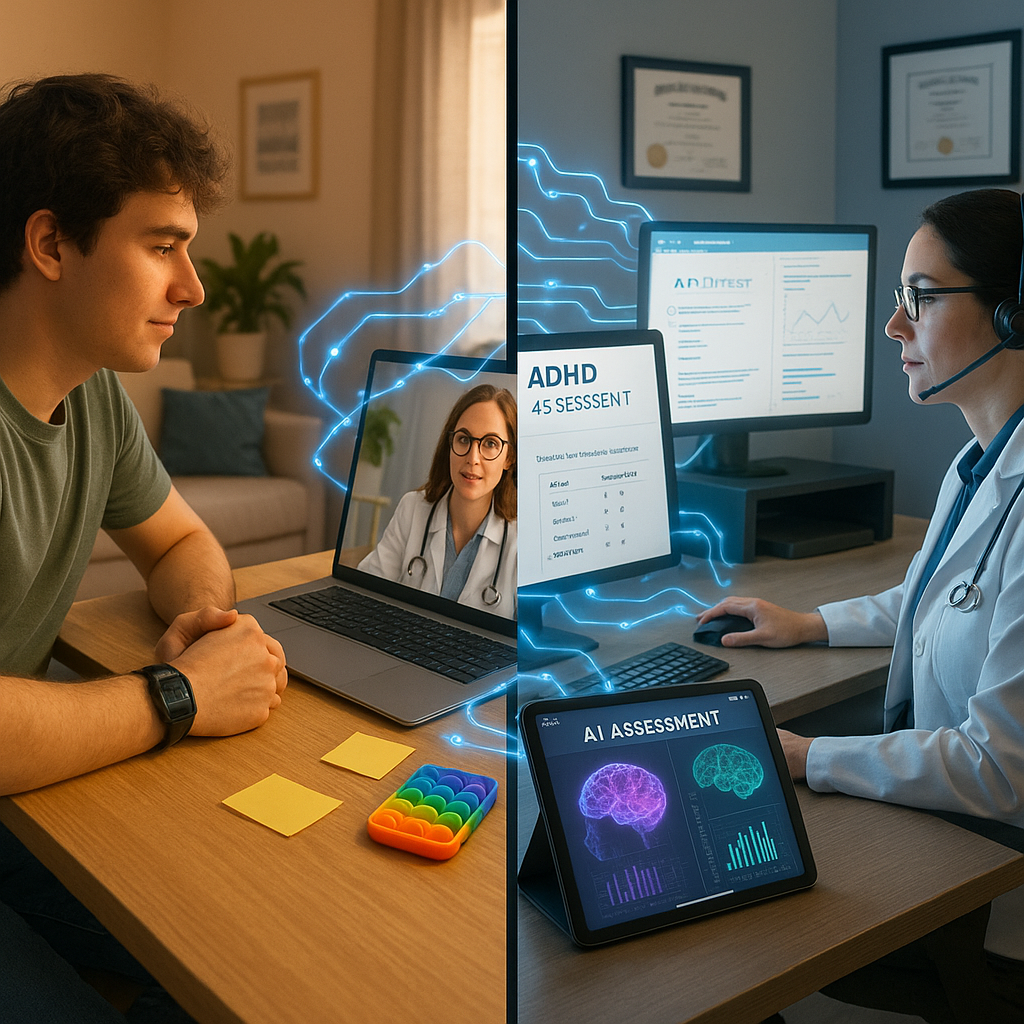
Virtual care has shortened the waiting period for adult ADHD assessments from several months to just a few weeks in many areas. Traditional in-person pathways often involve multiple appointments spread over an extended period. Virtual options, on the other hand, streamline the process.
Patients can now complete preliminary screenings and questionnaires online before their initial consultation, which optimizes clinical time. These tools collect detailed information about symptoms, developmental history, and functional impacts for clinicians to review ahead of time.
Remote access removes geographic constraints, enabling adults in rural or underserved areas to consult specialists who were previously out of reach. This development is especially important where local ADHD services are limited.
Hybrid models, which blend virtual screenings with in-person assessments when necessary, provide a balanced approach. This ensures the convenience of digital tools while keeping the benefits of face-to-face clinical evaluation for more complex cases.
Key Benefits of Virtual ADHD Assessments
- Shorter wait times, with many patients receiving evaluations within 2-4 weeks compared to 6-12 months for traditional pathways.
- Enhanced scheduling flexibility, including options for evening and weekend appointments.
- No travel required, reducing barriers for those with executive functioning challenges.
- Assessments conducted at home can encourage more authentic symptom presentation.
- Digital intake processes allow individuals to provide comprehensive responses without time pressure.
Completing assessments in a comfortable home environment often leads to a more accurate representation of symptoms. Many people with ADHD tend to mask challenges in unfamiliar settings like clinics, which can complicate in-person diagnosis.
Continuous digital documentation via apps and portals gives clinicians richer data, tracking fluctuations in attention and executive function over time instead of relying only on episodic self-reporting.
The Human Element in Digital Diagnosis
Even as technology enhances efficiency, experienced clinicians remain critical to effective ADHD assessment. Leading virtual platforms prioritize pairing patients with specialists who understand adult ADHD presentations.
Video consultations retain valuable non-verbal cues such as body language and speech patterns, offering diagnostic insights that go beyond formal assessment tools.
Many adults find sharing symptoms virtually less intimidating than in a clinical office. This setting can reduce anxiety or shame, so people are more likely to report symptoms honestly.
Effective assessments also integrate feedback from partners, family, or close friends when appropriate. These perspectives help build a fuller understanding of how ADHD symptoms show up in different environments and relationships.
Ensuring Quality in Virtual Assessment
Thorough virtual ADHD assessments include much more than self-report questionnaires. Reputable providers use standardized tools, in-depth clinical interviews, and careful differential diagnosis, just as with in-person care.
The strongest platforms use a multi-disciplinary team approach with psychologists, psychiatrists, and ADHD coaches. This ensures that the diagnosis reflects medical, psychological, and functional factors for a holistic view.
Protocols should be in place for referring patients to in-person care if virtual assessment cannot address their needs. Responsible platforms recognize when cases require more extensive evaluation or services.
Quality care also involves follow-up after the initial diagnosis. Trusted providers offer education, medication management if needed, and connections to resources for ongoing support.
Challenges and Considerations
Some symptoms and physical signs cannot be fully captured through virtual assessments. Alternative explanations may require examination in an in-person setting.
Technology and connectivity issues can limit virtual care for some users. Effective providers address these challenges with technical support and alternative options.
Insurance coverage for telehealth services remains inconsistent. Advocacy groups are working to establish parity between virtual and in-person mental health services.
Ensuring privacy is crucial in virtual environments. Reputable providers use secure, HIPAA-compliant platforms and clearly communicate confidentiality protocols before starting the assessment process.
What Happens Next for Virtual ADHD Care
The integration of passive data collection from wearables and smartphones is enhancing objective symptom tracking between appointments. These tools monitor sleep, activity, and attention during daily life, which supplements clinical evaluation.
Virtual reality-based assessments are now being trialed, offering environments that standardize real-world challenges and may improve diagnostic accuracy.
Hybrid models are gaining traction as the preferred approach, tailoring the mix of virtual and in-person care to individual needs. Flexibility here recognizes that ADHD diagnosis is not one-size-fits-all.
Policy changes at the federal and state levels increasingly support telehealth parity for ADHD and related conditions. Recent legislation aims to secure equal insurance coverage and recognition for virtual assessments.
Conclusion
Virtual and hybrid care models are making adult ADHD diagnosis faster, more accessible, and better adapted to everyday realities, especially for those outside traditional healthcare centers. As digital innovation and clinical expertise combine, adults gain assessments that reflect both their schedules and unique lived experiences. What’s next? Evolving policies and emerging technologies such as wearables and virtual reality tools will continue to influence the future of ADHD care.



Leave a Reply