

Key Takeaways
- Neurodivergent entrepreneurs are reshaping business norms: Founders with ADHD favor flexible routines and creative workflows over rigid structures.
- Technology and AI enhance productivity: Custom AI assistants and automation help ADHD individuals maintain focus, manage details, and reduce overwhelm.
- Acceptance drives progress: Many report breakthroughs came from embracing their neurodivergence, not battling it.
- Burnout is now a warning sign, not a badge of honor: Solopreneurs learn to design sustainable systems and avoid common burnout traps.
- A new definition of productivity is emerging: ADHD-led startups like ADHDink are leading a wider move toward inclusive, brain-friendly business.
Introduction
Entrepreneurs with ADHD are transforming the productivity landscape. They’re adopting adaptable routines, innovative workflows, and advanced tools like AI assistants to turn neurodivergence into a strength. As more founders accept their brains’ unique wiring and move away from burnout culture, a new vision of inclusive, sustainable success is shaping the modern business world.
Reframing ADHD as a Business Advantage
Entrepreneurs with ADHD are increasingly leveraging their cognitive differences as business assets, rather than liabilities. High creativity, intense focus on passion projects, and unconventional problem-solving often show up in successful ventures led by neurodivergent founders.
Emma Chen, founder of Spark Digital Marketing, stated, “My ability to make unusual connections between ideas isn’t a distraction, it’s my innovation superpower.” Chen credits her agency’s campaign successes to her neurodivergent thinking.
Research backs this up. A 2022 report from the Entrepreneurship Research Institute found that ADHD traits such as divergent thinking and comfort with risk align closely with qualities of high-performing founders. Quick decision-making and adaptability to uncertainty often prove valuable in dynamic business environments.
The Hyperfocus Phenomenon
Hyperfocus, that deep absorption in engaging tasks, is a powerful advantage for ADHD entrepreneurs. This intense concentration allows founders to solve complex problems, develop innovative products, and complete creative work with impressive efficiency.
Marcus Williams, CEO of CodeBurst, explained, “When I’m in hyperfocus mode, I can accomplish in four hours what might take others days.” To support this, Williams organizes company operations to match his peak focus periods, scheduling development tasks when deep concentration is possible.
The key for these entrepreneurs is working with their natural patterns instead of against them. Founders often design their businesses to accommodate fluctuating focus, moving away from traditional 9-to-5 models.
Alexis Rivera, founder of Neurodivergent Wealth, builds “hyperfocus runways” into her schedule. She said, “I clear entire days for deep work when I’m tackling complex client financial strategies, with no meetings or interruptions. My team knows these are my ‘deep dive’ days.”
Custom Productivity Systems That Work
ADHD entrepreneurs are developing tailored productivity strategies that reject conventional wisdom, but deliver better outcomes for their needs. These systems focus on aligning with natural tendencies rather than following mainstream methods to the letter.
Jordan Taylor, founder of TaskFlow, shared, “I tried every mainstream productivity system and failed at all of them. When I finally designed a workflow around my actual habits (including body-doubling sessions and visual cues everywhere), my productivity quadrupled.”
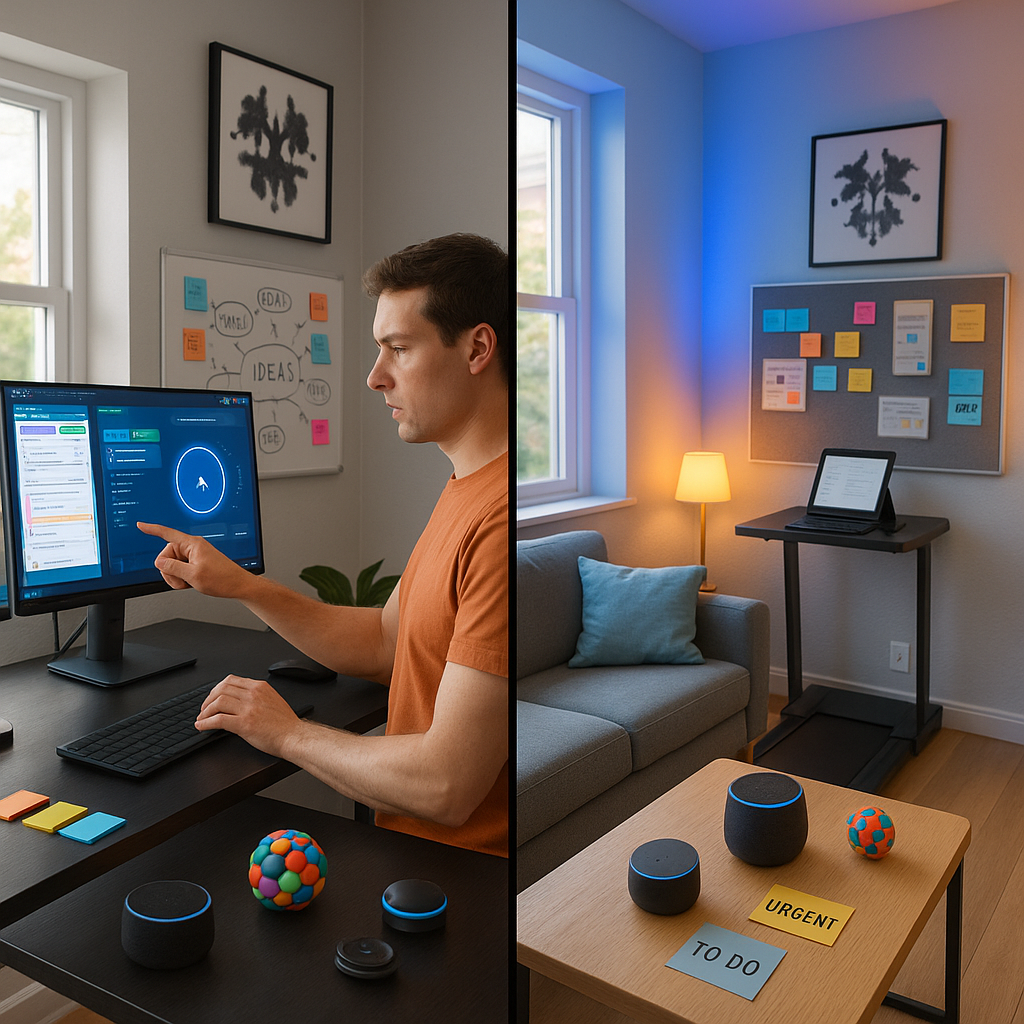
Popular adaptations include shorter time blocks, visual management tools instead of text lists, and physical movement between tasks. Many find analog tools like paper planners and whiteboards especially helpful, thanks to their multisensory, tactile nature.
These custom approaches often include gamification, accountability partners, and adjustments to the environment to reduce distractions and enhance focus.
Tech and AI as Game-Changers
Artificial intelligence has become a critical support for entrepreneurs with ADHD. Custom AI assistants now manage tasks that used to cause friction, including scheduling, email management, and prioritizing information.
Taylor Rodriguez, founder of NeuroDivergent Design, commented, “My AI assistant handles my calendar better than I ever could. It knows when I need breaks between meetings and automatically builds in buffer time to prevent burnout from context-switching.”
Automation platforms like Zapier and Make allow founders to create unique workflows that reduce task-switching and streamline processes. For many, these tools serve as “external executive function systems“, addressing productivity challenges while supporting creative strengths.
Voice-enabled technologies also prove valuable, letting entrepreneurs capture ideas immediately. Marketing strategist Jamie Winters explained, “I dictate notes while walking or driving. They are automatically organized in my project management system. No brilliant idea gets lost anymore.”
Building ADHD-Friendly Company Cultures
Progressive ADHD entrepreneurs are building company cultures that prioritize neurodiversity. These businesses promote flexible work policies, outcome-focused performance measures, and communication systems that serve varied processing styles.
Sasha Patel, founder of Kaleidoscope Creative, stated, “We threw out the traditional meeting structure completely. Our meetings are shorter, more visual, and let people stand, pace, or fidget as needed.” These changes have sparked noticeable improvements in idea generation and implementation.
Flexible scheduling has become another hallmark of ADHD-friendly organizations. Companies emphasize results over time spent, letting team members take advantage of their natural energy cycles.
Physical workspace design matters as well. Miguel Sanchez, operations director at NeuroFlow, explained, “Our office has dedicated quiet zones, collaboration spaces, and even movement areas with standing desks and treadmill workstations. People choose environments based on their tasks and needs that day.”
Overcoming Common Challenges
Administrative and financial tasks remain significant hurdles for entrepreneurs with ADHD. Many successful founders solve this through delegation, specialized tools, and automation.
Restaurant owner Zoe Chen admitted that bookkeeping was a struggle and said, “Hiring a dedicated financial manager was the best business decision I’ve made. It freed me to focus on menu innovation and customer experience, which energize me.”
To make unavoidable administrative work easier, entrepreneurs often batch similar tasks, use templates, and set up cues to prompt action. This “friction reduction” helps with tasks that could otherwise cause delays.
Executive function coaching is another valuable support. Software entrepreneur Devon Jackson shared, “Working with a coach who understands ADHD helped me identify specific executive function challenges and build personal workarounds. Now I have strategies for everything from project planning to email management that actually stick.”
The Future of Neurodivergent Leadership
A surge in openly ADHD business leaders is redefining professional standards and expectations. By creating environments where authenticity and cognitive diversity are valued, these entrepreneurs demonstrate the strengths neurodivergence brings to business.
Aisha Johnson, founder of a marketing agency, revealed, “I used to mask my ADHD traits in business settings. Now I’m transparent about how my brain works, and it attracts clients who value my unique perspective and creative problem-solving.”
Dedicated networks for neurodivergent entrepreneurs are growing, offering tailored mentorship, business resources, and peer support. Organizations such as ADHD Founders Collective and NeuroEntrepreneurs give validation and development opportunities for those facing similar challenges.
This movement toward embracing neurodivergence is impacting wider business practices. Ravi Mehta, a business consultant, noted, “The traditional corporate environment was designed for neurotypical minds. The innovations from ADHD entrepreneurs aren’t just improving their businesses. They are creating more humane and effective workplaces for everyone.”
Conclusion
Entrepreneurs with ADHD are showing that when neurodivergence is acknowledged and supported, it can drive innovative business practices and shift norms around productivity. Through their use of personalized systems, AI tools, and flexible work cultures, they’re shaping broader conversations about inclusive leadership and sustainable success. What to watch: as these practices catch on, more organizations may introduce neurodiversity-friendly policies and adopt technology to support high-performing teams.



Leave a Reply