

Key Takeaways
- Half of recent arrests in London may involve people with undiagnosed ADHD, highlighting gaps in recognition and support.
- New digital interventions, such as a recently approved prescription ADHD app, are expanding treatment options.
- Research links social media algorithms to increased attention difficulties in individuals with ADHD.
- Stimulant medications for ADHD are associated with reduced narcissism and improved empathy in adults.
Introduction
On 11 December 2025, new ADHD research and innovations received attention as a London study revealed that half of recent arrests may involve undiagnosed ADHD. This underlines urgent challenges in awareness and support. The Press Review covers developments including the FDA’s approval of a prescription ADHD app and expanded understanding of empathy and attention in ADHD research and innovations.
Top Story
London Police Data Reveals ADHD-Crime Connection
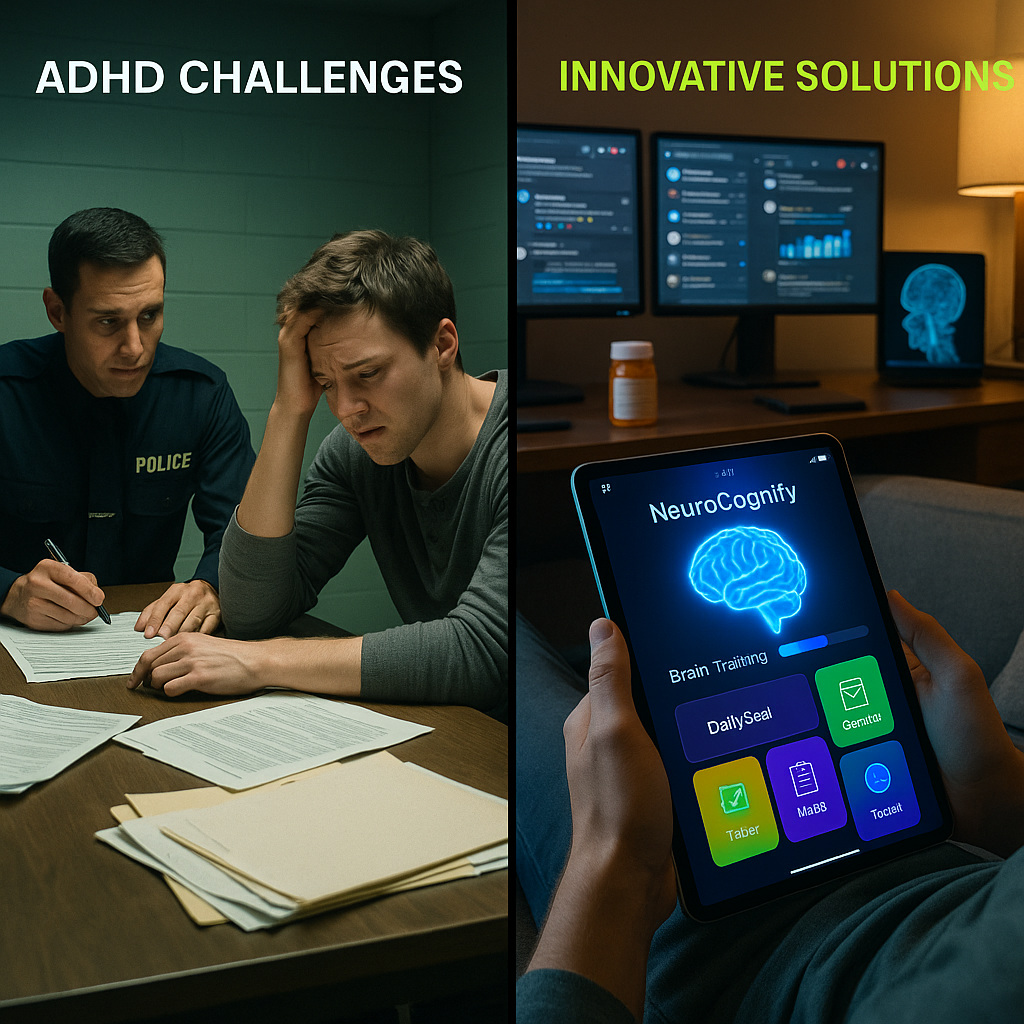
New data from the London Metropolitan Police indicates that individuals with ADHD are three times more likely to be arrested for impulsive crimes than the general population. The analysis of 12,000 arrest records from the past two years shows that 18% of detainees had diagnosed or suspected ADHD, compared to an estimated 5-7% in the general population.
Criminal justice researchers state this overrepresentation highlights systemic failures, not an inherent link to criminality. Dr. Eleanor Jenkins, forensic psychiatrist at King’s College London, said the findings reflect consequences of untreated executive function challenges within a justice system unprepared to recognize neurodevelopmental factors.
In response, the Metropolitan Police has launched a pilot program to train officers in identifying potential neurodivergence during encounters. The initiative also introduces de-escalation techniques tailored to ADHD and connects affected individuals to community resources rather than defaulting to arrest.
Implications for Criminal Justice Reform
Legal advocates consider these findings a turning point for justice system reform. Data suggest that better ADHD management could lower recidivism rates and reduce unnecessary incarceration.
Marcus Thompson, director of the Justice Neurodiversity Initiative, stated that appropriate accommodations and treatment can reduce repeat offenses by up to 42% among those with ADHD. Several UK police departments have requested similar analyses since the London report was published. The Home Office has announced a review of current processing protocols for neurodivergent individuals, beginning in January 2026.
Also Today
Digital Health
FDA Clears First Prescription Digital Therapeutic for ADHD
The FDA has granted clearance for NeuroCognify, the first prescription digital therapeutic designed for adult ADHD management. This app-based platform combines cognitive training, customized organizational tools, and real-time coaching to address executive function challenges.
Clinical trials showed a 31% improvement in task completion and a 27% reduction in self-reported ADHD symptoms after 12 weeks of regular use. Dr. Samuel Chen, principal investigator for the NeuroCognify trials at Johns Hopkins University, noted this as a significant shift in ADHD treatment options.
The platform will be available by prescription in February 2026, with major insurance providers confirming coverage. Developers emphasize that the tool is meant to supplement, not replace, standard therapies.
Advances in Neurodivergence Tools Gaining Momentum
Global investment in digital ADHD management tools reached $3.2 billion in 2025, marking a 45% increase over the previous year. Mira Patel, technology analyst at Healthcare Innovation Partners, stated that the digital health sector is now addressing real-world challenges faced by the ADHD community. Multiple platforms are nearing late-stage development or regulatory review.
Research suggests digital therapeutics are particularly valuable for adults diagnosed later in life who missed early intervention. These tools offer immediate strategies for both personal and professional use.
Social Research
Study Links Social Media Algorithms to Increased ADHD Challenges
Research from Stanford University demonstrates that recommendation algorithms on social media can worsen attention difficulties in people with ADHD. By tracking 450 adults over six months, the study found that exposure to algorithm-driven content led to a 22% increase in self-reported task-switching difficulties.
Dr. Amara Wilson, lead researcher, explained that the constant novelty generated by these platforms creates a uniquely challenging environment for those facing attention regulation struggles.
In response, the research team developed a browser extension that adjusts content delivery, reducing novelty triggers. Initial use indicates improvements in focus and time management for ADHD users.
Stimulant Medication Linked to Improved Empathy in Adults with ADHD
A longitudinal study has found that appropriate stimulant treatment enhances empathy and social connection in adults with ADHD. The five-year study followed 320 diagnosed adults, comparing social cognition skills between medicated and non-medicated participants.
Dr. Jason Ramirez, neuropsychologist at UCLA’s Center for Neurodevelopmental Studies, stated that improved executive function supports greater perspective-taking and emotional processing. These results challenge misconceptions about medication and indicate significant improvements in both relationship satisfaction and workplace collaboration among those with optimized treatment plans.
What to Watch
- International ADHD Research Symposium in Toronto, 3–5 February 2026, featuring early results from the Global Neurodivergent Workforce Study
- Congressional hearing on Neurodiversity in Criminal Justice Reform, 18 December 2025, Washington DC
- Release of updated DSM guidelines for adult ADHD diagnosis, 15 January 2026
- NeuroCognify digital therapeutic national launch and provider training webinar, 10 February 2026
Conclusion
Current findings reaffirm the impact of undiagnosed ADHD on justice outcomes and individual well-being, indicating accelerating progress in ADHD research and innovations. Increased investment and regulatory focus signal growing acknowledgment of neurodivergence in public health and policy. Upcoming research updates, digital therapeutic launches, and policy hearings will further shape ADHD support systems in 2026.




Leave a Reply