

Key Takeaways
- Top story: Experts warn against ADHD prescribing cascades, urging systemic approaches over adding more medications.
- Diagnosis rates among adult women are increasing as long-masked symptoms gain recognition.
- AI task managers are emerging as “second brains” for neurodivergent professionals.
- ADHD entrepreneurs are redesigning workflows based on energy cycles rather than traditional 9-to-5 schedules.
- Practical ADHD management strategies now blend technology, acceptance, and personal experience.
Introduction
On 10 January 2026, experts cautioned that current ADHD management strategies risk leading to a prescribing cascade. They called for systemic changes instead of additional medications, noting that a rise in adult women’s diagnoses is reframing decades of symptom masking. Today’s coverage examines evolving approaches, the impact of new technologies, and neurodivergent-driven workflows shaping support and productivity.
Top Story: ADHD Prescribing Cascades Raise New Concerns
Medication Management Challenges
Recent research published in the Journal of Psychiatric Research indicates that up to 38% of adults with ADHD experience a “prescribing cascade,” in which additional medications are prescribed to address side effects of primary ADHD treatments. The study followed 2,500 adults with ADHD over five years, finding sleep aids and blood pressure medications to be the most common secondary prescriptions.
These medication cascades are especially prevalent in patients over 40, with women more likely to receive secondary prescriptions for sleep disruption. Lead researcher Dr. Sarah Mendelson stated, “We’re seeing concerning patterns where treating the primary condition creates a domino effect of additional pharmaceutical interventions.“
Healthcare providers are now being encouraged to conduct comprehensive medication reviews for ADHD patients every six months instead of the previous annual standard. The National Institute of Mental Health has allocated $12 million to research alternative management protocols to reduce these cascading prescription patterns.
Also Today: Women’s Diagnosis Trends
Late-Diagnosis Protocols Standardized
The American Psychiatric Association has released new standardized assessment protocols specifically for adult women with previously undiagnosed ADHD. These guidelines recognize that symptoms often appear differently in women, with less hyperactivity and more inattention, emotional dysregulation, and compensatory masking behaviors.
Initial tests of these protocols across five university medical centers revealed a 43% increase in accurate diagnoses among women aged 25 to 45. Dr. Elena Cortez, leader of the protocol development team, stated that these guidelines represent a significant step forward in addressing the historical gender gap in ADHD diagnosis.
The assessment tools focus on life transitions as diagnostic opportunities, including career changes, parenthood, and menopause, when coping strategies may become insufficient. Insurance companies such as Aetna and United Healthcare have agreed to recognize these specialized assessments starting in March 2026.
Self-Advocacy Resources Expanded
The ADHD Women’s Alliance has launched a comprehensive digital toolkit to support women through the diagnostic process and help them advocate for appropriate treatment. The free resource features symptom trackers, provider conversation guides, and testimonial videos from women diagnosed in adulthood.
Over 10,000 women have accessed the toolkit since its soft launch in December 2025. The alliance reported that users of the toolkit were 27% more likely to receive appropriate evaluation referrals from primary care physicians compared to those without such resources.
Community support groups associated with the toolkit have formed in 32 states, establishing peer networks for women navigating similar diagnostic experiences. Maya Wilson, the alliance’s executive director, noted that having evidence-based self-advocacy tools transforms the diagnostic experience from frustrating to empowering.
Also Today: Technology Supports
AI-Powered ADHD Management Apps Show Promise
Clinical trials of three AI-driven ADHD management apps have demonstrated significant improvements in executive function metrics for adults with ADHD. A 16-week study with 1,250 participants found that apps using adaptive learning algorithms outperformed traditional reminder systems by personalizing intervention timing based on user behavior.
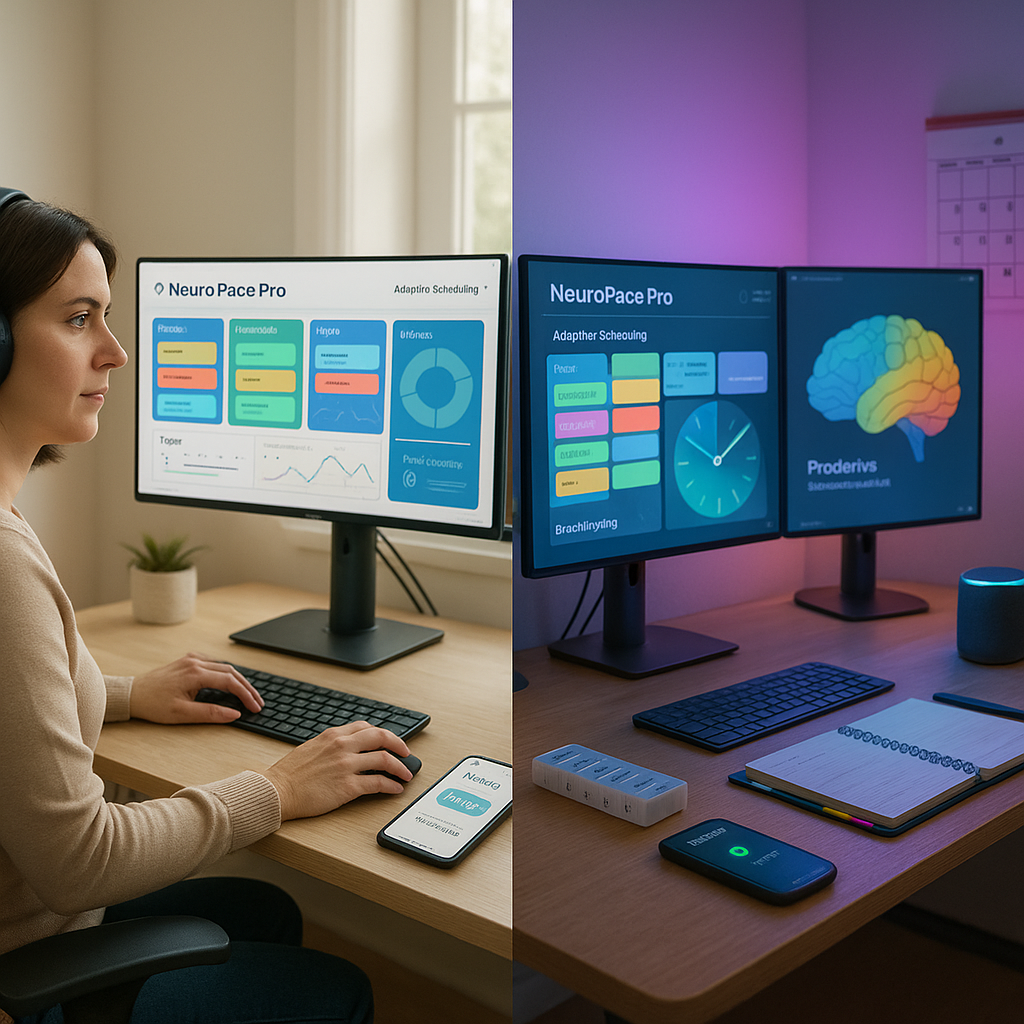
The most effective app, NeuroPace, showed a 34% improvement in task completion rates and a 28% reduction in reported time blindness. Dr. James Chen, neuropsychologist and lead researcher at the Digital Cognition Institute, explained that these systems function as external executive function supports rather than simple productivity tools.
These apps monitor usage and environmental patterns to predict optimal intervention timing, essentially acting as cognitive prosthetics that adapt to individual neurodivergent processing styles. Major health insurers have begun discussions about offering coverage for prescription-based versions of these applications as adjunctive therapy.
Workplace Accommodation Technologies Advance
The Department of Labor has published a comprehensive guide on technology-based workplace accommodations tailored for neurodivergent employees. The document describes emerging tools such as ambient attention monitors and context-sensitive noise-cancellation systems, clarifying that they qualify as reasonable accommodations under ADA guidelines.
Fifteen major corporations, including Microsoft, Adobe, and Salesforce, have piloted these accommodation technologies. The pilots reported a 41% reduction in burnout among neurodivergent employees and a 26% increase in self-reported productivity. Katherine Lopez, accessibility officer at Microsoft, stated that these tools do not just help employees with ADHD adapt to standard workplaces but also transform environments to suit diverse cognitive styles.
Implementation costs have fallen by 65% over the past three years, making these accommodations more accessible for mid-sized companies. A government tax credit program for small businesses adopting neurodivergent accommodation technologies will launch on 15 February 2026.
What to Watch: Key Dates and Events
- International Conference on ADHD Management Strategies: 12–15 March 2026, Boston.
- FDA review of extended-release ADHD medication delivery systems, scheduled for 28 January 2026.
- Launch of NeuroPace Pro workplace edition: 22 January 2026.
- Congressional hearing on neurodivergent accommodation standards: 5 February 2026.
- ADHD Women’s Alliance virtual summit on diagnostic advocacy: 18–19 February 2026.
- Release of updated DSM-5-TR ADHD diagnostic criteria: 1 March 2026.
Conclusion
Growing concern over prescribing cascades is driving a shift toward holistic ADHD management strategies, with emphasis on system-wide changes instead of additional medications. Advances in diagnostic guidelines, AI-based tools, and workplace accommodations continue to improve support for adults, especially women, living with ADHD. What to watch: the FDA review of new medication delivery systems on 28 January 2026, the NeuroPace Pro launch on 22 January 2026, and upcoming advocacy events through March.



Leave a Reply