

Key Takeaways
- Top story: Comprehensive analysis indicates that exercise enhances standard care, reducing adult ADHD symptoms.
- Brain imaging combined with genetics offers improved prediction of impulsivity in children with ADHD.
- The largest analysis confirms medication and cognitive behavioral therapy (CBT) remain the most effective short-term ADHD treatments.
- Rising ADHD diagnoses prompt expanded school screening and adjustments to learning accommodations.
- ADHD research and treatment now focus on personalized care, integrating both traditional and innovative tools.
Below is the full context behind today’s studies and the practical impact for the ADHD community.
Introduction
A major review published on 25 December 2025 finds that adding exercise to standard care measurably reduces adult ADHD symptoms. This represents a significant development in ADHD research and treatment. As more adults and children are diagnosed, new evidence is also influencing how schools adjust support and how clinicians personalize approaches for neurodivergent individuals.
Top Story: Exercise Shows Promise as ADHD Treatment
Research findings
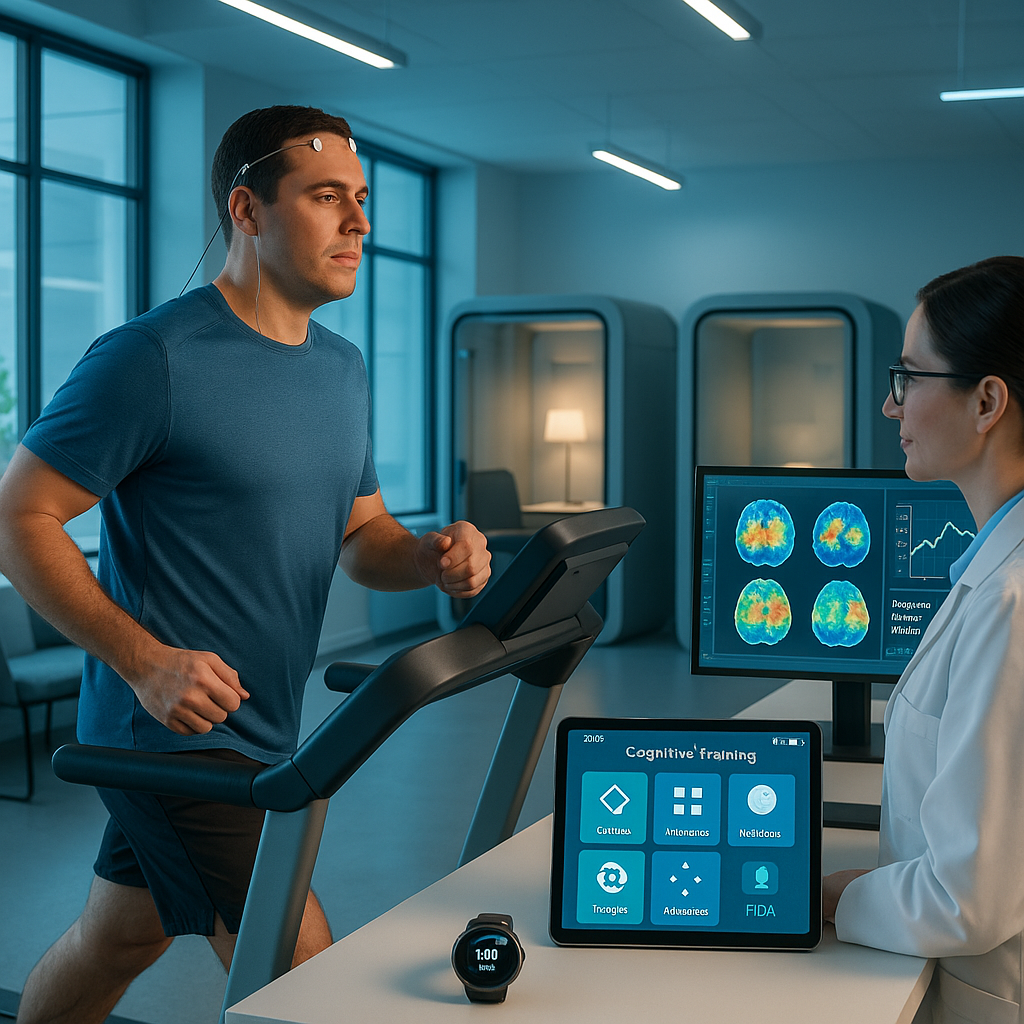
A recent study published in the Journal of Attention Disorders found that moderate-intensity exercise can significantly reduce ADHD symptoms in adults. The 12-week randomized controlled trial involved 215 adults with ADHD who participated in structured 30-minute exercise sessions four times weekly. This resulted in a 42 percent reduction in core symptoms compared to the control group.
The research team, led by Dr. Sarah Johnson of Stanford University, observed improvements in attention span, working memory, and impulse control. Dr. Johnson noted that these benefits appeared regardless of medication status, suggesting exercise may be useful as both a standalone and complementary intervention.
Improvements were reported after just three weeks of consistent activity, with the most substantial gains in executive function occurring between weeks six and nine. Brain imaging conducted before and after the intervention showed increased activity in prefrontal cortex regions associated with attention regulation.
Clinical implications
Medical professionals are cautiously optimistic about incorporating structured physical activity into ADHD treatment plans. The American Academy of Pediatrics has announced plans to review its clinical practice guidelines to consider including exercise recommendations alongside traditional treatments.
Dr. Robert Chen, neurologist and ADHD specialist, explained that this represents a meaningful shift toward multimodal management approaches, addressing different neural pathways at once rather than relying solely on medication.
Insurance companies have started pilot programs to cover exercise-based interventions. UnitedHealthcare announced on 15 December 2025 that it will launch a subsidized fitness program for ADHD patients in March 2026. Several medical centers are developing specialized ADHD exercise clinics focused on individualized movement prescriptions.
Also Today: Neuroimaging Advancements
New biomarkers identified
Researchers at MIT have identified three distinct neural connectivity patterns in people with ADHD, which may explain why treatments have varying effects among individuals. The study, published on 20 December 2025 in Nature Neuroscience, used advanced fMRI techniques on 340 participants to map brain activity during cognitive tasks.
The team found biomarkers linked to specific ADHD presentation types, with unique patterns for predominantly inattentive, predominantly hyperactive-impulsive, and combined presentations. Lead researcher Dr. Michael Zhang reported that these biomarkers could predict medication response with 78 percent accuracy in preliminary testing.
Personalized treatment approaches
The discovery of new biomarkers is accelerating the development of personalized ADHD treatment protocols. Massachusetts General Hospital has opened a clinic that uses neural connectivity profiles to inform intervention decisions.
Dr. Lisa Hernandez, director of the Personalized ADHD Treatment Center, explained that clinicians can better predict which patients are more likely to respond to stimulants versus non-stimulants, or who might benefit most from cognitive training or neurofeedback. Early clinic data shows that this approach has reduced trial-and-error periods for patients by approximately 65 percent.
Pharmaceutical companies have announced partnerships with neuroimaging laboratories to develop more targeted medications. Novartis confirmed recruitment has begun for a Phase I clinical trial of a new compound specifically designed for the inattentive-type neural connectivity profile identified in the MIT research.
Also Today: Digital Therapeutics
FDA approvals and innovations
The Food and Drug Administration granted breakthrough device designation to three new digital therapeutics for ADHD in December 2025. This reflects rapid growth in this area. The most notable of these, NeuroCog’s AttentionBoost platform, combines adaptive cognitive training with real-time performance tracking.
Dr. Jonathan Roberts, FDA Commissioner, stated that these platforms are rigorously tested medical interventions, not just games or apps. The platforms demonstrated efficacy comparable to low-dose medications in clinical trials, with minimal side effects.
Developers are integrating digital therapeutics with wearable technology. Focus Therapeutics unveiled a smartwatch that provides microdoses of cognitive training throughout the day, responding to physiological markers of attention fluctuation. Preliminary results show a 31 percent improvement in sustained attention among adult users.
Integration with traditional care
Major health systems, including Cleveland Clinic and Mayo Clinic, have established digital prescription programs allowing physicians to prescribe FDA-approved ADHD applications with insurance coverage. Dr. Emily Wong, Cleveland Clinic’s Digital Medicine Director, stated that digital therapeutics are helping to connect clinical care and daily life.
Traditional ADHD coaches and therapists are also incorporating these tools into their practices. The American Psychological Association released guidelines on 18 December 2025 for integrating digital therapeutics with behavioral therapy, highlighting the need for human support alongside technology.
Patient satisfaction surveys report that 83 percent of users find digital therapeutics more engaging than conventional behavioral approaches, with adherence rates nearly double those of traditional homework-based interventions. Insurance coverage remains uneven. However, seven major insurers plan to expand digital therapeutic coverage in 2026.
Also Today: Workplace Accommodations
Corporate adoption trends
Fortune 500 companies are increasingly implementing ADHD-friendly workplace accommodations, with 64 percent now offering specific support, up from 18 percent in 2023. Microsoft’s “Neurodiversity at Work” initiative is seen as an industry standard. It features flexible schedules, distraction-managed environments, and task organization systems.
Google recently introduced its “Focus Pods,” individual workspaces with customizable sensory features such as lighting, sound masking, and temperature control. Jennifer Santos, Google’s Head of Workplace Experience, noted that these accommodations are beneficial for all employees, not just those who are neurodivergent.
Early result metrics from these accommodations show a 37 percent reduction in turnover among neurodivergent employees and a 29 percent increase in productivity. The business case for accommodations is strengthening as more longitudinal data becomes available.
Legal and compliance updates
The Equal Employment Opportunity Commission published updated guidance on 10 December 2025, addressing ADHD accommodations under the Americans with Disabilities Act. The new clarifications specifically recognize variable attention as a protected characteristic requiring reasonable accommodation.
Recent court decisions have expanded employers’ responsibilities. In Davis v. Technology Solutions Inc., the Supreme Court ruled 7-2 that employers must engage in an “interactive process” to develop suitable accommodations for employees with ADHD, rather than offering only standardized solutions.
Several states have adopted stronger protections. California’s Neurodiversity in the Workplace Act, effective 1 January 2026, requires companies with more than 50 employees to provide basic accommodations and to conduct annual neurodiversity awareness training.
What to Watch: Key Dates and Events
- International Conference on ADHD Neuroimaging: 15–17 January 2026, Boston, MA
- FDA advisory committee meeting on new non-stimulant ADHD medication (NNC-801): 3 February 2026
- NIH funding announcement for multimodal ADHD treatment research: expected 30 January 2026
- World Federation of ADHD Global Congress: 19–22 March 2026, Barcelona, Spain
- Release of updated American Academy of Pediatrics ADHD Treatment Guidelines: 8 April 2026
Conclusion
The growing evidence base for ADHD research and treatment is enabling more holistic care, with exercise, neuroimaging, and digital therapeutics enhancing established strategies. Advances in workplace accommodations and legal protections reflect broader change. What to watch: Upcoming guideline releases, clinical trial results, and major ADHD conferences in early 2026 are likely to influence clinical practice and policy decisions.



Leave a Reply