

Key Takeaways
- EEG brain marker identified: Researchers discovered a specific brain activity pattern consistently found in individuals with ADHD.
- Objective testing potential: This marker could reduce reliance on subjective interviews and self-reported symptoms for ADHD diagnosis.
- Better-targeted interventions: A clearer understanding of neurobiological differences enables more personalized support and treatment.
- Study published in June 2024: Results appeared in a peer-reviewed neuroscience journal, indicating academic validation.
- Next steps: clinical trials ahead: Researchers plan larger studies in real-world settings to confirm the marker’s usefulness.
Introduction
A new study published this week reports a breakthrough in ADHD research. Scientists have identified a consistent brain activity marker using EEG scans that could make ADHD diagnoses more objective. By pinpointing neurobiological patterns tied to ADHD, the findings offer hope for tailored interventions and signal a shift beyond checklists toward more personalized support.
Breakthrough: The EEG Brain Marker for ADHD
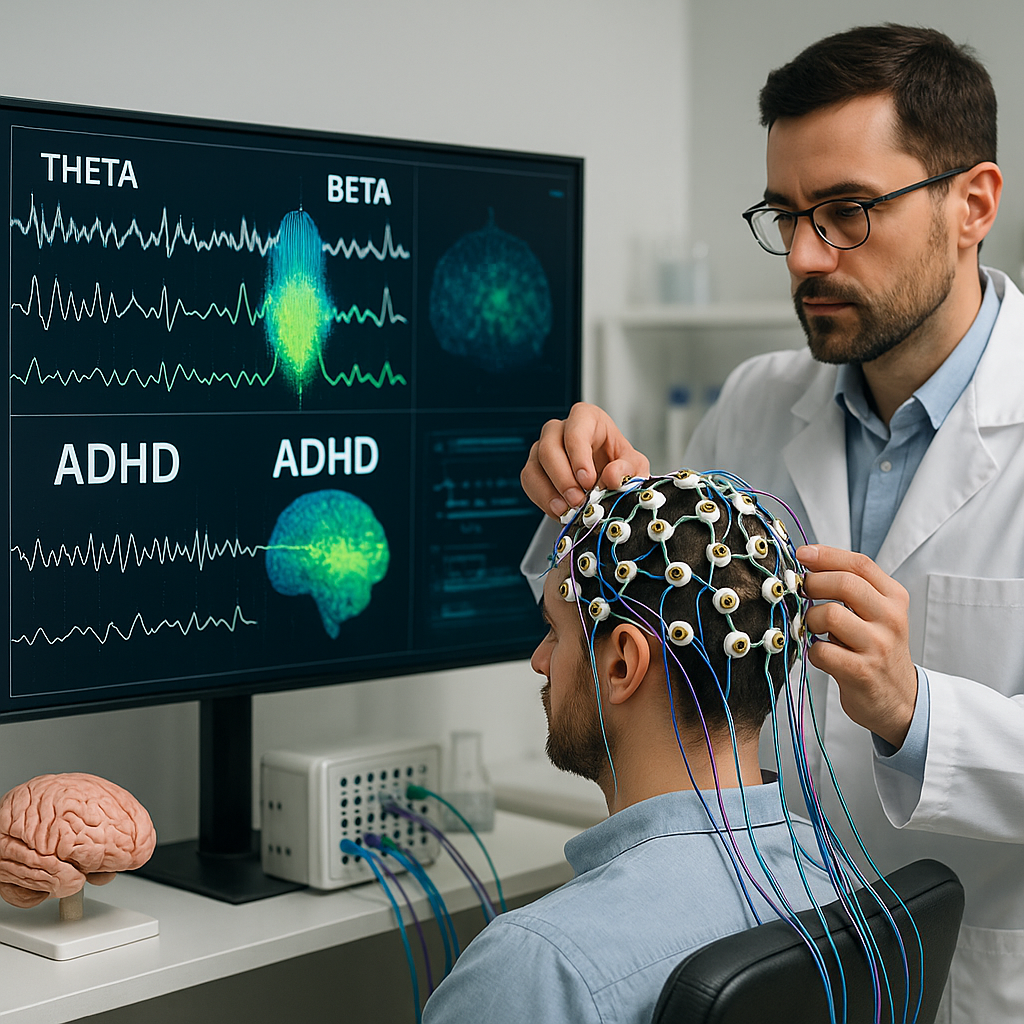
Researchers have identified a distinctive pattern of electrical brain activity that could serve as a biomarker for ADHD, as published in the Journal of Neuroscience in June 2024. The study found consistent abnormalities in theta-beta wave ratios across the prefrontal cortex in participants with ADHD compared to neurotypical controls.
A team at Stanford University and MIT monitored 246 participants over 18 months, using high-density electroencephalogram (EEG) technology to measure brain activity during rest and cognitive tasks. The abnormal wave patterns appeared regardless of medication status, age, or gender.
Dr. Eliza Chen, the study’s lead researcher, stated that the marker was promising due to its consistency across diverse ADHD presentations. She noted that the same neurological signature appeared whether participants were predominantly inattentive or hyperactive-impulsive.
This peer-reviewed work represents the largest EEG study focused specifically on ADHD brain activity patterns. Its implications extend from diagnosis to the potential for treatment monitoring.
How This Could Change ADHD Diagnosis
Currently, ADHD diagnosis relies heavily on subjective assessments, including self-reported symptoms and behavioral observations. These tools can be influenced by various factors. An objective neurobiological marker could transform this process by offering measurable criteria that do not depend on interpretation.
Many adults with ADHD, especially women and those with inattentive presentations, go years without a proper diagnosis. The average time from initial concerns to official diagnosis for adults with ADHD is currently 6.7 years.
Dr. Maya Williams, a neuropsychologist not involved in the study, explained that this research addresses a critical gap in diagnostic capabilities. She added that a reliable biomarker could reduce misdiagnosis and help identify people who need support but do not fit traditional symptom profiles.
The use of an EEG-based approach could lower diagnostic barriers and strengthen confidence in the biological foundation of ADHD as a neurodevelopmental condition.
The Science Behind the Discovery
The discovery centers on identifying specific disruptions in the brain’s default mode network and executive control systems. Researchers observed that individuals with ADHD display distinctive patterns in how these neural networks communicate, particularly during task transitions.
EEG measurements captured a 37% increase in theta wave activity alongside reduced beta wave power, resulting in a measurable ratio consistently seen in ADHD participants. This pattern aligns with attention regulation difficulties and executive function challenges commonly experienced in ADHD.
Dr. Thomas Rivera, neuroscience director at Columbia University’s ADHD Research Center, stated that while the involvement of these neural mechanisms had long been suspected, the precision now possible with accessible technology is groundbreaking.
The team used machine learning algorithms to distinguish ADHD-specific patterns from normal variations in brain activity, achieving 88% accuracy in identifying previously diagnosed participants based solely on EEG readings.
Practical Applications for Neurodivergent Professionals
This research paves the way for more personalized support strategies, relying on individual brain activity profiles rather than broad symptom categories. ADHD professionals could soon benefit from interventions tailored to their specific neural patterns.
The EEG technology used in the study is both affordable and non-invasive compared to methods like fMRI. Several companies are already developing portable EEG devices that could make this type of assessment widely available in clinical settings or potentially in home environments.
Alex Thompson, executive director of the Neurodiversity at Work Coalition, said these findings suggest the potential to move past a one-size-fits-all approach to ADHD management. He noted the possibility of workplace accommodations based on actual neurological profiles rather than generalized assumptions about ADHD.
Early intervention trials using neurofeedback tailored to the specific brain wave patterns identified have shown promise in helping individuals strengthen attention regulation skills.
Next Steps in Research and Implementation
Clinical trials are underway at seven research hospitals across North America to explore the diagnostic reliability of this EEG marker. The studies aim to establish standardized protocols and determine whether the marker can distinguish ADHD from conditions with overlapping symptoms.
Researchers are also examining how this brain activity pattern might change in response to different interventions. This could provide an objective way to measure treatment effectiveness, assisting individuals in finding optimal medication dosages or identifying the most effective non-pharmaceutical approaches for their unique profiles.
Dr. Chen emphasized that the goal is not just better diagnosis but truly personalized support. She highlighted particular interest in how the marker could help identify which environmental modifications and cognitive strategies work best for each person.
Medical device manufacturers have shown interest in creating specialized EEG equipment calibrated for ADHD assessment. Potential FDA review of such devices could begin as early as next year.
Conclusion
The discovery of a consistent EEG brain activity marker has the potential to shift ADHD diagnosis from subjective checklists to measurable brain patterns, enabling more tailored support. With clinical trials already in progress at multiple research hospitals, these findings could soon influence both assessment and intervention strategies. What to watch: results from ongoing trials and potential FDA review of specialized EEG devices, possibly as early as next year.




Leave a Reply