

Key Takeaways
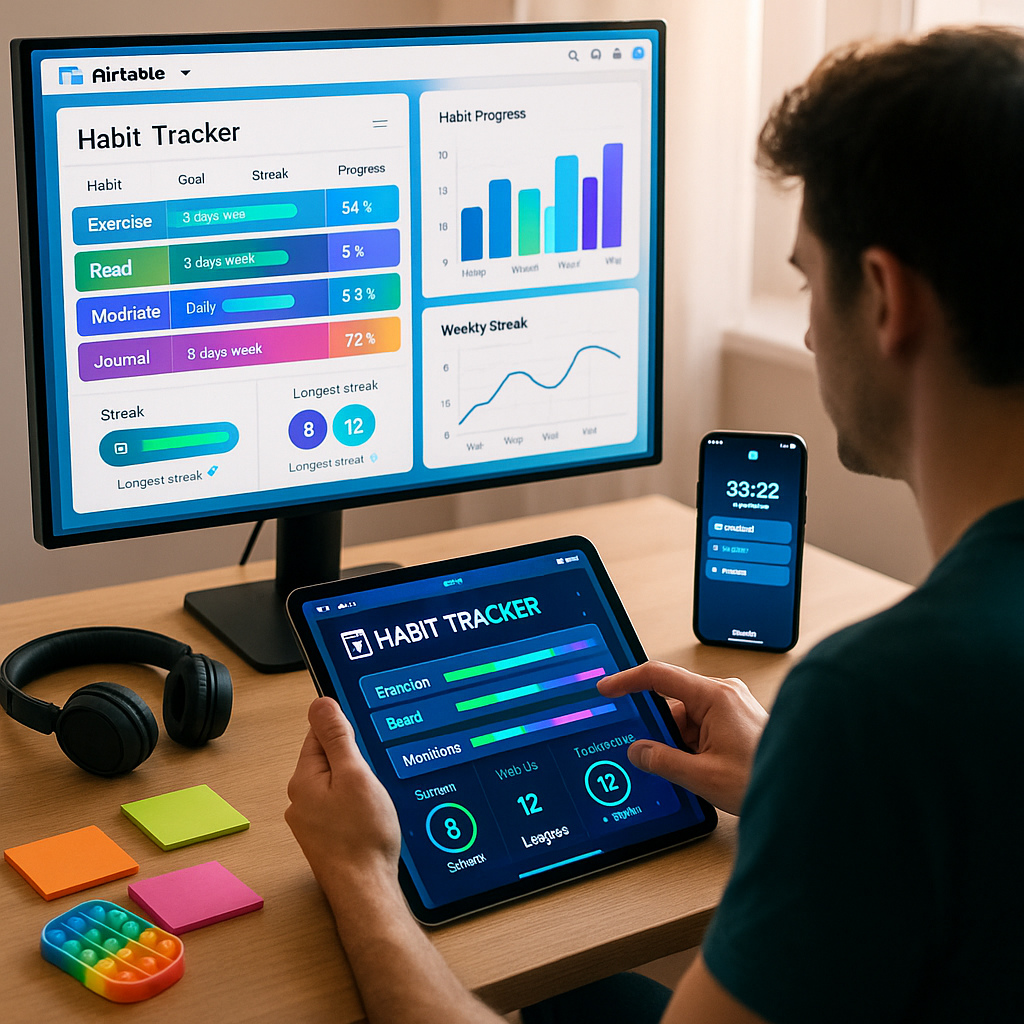
- Design habits that feel rewarding, not restrictive: ADHD brains thrive on novelty and powerful dopamine boosts. Personalized habit trackers with visual rewards, streak counters, and playful themes provide the motivation that generic apps often lack.
- Prioritize customization for your executive function needs: Select or build templates that let you adjust views, reminders, and tracking styles. This ensures your system fits your individual “energy curve” and minimizes friction, making the process more enjoyable and less overwhelming.
- Leverage automation to remove friction and forgetfulness: Integrate reminders, streak alerts, and recurring tasks using platforms like Notion, Airtable, or Obsidian. This way, even on your most distracted days, nothing slips through the cracks.
- Make progress visible with intuitive dashboards: Interactive visuals such as charts, color-coded streaks, and progress bars turn abstract effort into concrete wins. This feeds the ADHD reward loop, increasing motivation and long-term engagement.
- Connect your ecosystem for seamless tracking: Cross-platform integration ensures you can update habits from any device or tool, whether it is your phone, desktop, or another productivity app. By reducing barriers, you ensure that habit tracking is accessible wherever inspiration (or distraction) strikes.
- Templates designed for neurodivergence boost real results: Specialized ADHD-focused habit trackers dramatically outperform generic options. These tools increase engagement and consistency by aligning with the unique workflow and executive function realities of neurodivergent individuals.
If you are ready to create a habit tracking system that adapts to you and transforms executive function struggles into meaningful, ritualized wins, read on. We will dive into step-by-step setups for Notion, Airtable, and Obsidian, and uncover how to craft a tracker that works with your mind (not against it).
Introduction
For many with ADHD, most habit trackers quickly lose their appeal. The need for novelty, immediate visual feedback, and real flexibility is rarely addressed by generic solutions. If you have ever found yourself disengaged, overwhelmed, or even frustrated using standard tracking apps, you are not alone.
Designing a habit tracker for ADHD is about rewriting the rules to actively support executive function, deliver dopamine for small achievements, and adapt to your shifting needs. By blending the key strengths of platforms like Notion, Airtable, and Obsidian, you can build a personalized system that rewards your unique workflow. Visual dashboards, automated reminders, and playful themes don’t just make habit tracking possible; they make it genuinely engaging and sustainable.
In the sections that follow, you will discover how to construct a habit tracking system tailored to your brain’s wiring, turning everyday routines into rituals of satisfaction. With the right tools, friction and forgotten wins can become things of the past.
Why Standard Habit Trackers Fail for ADHD
Understanding why most habit trackers fall short for ADHD is the first step in designing systems that succeed. Traditional tracking tools are built for neurotypical brains, inadvertently overlooking the realities faced by those with ADHD.
The Executive Function Mismatch
Standard habit trackers often assume users can consistently leverage executive function. This is a core area where ADHD brains experience unique challenges.
Key pain points include:
- Working memory lapses that make it difficult to remember to check trackers regularly
- Time blindness that interferes with maintaining scheduled routines
- Task initiation struggles that make starting the tracking process harder than the habits themselves
- Shortened attention span that makes navigating complex forms or systems overwhelming
Expecting daily consistency without supporting these neurological differences can turn tracking into another source of stress or shame, not a catalyst for growth.
Motivation and Dopamine Dynamics
The reward system in ADHD brains relies heavily on immediate dopamine triggers. Standard trackers often deliver:
- Delayed rewards that fail to satisfy the need for instant feedback
- Flat, unstimulating visuals that fail to excite interest
- Little to no dopamine “hits” to reinforce the act of tracking
- Punitive mechanics where broken streaks create discouragement instead of resilience
Without a system that provides quick, meaningful payoffs and regularly sparks interest, abandonment is almost certain. ADHD-friendly trackers must work with, not against, the brain’s natural reward circuitry.
Overwhelm from Complexity
Complex habit tracking systems present another barrier by:
- Attempting to track too many habits at once
- Requiring involved data entry or navigation
- Presenting cluttered interfaces that make it hard to focus
- Expecting perfection over steady progress
For people with ADHD, unnecessary complexity can make a system unusable. Striking the right balance between simplicity and capability is crucial. Personalized, ADHD-specific approaches are essential for consistent, stress-free habit growth.
Core Features of ADHD-Friendly Habit Trackers
To achieve real, sustainable results, ADHD-friendly habit trackers must include specific features that align with the way neurodivergent minds operate.
Visual Stimulation and Dopamine-Triggering Elements
Visuals are more than aesthetic flourishes. They are key motivational tools.
Effective trackers incorporate:
- Color-coded systems for instant recognition and engagement
- Visible progress bars that provide satisfying feedback loops
- Custom visual themes tied to personal interests and mood
- Achievement badges or virtual rewards to trigger small dopamine spikes
Incorporating these elements keeps habit tracking fun and motivating, significantly increasing the likelihood of consistent use.
Friction-Reducing Automation
Every manual step increases the risk that a habit will go untracked. ADHD-friendly solutions automate wherever possible by providing:
- Single-tap or click tracking to minimize data entry
- Automated adaptive reminders that adjust to real-life patterns
- Integration with existing tools, such as calendars or digital assistants
- Pre-built templates to eliminate setup fatigue
Reducing these everyday hurdles supports focus and follow-through, even on the most distracted days.
Forgiveness Architecture
Traditional trackers often create “all-or-nothing” scenarios. ADHD-friendly systems introduce “forgiveness” by:
- Recognizing partial or reattempted success rather than only complete perfection
- Allowing streaks to recover after a missed day, combating discouragement
- Highlighting patterns and trends, not just failures or missed steps
- Customizing success benchmarks that flex with individual energy and focus levels
This compassionate structure helps manage the inevitable ups and downs of ADHD symptom cycles and keeps motivation intact.
Progressive Complexity Options
Building new habits is easier with a system that grows alongside you, offering:
- Tiered complexity that starts simple and allows for gradual feature expansion
- Modular capability to add or remove elements based on current needs
- Visual clarity modes for high-symptom or low-energy days
- Expandable data fields for tracking more detail as routine becomes established
This flexibility transforms your habit tracker from a rigid requirement into a responsive support system.
Setting Up Your Notion Habit Tracker for ADHD
Notion’s deep flexibility and dynamic visuals make it an outstanding choice for crafting an ADHD-friendly habit tracking solution.
Creating an ADHD-Optimized Dashboard
To boost the likelihood of engagement, design a dashboard that sparks motivation as soon as you open it.
Steps to get started:
- Create a dedicated page titled “My ADHD Habit Tracker.”
- Add an inspiring cover image, such as vibrant artwork or a visual connection to your aspirations.
- Choose a motivating icon that represents habit-building energy.
- Write a clear heading and a brief “why” statement as a daily reminder of your intentions.
This quick visual impression encourages consistent interaction, especially when energy or focus is low.
Building Your Habit Database
Establish a solid tracking foundation by creating a robust yet manageable database:
- Launch a new database (inline or full-page).
- Design key data fields, including:
- Habit Name
- Category (with colored tags)
- Difficulty level (Easy, Medium, Hard)
- Consistency Goal (number of days per week)
- Current Streak (formula)
- Longest Streak (formula)
- Notes or Reflection (open text)
- Begin with 2-3 high-impact habits to prevent overwhelm from the outset.
A relational database approach provides the flexibility to view and filter your habits in several ways, helping to maintain novelty and prevent boredom.
Setting Up Multiple Views for Different ADHD States
Customize the user experience to suit your energy and focus on any given day:
- Set up a Calendar View to easily spot patterns over time.
- Build a Gallery View for vivid, card-like displays.
- Configure a Kanban View to track progress across categories or stages.
- Enable a Table View for detail-oriented reflection during moments of hyperfocus.
Switching between these modes keeps your system fresh and adaptive, matching your mood and bandwidth in real-time.
Implementing ADHD-Specific Automation in Notion
Adding targeted automation further reduces reliance on memory and willpower:
- Build daily entry templates to streamline input.
- Connect habit logs to daily reflections using relation fields.
- Automate streak and consistency calculation with formula fields.
- Install a “Quick Track” button for speedy habit check-ins.
Place a Notion widget on your phone’s home screen for effortless access. This small environmental tweak makes checking in effortless.
Leveraging Airtable for Complex ADHD Habit Tracking
If you need advanced analytics and deeper customization, Airtable provides an excellent blend of power and user-friendly design, suitable for ADHD needs.
Initial Airtable Base Setup
Begin with an organized structure to prevent overwhelm:
- Start a new base titled “ADHD Habit Tracking System.”
- Separate your workspace into three tables:
- Habits (the master list)
- Daily Tracking (input for each completion)
- Insights (automated reflections and summaries)
- Include key fields in the Habits table such as:
- Habit Name (primary)
- Category (color tagged)
- Effort Level (1–5 rating)
- Purpose (“Why This Matters” text)
- Visual Cue (image attachment)
- Current Streak (formula)
- Success Rate (formula)
Dividing your workflow in this way keeps the system visually clean and avoids cognitive overload. For ADHD users, this can be a game-changer.
Creating Automated Workflows for ADHD Support
Let Airtable’s automation features lighten your mental load in practical ways:
- Send personalized check-in reminders via email or SMS
- Trigger supportive messages or friendly streak resets if a habit stalls
- Integrate with Zapier or Make.com for cross-platform habit updates, including instant mobile entries
- Automate visualization of your progress with color-coded dashboards and trend graphs
This kind of automation means the system works for you, not the other way around. On days when energy dips or distractions spike, your tracker continues to guide you steadily forward.
Expanding to Diverse Applications
While Notion and Airtable are popular, these strategies and techniques can also be adapted for a wide range of contexts and platforms:
- Healthcare: Use custom trackers for medication adherence, wellness routines, or appointment management.
- Education: Support students with ADHD by tracking study habits, assignment submissions, or learning milestones.
- Finance: Monitor daily spending habits, budgeting patterns, or bill payment consistency, using the same dopamine-driven feedback loops.
- Marketing and Creative Work: Track publishing consistency, creative sprints, or audience engagement to build sustainable routines within visually dynamic dashboards.
- Self-care and Lifestyle: Apply similar templates for meal planning, exercise routines, or sleep quality, ensuring the tracking remains stimulating and actionable.
This cross-industry adaptability ensures that ADHD-friendly habit tracking is relevant and powerful, whether in healthcare, education, business, or daily life.
Conclusion
Traditional habit trackers falter for those with ADHD because they ignore the vital differences in how neurodivergent brains operate. Sustainable progress demands tools that deliver vibrant visuals, instant feedback, and built-in forgiveness. These are systems that genuinely adapt to your needs and rhythms, not just demand compliance.
By leveraging platforms like Notion and Airtable, you can create custom dashboards, powerful automations, and flexible designs that turn habit tracking from a daily struggle into a rewarding ritual. When your tools echo your brain’s wiring, the process is no longer about enforcing discipline, but about nurturing support and celebrating growth.
For neurodivergent professionals, creatives, and anyone looking to replace friction with flow, ADHD-friendly habit systems are more than practical. They are a radical act of self-acceptance and empowerment. Success is measured not just in perfect streaks but in the resilience to try again, the capacity to adapt, and the freedom to design a system that lets your unique brilliance shine.
Looking ahead, the next generation of neurodivergent-friendly tools will harness even greater personalization, cross-platform integration, and AI-driven insights. The future belongs to those who embrace their differences and craft systems that not only accommodate their needs but transform them into a competitive advantage. Now is the time to experiment, iterate, and build a habit tracking ecosystem designed for you. This can fuel both meaningful progress and lasting self-confidence.



Leave a Reply