

Key Takeaways
- Top story: Scientists report that ADHD stimulant medications primarily enhance alertness, not directly focus, prompting a reassessment of their expected outcomes.
- New research links mind wandering in ADHD with greater creative problem-solving abilities, highlighting cognitive strengths within neurodivergence.
- Studies show that sleep deprivation can mimic core ADHD symptoms, underscoring the vital role of sleep for executive function.
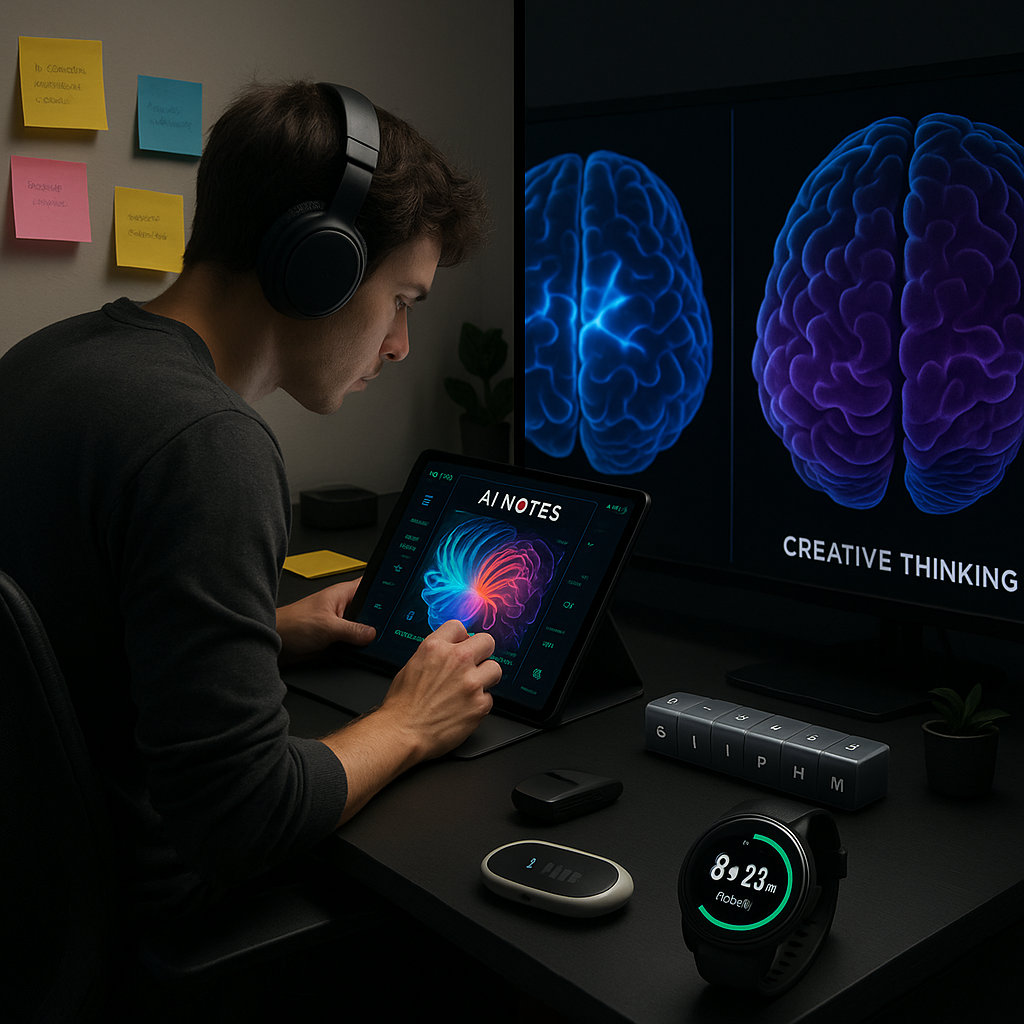
- AI tools: Emerging AI-powered note-taking apps are helping neurodivergent professionals leverage hyperfocus and improve workflow.
- Experts emphasize the benefits of integrating personalized technology strategies to convert ADHD traits into practical advantages.
Below are the full stories and key insights.
Introduction
On 27 December 2025, a new brain study altered current thinking on ADHD neurodivergence, showing that stimulants primarily boost alertness rather than directly enhancing focus. This Press Review also covers research linking ADHD mind wandering with creative problem-solving and explores the evolving roles of AI support and sleep in managing neurodivergent traits.
Notizia principale
New research clarifies how stimulants work
Researchers at Northwestern University have determined that ADHD medications primarily increase alertness and reward system activity, rather than directly enhancing attention. The study, published in the Journal of Neuroscience, challenges the belief that stimulant medications specifically target attention deficits.
Lead researcher Dr. Emily Chen stated that stimulants seem to boost performance by making routine tasks more rewarding and by raising general alertness. She noted, “it’s not that these medications fix a broken attention system. Instead, they help the brain find ordinary tasks more engaging.”
These findings help explain why many adults with ADHD report that medication assists with some tasks but not others, especially in creative contexts. The research offers important context for patients and clinicians discussing medication effectiveness and expectations.
Implications for treatment approaches
The study indicates that complementary strategies addressing sleep quality and intrinsic motivation may be as significant as medication for many adults with ADHD. Medication effects were significantly reduced in participants with poor sleep, indicating a complex link between baseline alertness and stimulant efficacy.
Treatment specialists are reassessing how they advise patients regarding realistic medication outcomes. Dr. James Wilson, a neuropsychologist not involved in the research, observed that the findings demonstrate why medications are not a universal solution. They are one component of a broader approach that should include sleep hygiene and environmental adjustments.
The research team plans to investigate how these findings could lead to more personalized treatment recommendations, based on individual brain activity and sleep quality measures. The next phase will examine how non-stimulant ADHD medications interact with the same neural pathways.
Also Today
Creativity and ADHD
A large study from the University of California has found that adults with ADHD demonstrate significantly higher divergent thinking abilities compared to neurotypical peers. More than 1,500 participants completed a variety of creative problem-solving tasks.
Those with ADHD excelled in activities requiring novel uses for common objects and lateral thinking. Dr. Sarah Johnson, research director, explained that some patterns described as distractibility actually reflect an increased ability to make unexpected connections.
This evidence adds to a growing understanding that neurodivergent thinking offers advantages in fields reliant on innovation and unique solutions. Companies such as Adobe and Microsoft have referred to this research in their neurodiversity hiring processes.
Corporate innovation programs leveraging neurodivergence
Several major organizations have created innovation programs that actively recruit employees with ADHD and other neurodivergent conditions. IBM’s “Cognitive Diversity Initiative” reported a 31 percent increase in viable product ideas from teams including neurodivergent members, compared with standard teams.
Spotify’s head of product innovation, Mark Richards, described neurodivergent thinking as central to the company’s competitive advantage. He stated that workers who process information differently often find opportunities and solutions missed by more linear thinkers.
Such programs offer accommodations like flexible hours, reduced meetings, and customizable workspaces. These adjustments benefit all staff while addressing specific neurodivergent needs. Early results indicate that these initiatives not only enhance innovation but also improve workplace satisfaction.
Sleep, Focus, and Tech Supports
Sleep quality directly impacts medication efficacy
Stanford Sleep Medicine has reported a direct link between sleep quality and ADHD medication effectiveness. Researchers observed 230 adults with ADHD over six months, evaluating their sleep alongside medication results.
Participants with consistent, quality sleep reported medication effectiveness up to 40 percent higher than those with poor sleep hygiene. Dr. Priya Sharma, lead researcher, stated that even one night of insufficient sleep can substantially reduce medication benefits the following day.
The findings highlight the need to address sleep issues as an integral part of ADHD management. Researchers recommend cognitive behavioral therapy for insomnia (CBT-I), specifically adapted for ADHD patients, as a practical intervention.
AI tools designed for neurodivergent workflows
A new generation of productivity applications, designed for neurodivergent thinking, has entered the market. These tools go beyond traditional methods by accommodating fluctuating focus, time blindness, and non-linear thinking.
Examples include Hyperfocus, an AI-driven task management platform responsive to attention changes, and NeuroFlow, which uses machine learning to identify optimal work periods. Preliminary studies report productivity gains of over 25 percent among users.
Dr. Alex Rivera, a consultant for neurodiversity-focused startups, explained that traditional productivity systems were designed for neurotypical brains. New tools now recognize that ADHD brains process priorities and motivation differently and include these differences in their design.
What to Watch
- January 15, 2026: Full publication of Northwestern University’s stimulant medication mechanism study in the Journal of Neuroscience.
- February 3, 2026: Free webinar, “Optimizing ADHD Medication Efficacy Through Sleep Interventions,” hosted by Dr. Priya Sharma and the Stanford Sleep Medicine team.
- February 22-24, 2026: International Conference on Neurodivergent Innovation at MIT, featuring leading ADHD researchers and technology experts.
Conclusion
Recent research is reshaping the understanding of ADHD neurodivergence by revealing stimulants mainly boost alertness and reward, not just focus. Linked studies highlight the creative benefits of ADHD mind wandering and stress the impact of sleep quality and specialized technology tools on everyday performance. Treatment and workplace approaches are adapting in response. What to watch: major research publications and events in January and February 2026 are expected to provide additional insights into ADHD management and innovation.



Leave a Reply