

Key Takeaways
- Top story: Brain imaging finds ADHD stimulants replicate beneficial sleep patterns, challenging traditional focus-based views.
- Homer1 gene identified as a potential gateway for new, non-stimulant ADHD therapies.
- AI productivity tools are rapidly evolving to empower neurodivergent teams with tailored workflows.
- Recent studies validate core ADHD traits as unique advantages for entrepreneurial success.
- What to watch: Further trials on Homer1-targeted medications expected in early 2026.
Below are the full context and key implications for work and daily life.
Introduction
On 30 December 2025, new findings in ADHD research and management revealed that brain scans show stimulant medications mimic the cognitive benefits of quality sleep rather than simply increasing focus. These insights open fresh perspectives on treatment approaches. Today’s press review also highlights discoveries like the Homer1 gene and evolving AI tools that are expanding real-world options for the neurodivergent community.
Top Story
ADHD Stimulants Mimic Restful Sleep Effects
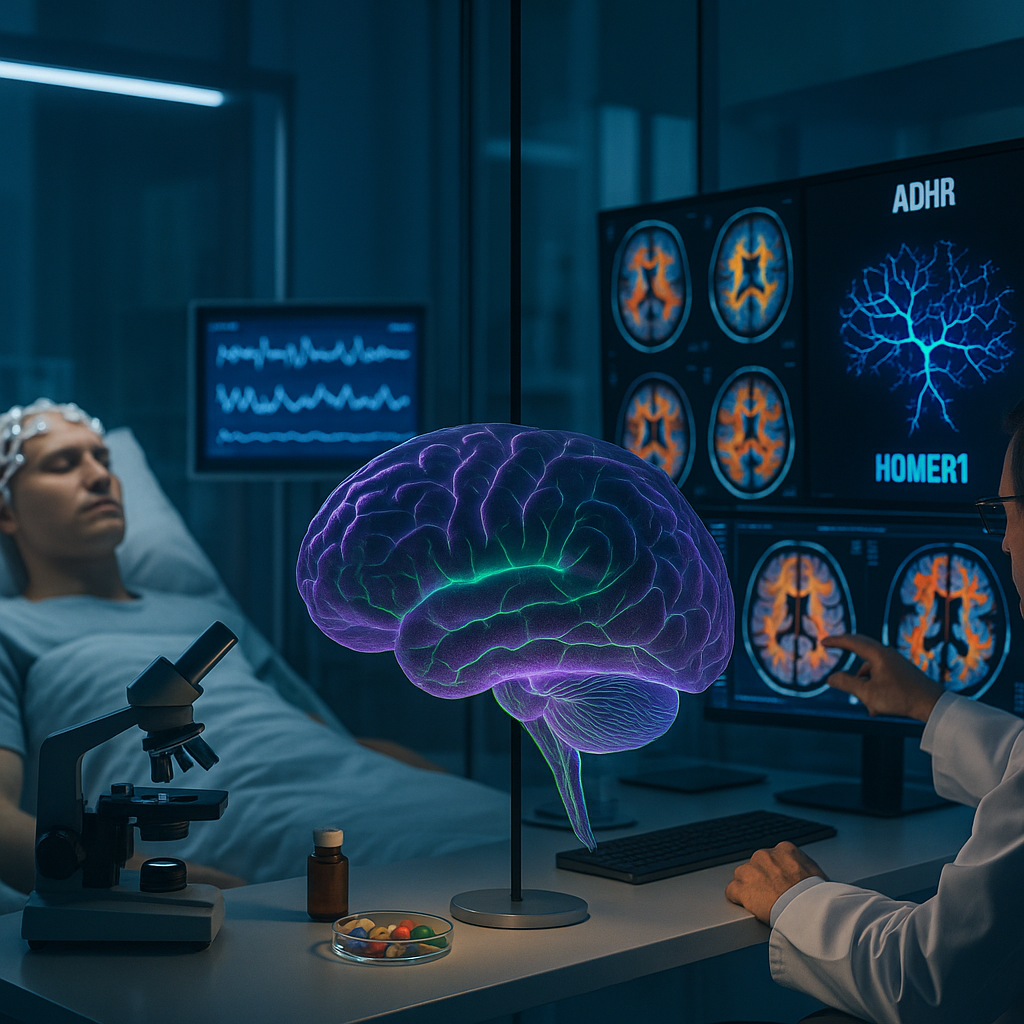
Researchers at Stanford University discovered that ADHD stimulant medications primarily replicate the brain’s sleep-recovery processes instead of directly enhancing focus. The study, published on 29 December 2025 in the Journal of Neuroscience, used advanced fMRI technology to monitor brain activity in 150 participants with ADHD over six months.
Lead researcher Dr. Maya Henderson stated that stimulants appear to activate the Homer1 protein pathway, which is typically engaged during deep sleep cycles. Henderson explained that these findings challenge the fundamental understanding of how these medications work.
This evidence suggests that sleep disruption may be a more central aspect of ADHD than previously recognized. It may also explain why stimulant effectiveness varies among patients with different sleep patterns. As a result, new treatment approaches that directly target sleep quality, rather than attention mechanisms alone, may emerge.
Implications for Treatment Approaches
The research team observed that participants with the most severe sleep disruptions showed the strongest response to stimulant medications, with a 68% improvement in attentional performance. Those with healthier sleep patterns demonstrated a 23% improvement from the same medications.
Dr. James Chen, a neuropsychiatrist at Columbia University who was not involved in the study, commented that the field has been viewing ADHD through the wrong perspective for decades. Chen noted this could explain why an estimated 30% of people with ADHD do not respond well to stimulants.
Medical associations have announced plans to review treatment protocols in response to these findings, with potential updates expected by mid-2026.
Also Today
Therapeutic Innovation
Non-Stimulant ADHD Medication Shows Promise
A novel non-stimulant ADHD medication that targets sleep architecture has shown promising results in Phase II clinical trials. Developed by Neurocognitive Therapeutics, the drug enhances slow-wave sleep quality without the cardiovascular side effects linked to traditional stimulants.
Preliminary data showed a 42% improvement in executive function scores among adult participants after eight weeks of treatment. Dr. Samantha Rodriguez, chief scientific officer at Neurocognitive Therapeutics, reported consistent effectiveness across different ADHD presentations.
The medication demonstrated a lower side effect profile compared to stimulants, with only 8% of participants reporting mild sleep onset delays. Full trial results will be published in January 2026 in the American Journal of Psychiatry.
Homer1-Targeted Therapy Development
Following the Stanford findings, three pharmaceutical companies have announced accelerated development of therapies that target the Homer1 protein pathway. These compounds aim to enhance the brain’s natural sleep-recovery mechanisms without increasing total sleep time.
Early animal studies suggest these treatments could benefit both ADHD and other conditions involving cognitive fatigue. Dr. Alex Petrov, neuropharmacologist at Meridian Therapeutics, explained that the Homer1 pathway appears to be a master regulator of cognitive recovery.
Researchers believe these targeted therapies could support the significant portion of ADHD patients who do not respond to current medications. Human trials are scheduled to begin in early 2026.
Technology
AI-Powered ADHD Management Apps Gain Traction
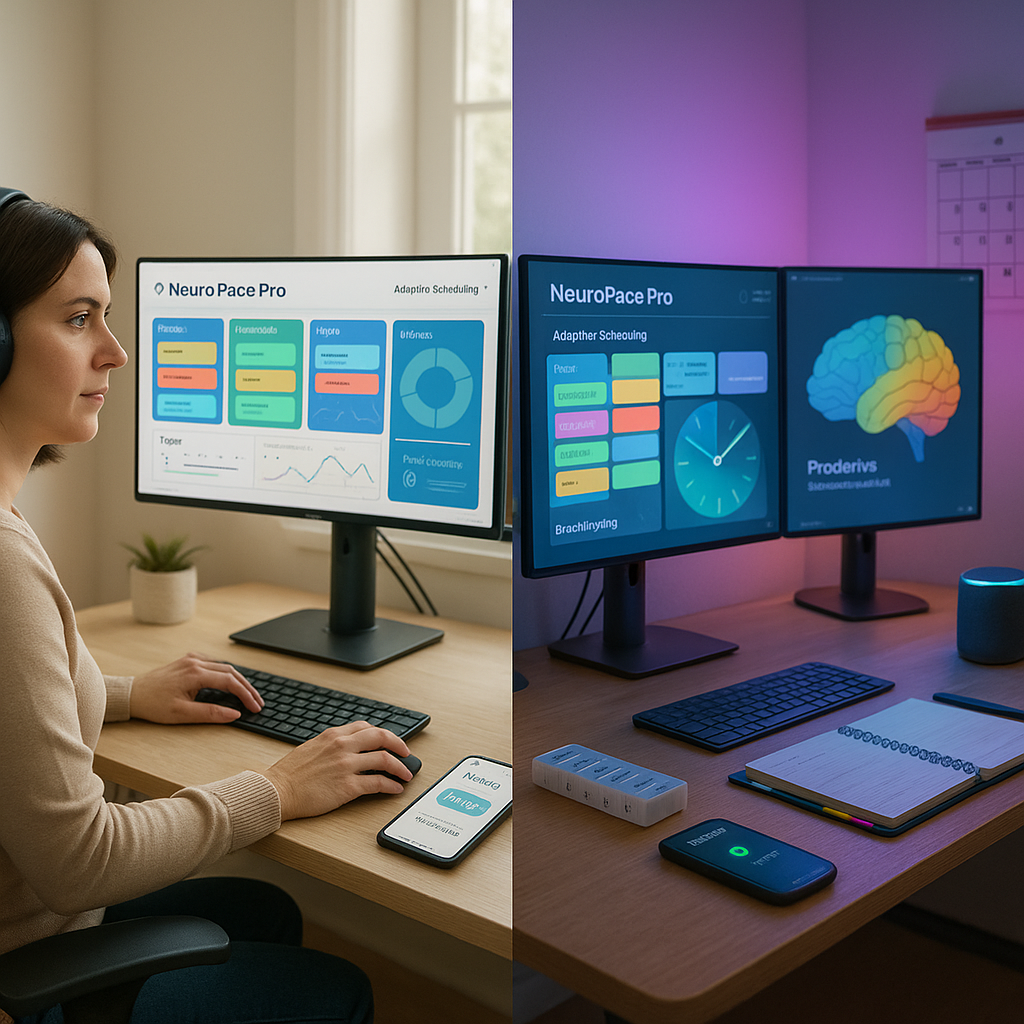
A new generation of AI-powered applications designed for ADHD management has seen rapid adoption, with over 1.2 million downloads reported across the top three platforms in the past quarter. These apps use personalized algorithms to adapt to individual executive function patterns.
FocusFlow, the market leader, reported a 37% improvement in task completion rates after three months of consistent usage. Maria Lopez, CEO of FocusFlow, stated the company leverages machine learning to identify when users enter hyperfocus states and when intervention is needed.
These applications incorporate sleep tracking and circadian rhythm optimization, reflecting research connecting ADHD symptoms with sleep quality. Many users report success with features that adjust daily schedules around personal energy levels, as opposed to conventional productivity patterns.
Adaptive Workspace Technologies for Neurodivergent Professionals
Technology companies including Microsoft and Adobe have introduced adaptive workspace features designed for neurodivergent professionals. These tools automatically adjust interface complexity, notification timing, and lighting recommendations in response to attention patterns.
Microsoft’s “Flow States” feature, integrated into its productivity suite, led to a 41% reduction in task-switching among ADHD users during beta testing. Alex Williams, head of accessibility innovation at Microsoft, explained the tools acknowledge that neurodivergent attention follows different patterns rather than being broken.
Environmental sensors in these technologies can detect cognitive fatigue and suggest breaks or modality switches as needed. Early corporate adopters report a 28% increase in self-reported job satisfaction among neurodivergent employees.
What to Watch
- January 15, 2026: Neurocognitive Therapeutics will publish complete Phase II results for its sleep-enhancing ADHD medication.
- February 3, 2026: International ADHD Conference in Toronto featuring a special symposium on Homer1 pathway research.
- March 2026: First human trials of Homer1-targeted therapies scheduled at multiple research centers.
- April 10, 2026: FDA advisory committee meeting to review potential updates to ADHD treatment guidelines based on recent sleep research.
Conclusion
Recent advances in ADHD research and management reveal that stimulant medications work by mimicking the effects of restful sleep. This finding shifts attention toward sleep quality as a critical treatment factor. Innovations in non-stimulant medications, AI tools, and workspace adaptation are expanding options for neurodivergent professionals. What to watch: Upcoming clinical trial results, major conference presentations, and regulatory meetings anticipated through April 2026 will shape the future direction of ADHD therapy guidelines.



Leave a Reply