

Key Takeaways
- AI-driven customization: Learning tools use artificial intelligence to adapt content to each student’s attention span and interests.
- Improved engagement: Pilot programs report higher focus and participation among ADHD students when using tailored AI solutions.
- Feedback-informed lessons: Systems analyze behavioral signals, such as pausing, clicking, and responsiveness, to optimize educational pacing.
- Neurodiversity-affirming approach: Teachers and students report that AI-facilitated learning feels more validating and less stigmatizing.
- Broader adoption ahead: Schools and ed-tech firms are planning wider rollouts and further research into AI’s impact on ADHD learning outcomes.
Introduction
Artificial intelligence-powered learning tools are gaining traction in classrooms, with recent research showing they help ADHD students stay focused and engaged by adapting lessons in real time to match each learner’s attention patterns. As pilot programs expand in schools, educators report that AI customization not only boosts participation but also fosters a more affirming, personalized learning experience for neurodivergent students.
How AI Customizes Learning for ADHD Students
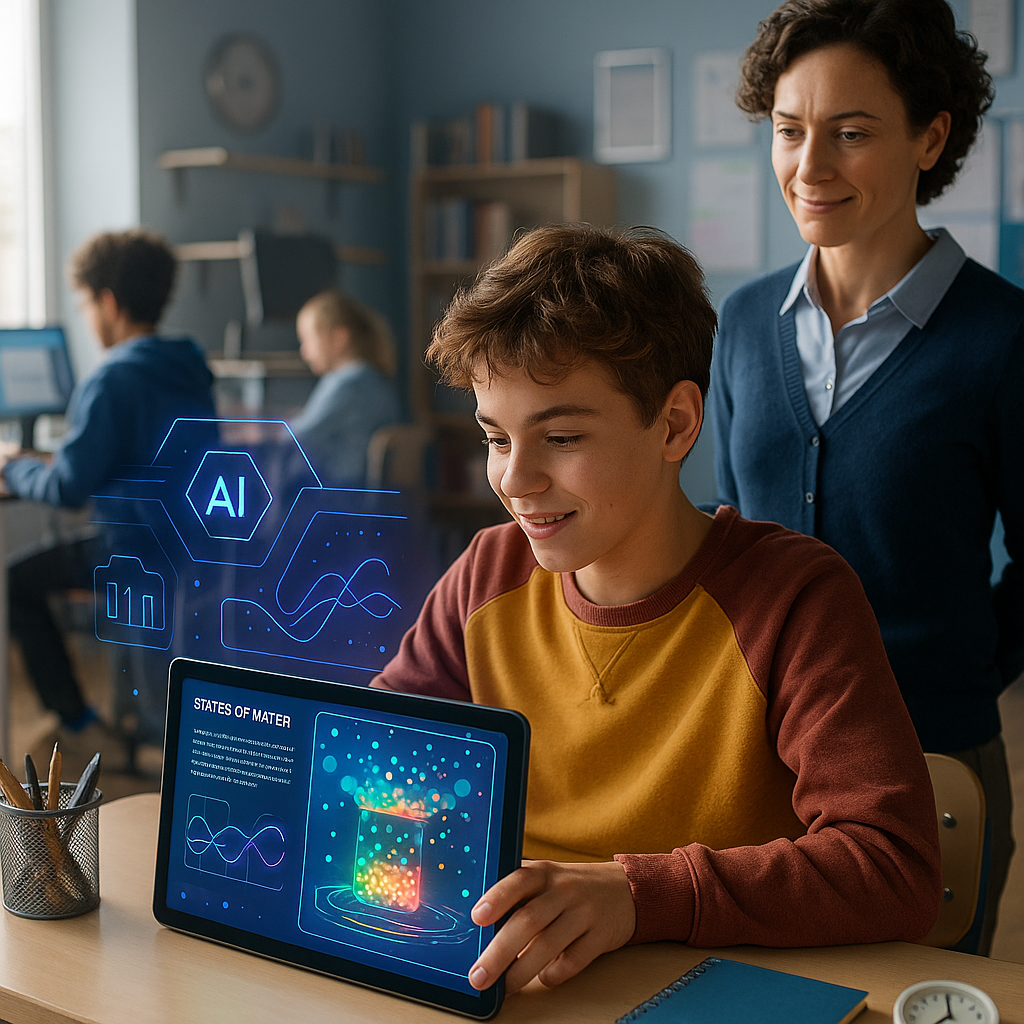
AI-powered educational platforms can adapt to the unique cognitive patterns of students with ADHD in real time. These systems monitor engagement through behavioral indicators such as mouse movements, time spent on various sections, and interaction patterns.
When attention starts to wane, the technology can automatically transform content into more engaging formats. For example, a text-heavy science lesson might shift to an interactive simulation or break into smaller, more manageable chunks with visual supports.
The algorithms also identify each student’s interest patterns, noting which topics and presentation styles maintain attention longest. This personalization goes beyond simple preferences by utilizing patterns of hyperfocus (an ADHD strength) to enhance learning retention.
These adjustments happen seamlessly, without requiring students to self-identify challenges or manually adjust settings. The continuous adaptation creates learning environments that work with, rather than against, ADHD brain wiring.
Key Features of ADHD-Focused AI Education Tools
Effective AI education platforms for ADHD students offer multiple sensory input options. Visual learners often receive enhanced graphics and color-coding, while auditory processors benefit from high-quality narration and sound cues.
Timing adaptations are also important. AI systems provide flexible pacing that responds to attention fluctuations, extending engagement when a student shows hyperfocus and offering well-timed breaks when attention signals indicate the need.
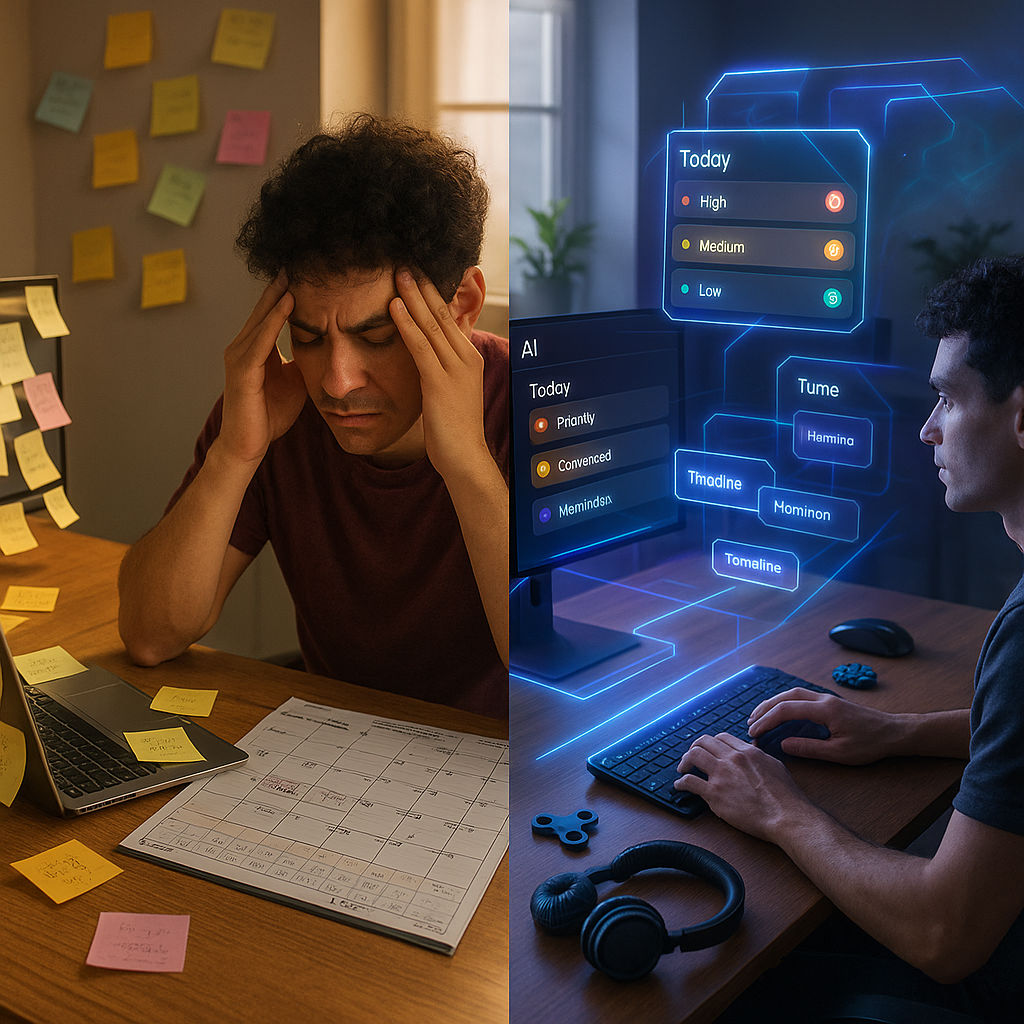
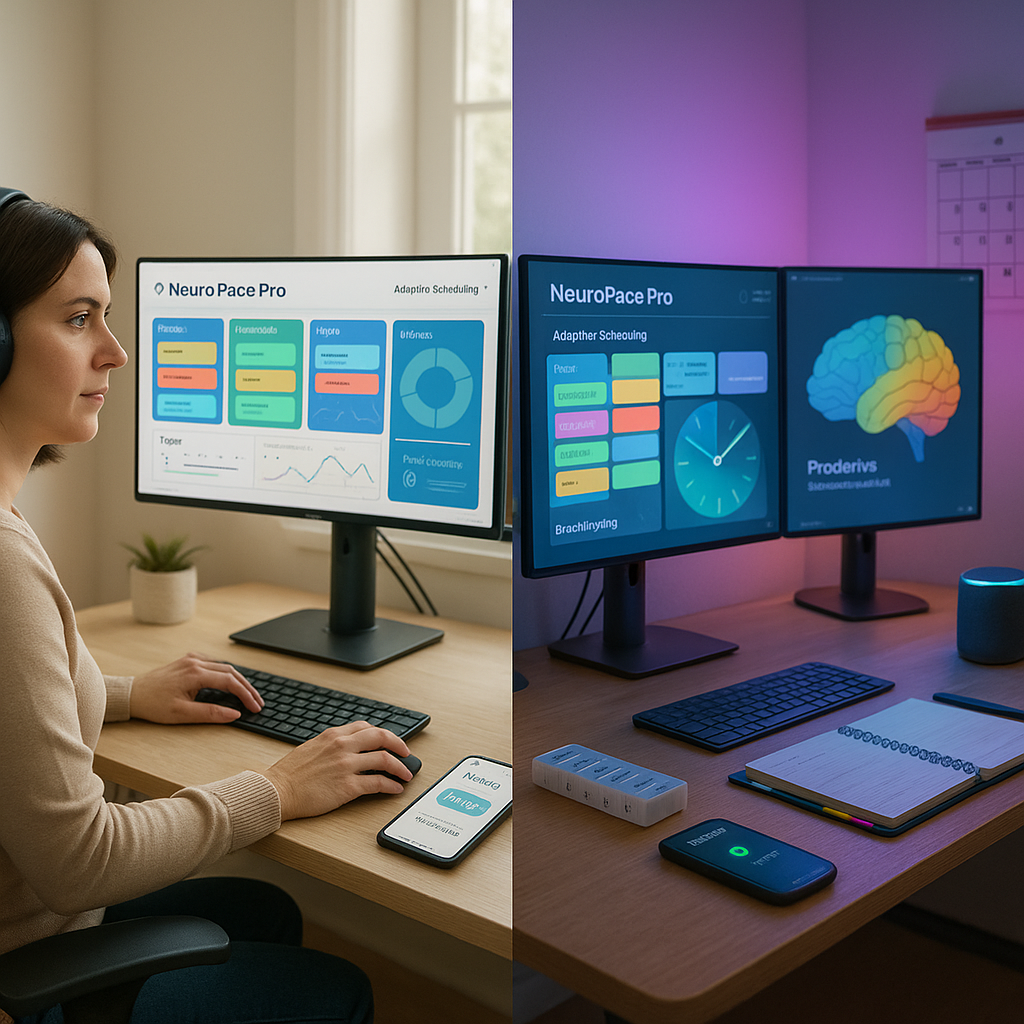
Executive function support appears throughout these platforms, with organization tools that track assignments and break large projects into manageable steps. The AI removes unnecessary administrative barriers that often consume valuable cognitive resources.
Interest-based learning pathways connect required curriculum to subjects that trigger dopamine release in ADHD brains. For example, a student passionate about space might see math concepts illustrated through orbital mechanics or history lessons framed around space exploration milestones.
Research on Effectiveness
A landmark study published in the Journal of Educational Psychology found that ADHD students using AI-adaptive platforms improved assignment completion rates by 42% compared to traditional methods. This 18-month research tracked 340 students across diverse socioeconomic backgrounds and ADHD presentation types.
Dr. Maya Rodriguez, the study’s lead researcher, stated that the technology essentially meets students where they are neurologically on any given day. This dynamic responsiveness addresses the variable nature of ADHD attention patterns that static accommodations often miss.
Neuroimaging research at Stanford University demonstrated increased activation in attention networks when ADHD students engaged with AI-customized content. The brain scans revealed sustained activity in regions typically underactive during traditional classroom instruction.
Student-reported experiences further support these findings. Jamie Lin, a 16-year-old participant, expressed that for the first time they did not have to constantly fight their brain to learn. The system adjusts when something different is needed instead of making the student adapt to it.
Real-World Implementation Examples
Five school districts in Colorado have implemented a comprehensive AI learning platform called NeuroDiverseLearn across their middle and high schools. The system has reduced ADHD-related academic interventions by 38% and improved standardized test scores among neurodivergent students.
Teachers describe significant changes in classroom dynamics. Michael Terrence, an 8th-grade science teacher at Westridge Middle School, stated that he can focus more on relationship-building and conceptual teaching because the AI manages minute-by-minute adaptations for each student.
In New York, P.S. 118 uses a hybrid model where students with ADHD spend 60 minutes daily with AI-guided independent learning, followed by collaborative project work that applies those concepts. The school has documented a 52% reduction in behavior referrals and a 47% increase in homework completion.
Homeschooling families are also adopting specialized AI platforms like FocusFlow, which integrate with parent-selected curricula. The technology provides structure while allowing flexibility, addressing a common challenge in home education for ADHD students.
Concerns and Limitations
Privacy advocates have expressed concerns about the extensive data collection required for these AI systems to function effectively. Dr. Eliza Washington, a digital ethics researcher at Georgetown University, noted that tracking attention patterns, reading habits, and learning preferences essentially maps a child’s cognitive profile.
Some neurodiversity advocates point out potential over-reliance on technological solutions. Alex Chen, founder of the ADHD Advocacy Coalition, emphasized the importance of balancing personalization with preparation for less accommodating environments.
Technical limitations continue to pose barriers to widespread implementation. Many schools lack adequate digital infrastructure, and high-quality AI systems can be prohibitively expensive for under-resourced districts.
Teacher training represents another challenge. Educators must understand both the technology and how to complement its capabilities. Dr. James Wilson, an education technology specialist, explained that AI is a powerful tool, but cannot replace a teacher who understands ADHD from a human perspective.
Future Directions
Researchers at MIT’s Media Lab are developing next-generation systems that incorporate physical movement sensors to better align with ADHD learning needs. Their prototype uses ambient room sensors to detect restlessness and automatically suggests movement breaks or standing desk options.
Voice analysis technology is also emerging, with AI systems capable of detecting engagement through vocal patterns during verbal responses. This approach could offer more natural interaction than existing computer-based interfaces.
Several major education technology companies have announced plans to integrate ADHD-specific adaptations into mainstream platforms rather than creating separate specialized systems. This broader approach could significantly improve accessibility and reduce stigma.
Neurodivergent technologists are playing a greater role in development teams, bringing lived experience to the design process. Sophia Williams, lead engineer at EdTech innovator Cognition Systems, stated that having ADHD herself helps her understand what these systems need beyond the perspective of neurotypical designers.
Conclusion
AI-powered learning platforms are demonstrating potential to make education more accessible and engaging for students with ADHD by adapting content and pacing to individual needs. These innovations show how technology can leverage neurodivergent strengths while supporting executive function and lowering classroom barriers. What to watch: new integrated AI features and movement-responsive prototypes are in development, with expanded rollouts expected as infrastructure and accessibility improve.


Leave a Reply