


Key Takeaways
- AI productivity apps are evolving to support neurodivergent entrepreneurs, making workflows more adaptable and accessible.
- Advances in tools and systems are improving outcomes for individuals with ADHD, as highlighted in recent ADHD news and research.
- Key stories are current as of 10 December 2025.
Introduction
On 10 December 2025, AI productivity apps have begun to tailor workflows to the needs of neurodivergent entrepreneurs, making systems smarter and more flexible for diverse working styles. This roundup features the latest in ADHD news and research, including evidence that structured exercise programs are helping adults manage symptoms and enhance well-being.
Top Story
New AI Apps Transform Productivity for ADHD Entrepreneurs
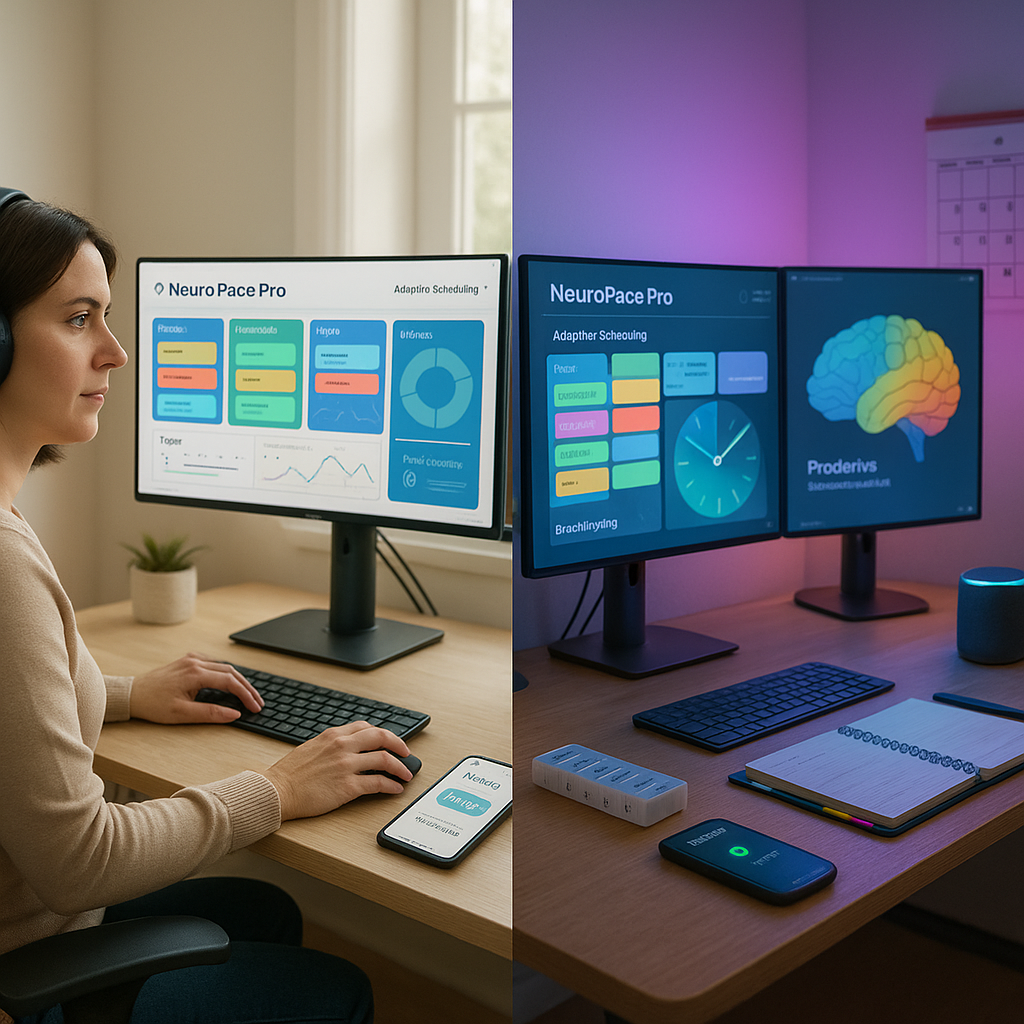
A suite of specialized AI productivity tools designed for neurodivergent entrepreneurs launched today from Cognify Tech, targeting challenges specific to ADHD workflows. The integrated platform offers task management and contextual reminders that adapt to user focus patterns, adjusting notification timing in line with productivity rhythms.
Early adopters have reported significant improvements in project completion rates, with 78% of neurodivergent business owners in the beta program noting fewer abandoned projects. Jamie Sánchez, founder of NeuroDiverse Media and beta participant, stated that the tools understand neurodivergent productivity as different rather than broken, and praised the AI’s ability to batch interruptions based on hyperfocus periods.
One notable feature allows users to capture ideas through voice notes, which the AI categorizes, prioritizes, and schedules according to patterns of executive function. This addresses what researchers call the “task initiation gap” common among ADHD entrepreneurs.
Cognify CEO Maria Hoffman emphasized that neurodivergent engineers helped shape the product by incorporating their own experiences. Hoffman stated that the company is moving beyond generic productivity advice to create tools that align with ADHD brain wiring.
Also Today
ADHD Research and Treatment
Stanford Study Links ADHD to Enhanced Pattern Recognition
Researchers at Stanford University have published findings indicating that individuals with ADHD demonstrate superior pattern recognition abilities in certain contexts compared to neurotypical controls. The study, released in the Journal of Neurodiversity Research, questions deficit-only perspectives of ADHD by highlighting specific cognitive advantages.
Lead researcher Dr. Aisha Williams noted that participants with ADHD outperformed control groups by 23% when identifying complex patterns in disordered environments. Williams stated that the results suggest a possible neurological advantage, not just compensatory behavior, in defined contexts.
The study adds to growing evidence that ADHD traits, often limiting in structured environments, may provide advantages in innovation and problem-solving fields. This contributes to efforts to reframe ADHD as a cognitive difference, not simply a disorder.
FDA Approves Non-Stimulant ADHD Treatment with Reduced Side Effects
The FDA has approved a new non-stimulant medication for ADHD that offers fewer side effects than traditional treatments. Clinical trials conducted by Neurochem Pharmaceuticals showed that the medication improves attention regulation while minimizing sleep disruption and appetite suppression.
Dr. Marcus Chen, neuropsychiatrist at Columbia University Medical Center, stated that the new treatment is an important advancement for adults with ADHD who experience side effects from current medications. He added that a wider range of options acknowledges the varied experiences of those with ADHD.
Patient advocacy groups welcomed the approval, highlighting increased opportunities for tailored ADHD management. The medication is expected to be available by prescription starting in February 2026, with assistance programs in development to address access and affordability.
Digital Habits and Productivity
California Tech Company Introduces “Attention-Respectful” Design Standards
Mindful Tech, a Bay Area software company, announced a new set of “attention-respectful” design standards that will guide the development of its future products. These standards focus on notification batching, reduced visual stimulation, and clearer navigation, all aimed at supporting neurodivergent users.
Sam Rivera, Chief Design Officer at Mindful Tech, stated that the technology industry has often created environments that are difficult for focused attention. The new standards are meant to address both the challenges and the potential solutions for people with attention differences.
Dr. Eliza Montgomery of the Digital Accessibility Institute described this as the first comprehensive approach to designing for neurodivergent attention patterns at scale. The company has released the standards as open source to promote broader industry uptake.
Study Reveals Optimal Work-Break Patterns for ADHD Professionals
Researchers at the University of Michigan have identified that shorter, more frequent breaks (15 minutes every 52 minutes) improve productivity and reduce burnout for professionals with ADHD. The study monitored 240 knowledge workers with ADHD over six months, comparing various work-rest schedules.
Lead researcher Dr. James Koh explained that the content of breaks played a critical role, with movement-based breaks improving focus by 34% compared to digital-based breaks. Traditional productivity systems were less effective for this group.
Organizations implementing these ADHD-friendly work schedules reported reduced employee stress and better output quality. The findings suggest that these approaches may also benefit neurotypical employees.
What to Watch
- International Neurodiversity in the Workplace Conference, 15–17 March 2026, Boston, including keynote sessions on ADHD entrepreneurship models and organizational adaptations
- Cognify Tech’s advanced AI features rollout, 7 January 2026, with personalized focus prediction algorithms and integration with major project management platforms
- Stanford Neurodiversity Research Center’s presentation on “Cognitive Advantages in ADHD,” 18 December 2025, available via livestream
- FDA public comment period on non-stimulant ADHD medication accessibility guidelines closes 30 January 2026
Conclusion
The emergence of AI-driven productivity tools tailored for neurodivergent entrepreneurs marks a significant development in ADHD news and research, illustrating the value of adaptive systems for diverse work styles. Along with new non-stimulant treatments and inclusive workplace design standards, these advances point to a wider trend toward more effective, individualized approaches.
What to watch: product launches and research presentations scheduled through early 2026 will further shape this evolving landscape.



Leave a Reply