

Key Takeaways
- Founder’s journey shapes product: The app’s creator rebuilt life and business by leveraging ADHD strengths after the pandemic, inspiring the platform’s core philosophy.
- AI tailored for neurodiversity: Custom assistants and automation tools are designed to accommodate diverse thought patterns and overcome common productivity barriers.
- Empowerment over fixing: The app reframes ADHD as a potential advantage, moving away from one-size-fits-all productivity and medicalized language.
- For individuals and teams: Solutions scale from solo users to organizations seeking ADHD-friendly, tech-driven workflows.
- Broader community impact: Content and consulting aim to reduce isolation, foster practical creativity, and prove that unique minds can lead in innovation.
- Expansion roadmap: The team plans to roll out additional features and partnerships in the coming months, including business automation suites and community-driven resources.
Introduction
A new AI-powered productivity app launched this week is aiming to redefine how neurodivergent professionals, especially those with ADHD, approach work and creativity. The platform offers personalized tools rooted in lived experience, helping users turn unique traits into advantages. Founded by an entrepreneur who rebuilt life and business by embracing neurodivergence, the app promises burnout-free growth for freelancers and teams. There’s a broader community impact and clear expansion plans as well.
How the App Works with Neurodivergent Thinking Styles
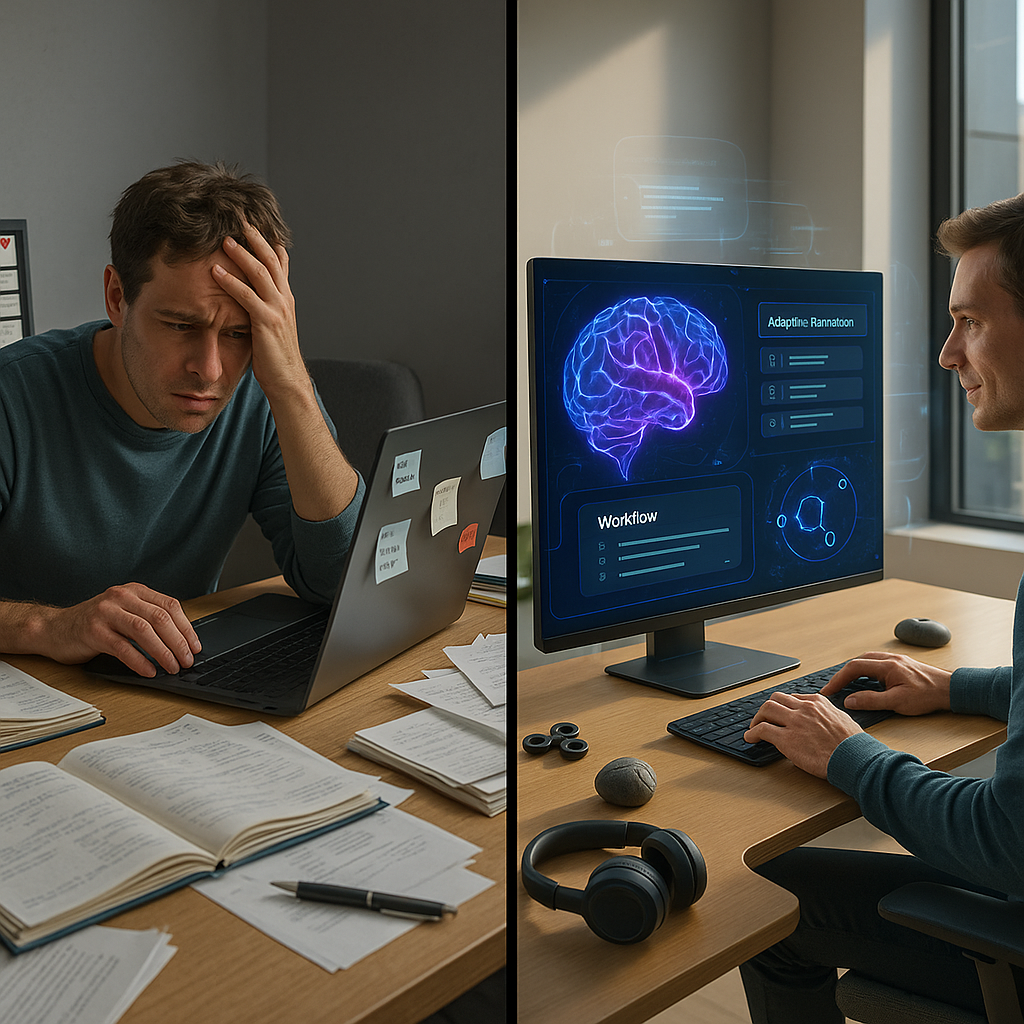
This AI-powered platform uses machine learning to adapt to and complement different neurodivergent thinking patterns; it does not force users into neurotypical workflows. An initial assessment identifies each user’s processing style, executive function strengths, and potential challenge areas.
Based on this input, the app creates a personalized interface that aligns with the user’s natural information processing. ADHD users in particular benefit from flexible systems that accommodate non-linear thinking and fluctuating energy levels throughout the day.
Maya Chen, the app’s founder, shared that the platform is built on a fundamental belief: neurodivergent minds are not broken, but simply operate on different (and often more creative) systems. The AI learns from users’ work rhythms instead of imposing arbitrary structures.
The platform’s algorithms recognize when users enter hyperfocus and minimize distractions during these periods. They also provide gentle redirection when attention starts to drift during important tasks, helping users maintain momentum.
Key Features of the AI Productivity App
The app includes custom AI assistants specifically designed to work with ADHD thought patterns. Each assistant can be configured for varying support, from detailed task breakdowns to quick idea capture during creative bursts.
Smart automation minimizes task-switching by managing routine administrative tasks that so often create bottlenecks for neurodivergent professionals. The system can sort emails, schedule tasks based on energy patterns, and convert vague ideas into actionable project steps.
Real-time adaptive reminders respond to user behavior instead of sending static notifications. For instance, if the system detects deep focus on a priority task, it holds non-urgent reminders until a natural transition occurs.
Beta tester Eli Torres, a graphic designer, said this platform differs greatly from traditional productivity tools because it supports working differently, without guilt.
The Founder’s Neurodivergent Journey
Maya Chen discovered she had ADHD at age 32 after years of creating successful but ultimately unsustainable work systems that led to burnout. The diagnosis came during the pandemic when her established coping mechanisms failed under remote work conditions.
Chen explained that she had built coping structures that worked only in specific environments but were neither portable nor adaptable. When these structures failed, she recognized the energy she spent trying to work against her brain’s natural tendencies.
After her diagnosis, Chen researched how other neurodivergent professionals navigated similar challenges. She found many were inventing their own tools due to the lack of mainstream solutions. The idea for the app grew from this research and Chen’s background in AI development. She now leads a team where over 70% of members identify as neurodivergent.
Early User Experiences and Results
Early adopters report significant improvements in productivity and well-being. Users cite reduced cognitive load from no longer needing to adapt their thinking to inflexible systems.
Jordan Williams, a marketing consultant with ADHD and dyslexia, noted a 40% increase in completed projects after three months of use. Williams described previously being stuck in planning or scattering energy across too many unfinished tasks. Now, the app helps harness enthusiasm and provide supportive structure.
Professional teams using the platform report better collaboration between neurodivergent and neurotypical members. The app’s translation features help bridge communication gaps that often appear in mixed-neurotype workplaces.
Beta testing data indicates users spend, on average, 62% less time on task management, freeing mental resources for creative and strategic work. This improvement is particularly notable in creative fields, where administrative tasks can be especially taxing.
How the Technology Differs from Standard Productivity Tools
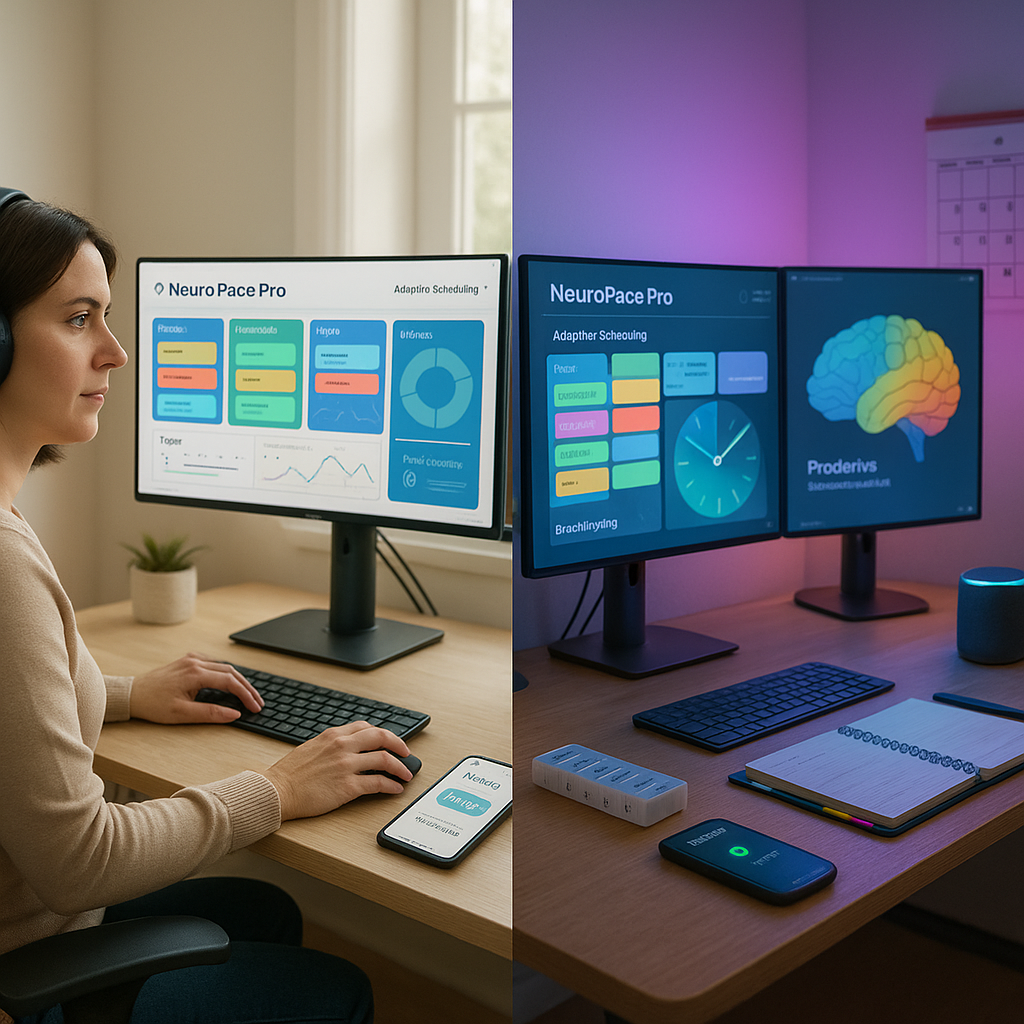
Unlike conventional productivity apps that prioritize organizing tasks into rigid frameworks, this platform emphasizes flexibility and adaptation. The AI continually refines its understanding of each user’s optimal work conditions and adjusts its approach.
The app intentionally avoids common pitfalls such as overwhelming dashboards, excessive notifications, and complicated setup. Its interface is clean and customizable, designed to minimize visual clutter.
Dr. Nadia Patel, a neurodiversity consultant involved in development, explained that traditional tools are often built for neurotypical executive functioning and assume abilities such as consistent task prioritization and sequential processing. These do not always fit neurodivergent work styles.
The platform also includes body doubling features, simulating the accountability of working alongside someone else. This method is something many ADHD individuals find helpful for maintaining focus.
Pricing and Accessibility Considerations
The app uses a tiered subscription model starting at $14.99 per month for individuals, with options for teams and enterprises. A scholarship program offers free access to unemployed neurodivergent individuals seeking work.
Each subscription includes all core features, so essential tools aren’t hidden behind higher paywalls. This decision reflects feedback about accessibility challenges in other platforms.
Maya Chen stated that the company is committed to making this technology available to those who need it most, emphasizing financial accessibility due to employment challenges common in the neurodivergent community.
Discounted rates are also available for educational institutions and non-profits serving neurodivergent populations. A portion of all revenue funds ongoing research into workplace technologies that support neurodivergent users.
Conclusion
This AI productivity app illustrates how flexible, tailored technology can reduce friction and help neurodivergent professionals leverage their strengths. Its adaptive approach supports diverse thinking styles, transforming difference into a tangible advantage for both individuals and teams. What to watch: forthcoming longitudinal studies and expanded organizational partnerships aiming to measure long-term benefits across varied workforces.



Leave a Reply