

Key Takeaways
-
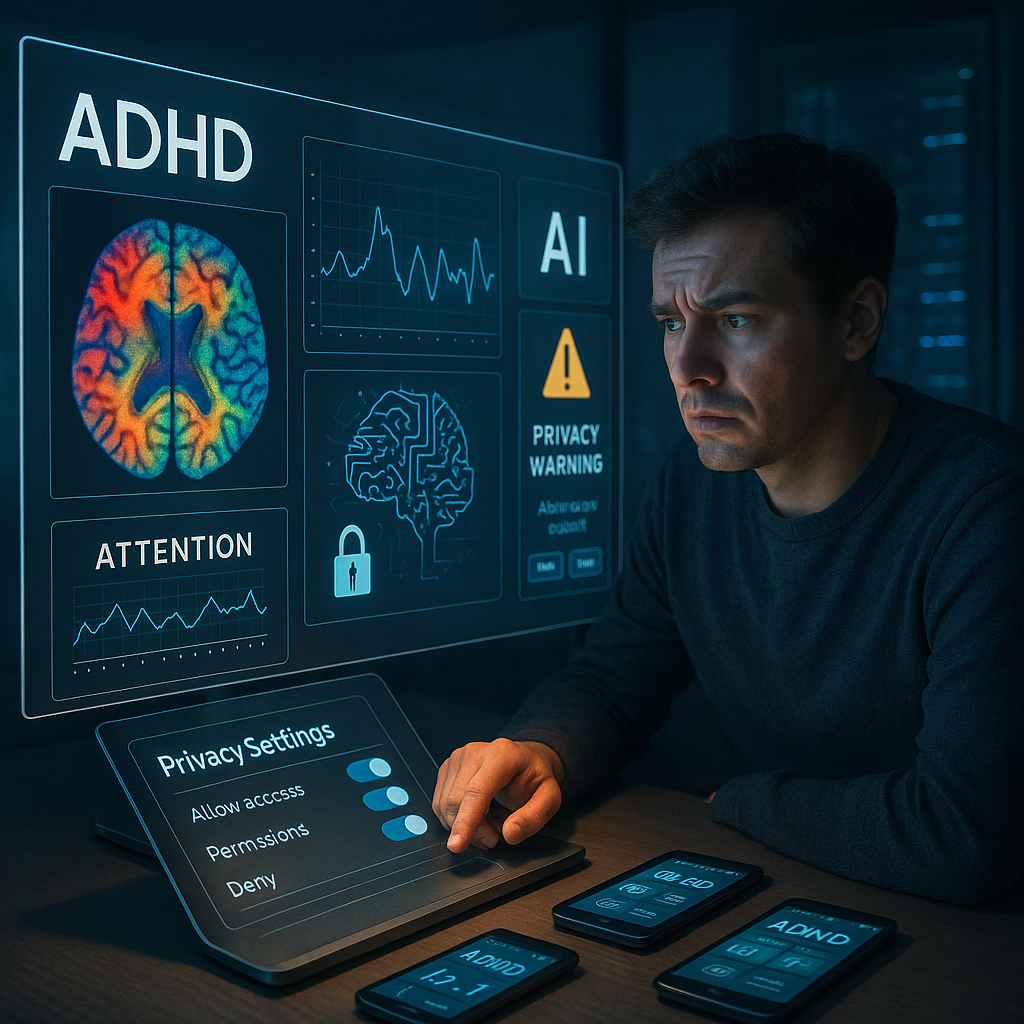
Demand transparency in AI data collection: A significant portion of AI tools designed to support those with ADHD gather highly personal and behavioral health data. Users should be fully informed about what is collected, how it is used, and where it is stored, ensuring no element of the process remains hidden or ambiguous.
-
Challenge the stigma of disclosure in educational AI: AI-based learning platforms often require students to disclose their ADHD status to access personalized accommodations. This practice introduces privacy dilemmas outside clinical settings, putting students at risk of unnecessary exposure and stigma.
-
Insist on robust consent protocols: Ethical AI systems must move beyond vague terms of service by offering ongoing, explicit consent options tailored to the needs of neurodivergent users, especially when sensitive data is involved.
-
Assess HIPAA compliance and legal protections: Many AI tools utilized in mental health, education, or daily management are not covered by HIPAA or similar protections. This lack of coverage leaves gaps in confidentiality and increases exposure for ADHD-related data.
-
Prioritize user control over data sharing: Individuals with ADHD should have granular options for managing how their diagnosis and behavioral data are shared with AI applications, both now and as these systems evolve in the future.
-
Scrutinize AI’s role in behavioral profiling: AI models used for ADHD assessment or recommendation may inadvertently profile or reinforce biases against neurodivergent patterns. This risk impacts not just privacy, but also fair access and equitable treatment.
-
Promote inclusive, ethical frameworks in AI design: Developers should center neurodivergent voices in their processes, designing systems that accommodate a spectrum of needs and actively address risks unique to ADHD and related conditions.
-
Proactively protect your digital identity: Individuals can take charge by reviewing app permissions, utilizing pseudonymized accounts, and requesting deletion of stored data where possible to protect sensitive ADHD information from unwanted exposure.
By understanding the nuanced challenges that arise where AI ethics and ADHD data privacy meet, you place yourself in a position of strength. You become more capable of making empowered choices, advocating for safer technologies, and demanding systems that respect both your identity and your privacy. The following sections will dissect current shortcomings and provide actionable pathways to protect neurodivergent users as AI continues to reshape the landscape.
Introduction
With every AI-powered tool supporting ADHD diagnosis, therapy, or learning, an intricate web of highly personal data is quietly woven. This data often extends beyond what is shared with a doctor or teacher, painting a comprehensive digital portrait of the neurodivergent mind. The question becomes: how much real control do individuals have over their most sensitive information when interacting with these increasingly intelligent systems?
Today, safeguarding ADHD data requires more than ticking “I agree” on a terms-of-service agreement or trusting that an app labeled “secure” lives up to its promise. As AI solutions evolve, so do privacy risks, manifested as granular behavioral profiling, unclear consent structures, and inconsistent legal protections. Gaining awareness of these vulnerabilities is the cornerstone of building trust between user and technology, and for advocating systems that truly honor the neurodivergent experience.
Let’s uncover the pressing ethical hurdles at this crossroads between technology, neurodivergence, and privacy. We’ll also reveal practical ways neurodivergent individuals, their allies, and creators of these systems can work together to ensure safety, agency, and empowerment in the age of AI.
The Current Landscape of AI and ADHD Data Collection
The fusion of artificial intelligence with ADHD management has sparked a new frontier. It’s marked by both unique promise and significant privacy considerations. AI now powers tools for diagnosis, therapy, academic support, workplace productivity, and even self-reflection, pulling in immense quantities of sensitive neurodivergent data. This information includes focus patterns, time management habits, medication responses, and behavioral trends distinct to ADHD.
Studies published by the Journal of Medical Internet Research reveal that about 68% of AI-enabled ADHD applications collect detailed, personally identifiable information in tandem with condition-specific data. These profiles can reveal not just a diagnosis but the underlying cognitive and behavioral fabric unique to each individual. Often, the depth of data collection far surpasses what users anticipate or what would be gathered in a traditional healthcare or educational setting.
The boom is considerable. With the market for AI-powered ADHD tools growing by nearly 50% per year since 2019, the majority of options now fall under standard consumer data policies instead of strong healthcare-grade safeguards. The consequences are profound. According to a 2022 Digital Privacy Coalition analysis, only 23% of tools advertised to ADHD users provide clear disclosures regarding how neurodivergent data is handled or protected.
The education sector adds even more complexity. Increasingly, schools and colleges implement AI-driven monitoring for granting accommodations, tracking attentiveness, and flagging learning trends. Students, often required to interact with these platforms to receive support, must weigh the necessity of tailored resources against the demand for deeply personal disclosures. This leads to a stark “privacy-for-access” trade-off seldom encountered in clinical environments.
Underlying these developments are broad variations in how data is processed and stored. Some solutions rely on cloud processing, sending users’ raw behavioral data to remote servers. Others utilize edge computing, processing sensitive data directly on an individual’s device, which may offer improved privacy and security. Grasping these technical distinctions is vital for users seeking to assess real risks and for professionals advocating better safeguards.
Unique Vulnerabilities and Ethical Concerns for ADHD Data
Unlike generic personal information, ADHD-related data exposes specific vulnerabilities tied directly to a person’s cognition, identity, and life opportunities. The stakes are higher. Misuse or misinterpretation can lead to discrimination, unintended profiling, and stigmatization seldom associated with more commonplace datasets. Research from Nature Digital Medicine highlights that ADHD data can illuminate core cognitive processing patterns, details as unique and sensitive as a fingerprint.
Discrimination and Algorithmic Bias
AI-driven platforms frequently use ADHD data to drive decisions in education, hiring, insurance, and resource allocation. This comes with hidden risks. For example, a 2023 AI Ethics Institute report chronicled automated hiring systems where patterns associated with ADHD (such as variable attentional rhythms) resulted in lower employability evaluations, even for candidates whose skills matched those of neurotypical peers.
At a technical level, most machine learning models have been trained largely on neurotypical populations. As a result, behaviors typical of ADHD may be treated as anomalies, flagged as problems, or even systematically devalued. This foundational flaw amplifies risk, as neurodivergent users are judged against benchmarks that simply do not account for their strengths and differences.
Data Exploitation and Secondary Usage
The commercial appetite for ADHD-related data is broad and growing. Beyond supporting the user, this information is ripe for repurposing:
- Pharmaceutical companies may use medication and symptom data for targeted advertising.
- Edtech firms leverage learning and focus patterns for upselling products or services tailored to perceived weaknesses.
- Employers integrate productivity metrics into workplace monitoring tools, sometimes to the detriment of neurodivergent employees.
- Insurers may incorporate impulsivity or attentional data into risk algorithms that affect premiums or eligibility.
This is often enabled by data brokers who aggregate, anonymize (sometimes inadequately), and resell information, creating complex networks that make tracing accountability exceedingly difficult. Data is shared across apps, devices, and cloud systems, far removed from the original context in which it was provided.
Informed Consent Challenges
The intricacy of both AI systems and neurodivergent cognition often renders true informed consent elusive. Recent findings from the Journal of Technology Ethics show that nearly four out of five ADHD-related AI applications use privacy documents written at a level beyond the average user’s comprehension. For individuals with executive function challenges, the maze of legalese presents an extra barrier.
Consent is often binary. Accept all data uses or decline the feature entirely. Granular options, allowing users to control therapeutic use while declining profiling or third-party analysis, are rare. This lack of specificity can force neurodivergent individuals to relinquish more information than necessary just to access essential support, reducing agency and increasing risk.
The tension intensifies in therapeutic and educational scenarios. Tools offering cognitive behavioral therapy or adaptive learning require deep insight into user habits and neural patterns, but this information, once collected, is often vulnerable to misuse unless strict technical and ethical boundaries are established and maintained.
Regulatory Frameworks and Compliance Considerations
The management of ADHD-related data falls across several overlapping legal regimes. Developers, clinicians, educators, and individuals must navigate a patchwork of protections based on location, context, and system design.
HIPAA and Clinical Data Protection
HIPAA (Health Insurance Portability and Accountability Act) represents the gold standard for protecting ADHD data within clinical settings. To comply, systems must:
- Encrypt all data transmissions (often using AES-256 standards).
- Enforce strong access controls with multi-factor authentication.
- Maintain audit trails for every data access or modification event.
- Establish formal agreements covering third-party data handling.
- Notify affected users rapidly in the case of data breaches.
However, not all tools are covered. Only software marketed explicitly for medical therapy or diagnosis by healthcare entities is bound by HIPAA. Most ADHD apps, wellness trackers, and educational platforms exist outside this jurisdiction, making them less accountable under strict healthcare privacy rules.
GDPR and International Data Standards
For Europeans and global users, the GDPR (General Data Protection Regulation) applies more broadly, classifying health and biometric data as “special category” and requiring:
- Explicit, informed user consent for each type of data processing.
- User rights to opt out of algorithmic decisions shaped by their ADHD data.
- Data portability, so users can take their information should they switch providers.
- Purpose limitation to prevent data reuse for unrelated commercial applications.
- The right for users to have their data deleted entirely on request.
These protections, when implemented rigorously, provide neurodivergent individuals with greater leverage over how their data is collected, stored, and monetized.
FDA Oversight of AI-Driven ADHD Tools
The U.S. FDA is increasingly active in regulating AI software for neurological and behavioral health. Platforms that market themselves as clinical decision-support tools for ADHD must address:
- Validation using diverse neurodivergent populations to minimize bias.
- Transparency regarding the source and handling methods of sensitive information.
- Evidence of safety, efficacy, and equitable impact across ADHD subtypes.
- Processes for monitoring and responding to real-world privacy incidents.
- Quality controls that document both technical and ethical safeguards.
Despite this, the majority of ADHD-focused apps and platforms have not sought or earned FDA clearance, creating a mismatch between regulatory rigor and widespread use.
FERPA and Educational Data Protection
FERPA (Family Educational Rights and Privacy Act) governs ADHD-related data within U.S. educational institutions. It compels consent from parents or guardians for sharing identifiable student data, but several exceptions apply:
- Broad definitions of “school officials” enable extensive internal data sharing.
- Directory information loopholes allow certain disclosures without notice or consent.
- Determining what constitutes a “legitimate educational interest” is often left to each institution, reducing clarity and consistency.
- Enforcement is less potent compared to HIPAA or GDPR, weakening protections further when AI is deployed in classrooms or online learning environments.
Institutions and edtech platforms must balance these rules with Americans with Disabilities Act obligations to ensure equal access, often resulting in a challenging legal and ethical balancing act.
Technical Safeguards and Privacy-Enhancing Technologies
Securing ADHD data demands targeted technical strategies that both reduce risk and preserve the useful, supportive features of AI tools. Several privacy-enhancing technologies (PETs) should be central to this process.
Encryption and Secure Storage Protocols
At the heart of strong data protection is robust encryption, both for data in transit and at rest. Tools handling ADHD-related data should:
- Encrypt all data transmissions using industry standards.
- Store behavioral and diagnostic data on secure servers with advanced intrusion detection systems.
- Isolate identifying information from usage data to limit reidentification risks.
Regular security audits and penetration tests add further reassurance, uncovering vulnerabilities before malicious actors can exploit them.
Advanced Access Controls and User Dashboards
Effective systems empower users to dictate who can view, share, or update their data. Granular permissions, such as separating therapeutic insights from data used for algorithm training or product improvements, give neurodivergent individuals meaningful control.
User-friendly dashboards that enable easy review, export, or deletion of stored data are equally important, aligning digital experiences with the executive function needs of the ADHD community.
Privacy by Design and Differential Privacy
Developers should embed privacy protection throughout the entire product lifecycle, not just as an afterthought. By minimizing data collection to what is strictly necessary and applying anonymization or differential privacy techniques, the risk of secondary misuse or unwanted exposure can be reduced without sacrificing the effectiveness of AI features.
These approaches also make it easier to comply with global regulations and improve user trust, particularly among neurodivergent individuals for whom privacy concerns are heightened.
Application Across Industries
While much discussion centers around healthcare and education, these strategies are equally vital in other fields. For example:
- Finance: AI-driven personal finance tools tailored for neurodivergent users should anonymize spending and behavioral data, avoid sharing with third parties, and provide instant user controls for data deletion.
- Workplace Productivity Platforms: Tools that track time or attention to help ADHD professionals manage tasks must clarify data use policies, enable opt-in consent for productivity analytics, and resist employer requests for intrusive monitoring.
- Consumer Technology: Smart home devices or wellness apps designed for neurodivergent households must respect household-level privacy, allow easy opt-outs, and limit commercial repurposing of attention or routine data.
Conclusion
The convergence of artificial intelligence and ADHD management brings both unprecedented opportunity and critical urgency to the conversation around data ethics, user control, and neurodivergent empowerment. As these tools gather comprehensive behavioral and cognitive profiles, the risks tied to bias, discrimination, and commercial exploitation move beyond the theoretical and into the everyday realities of people striving to live and work on their terms.
Fragmented regulations—whether HIPAA for clinical data, FERPA in schools, FDA reviews for medical-grade tools, or GDPR across international borders—offer only partial answers, often leaving consumer-facing technologies outside robust regulatory reach. The result is a landscape where neurodivergent individuals must navigate complex, sometimes invisible risks, while demanding resources that honor their privacy and dignity.
Looking forward, the path to safer and more empowering AI lies in a new paradigm. This new approach demands both technological excellence and deep ethical consideration. For neurodivergent professionals, allies, and advocates, the challenge is to push for:
- Transparent, ongoing consent that matches the cognitive needs and realities of ADHD users.
- Technical safeguards and privacy by design that preemptively address risks before harm is done.
- Systems built with (not just for) neurodivergent communities, ensuring every advancement centers lived experience and authentic agency.
In a world where our data tells the story of who we are, the next era will belong to those who refuse to accept privacy trade-offs as the cost of progress. Instead, future leaders will set new standards for transparency, inclusivity, and adaptive innovation. The real mark of success will be in turning technology from a source of vulnerability into a powerful amplifier of neurodivergent brilliance. For every ADHD mind, this means embracing the idea that we are not broken, but brilliant. The question isn’t whether you’ll adapt to this new digital landscape, but whether you’ll help define it.



Leave a Reply