

Key Takeaways
- ADHD rarely exists in a vacuum. Many individuals living with ADHD also experience overlapping conditions such as anxiety, autistic traits, and sleep disorders. Understanding these connections is essential for developing practical solutions that truly address the reality of neurodivergent experience. The insights below highlight how these challenges intersect and what these intersections mean for those navigating them.
- Anxiety amplifies ADHD challenges. Anxiety frequently co-exists with ADHD, intensifying symptoms like restlessness, indecision, and overwhelm, and making it significantly harder to focus and self-regulate.
- Autism and ADHD: distinct yet deeply intertwined. Many people experience both autistic traits and ADHD, which can lead to unique strengths but also complex struggles, particularly around sensory overload, the need for routine, and reading social cues.
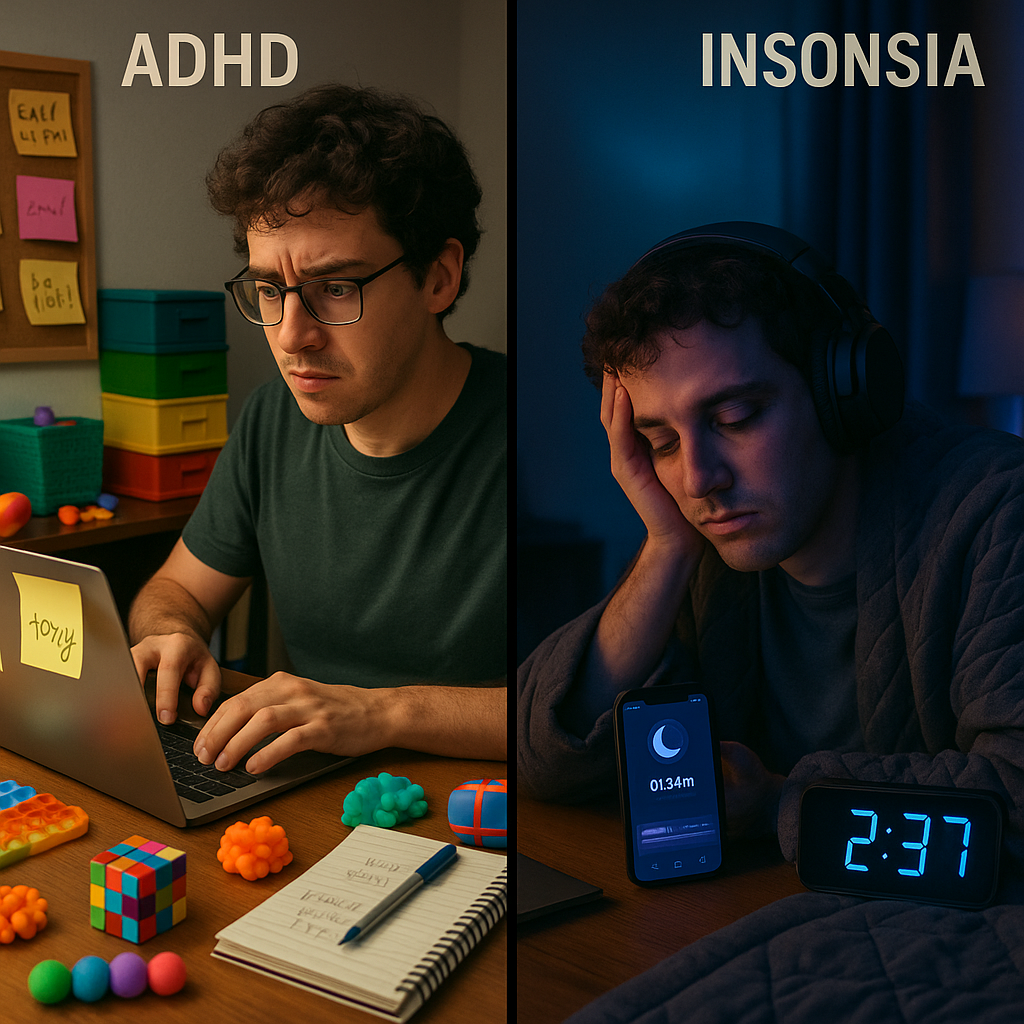
- Sleep struggles aren’t just “a side effect.” Sleep disorders (including insomnia, delayed sleep phase, and restless sleep) interact closely with ADHD and anxiety. These conditions reinforce each other, creating feedback loops that worsen attention, mood, and overall function.
- Comorbidity complicates diagnosis and treatment. Overlapping conditions can both mask and mimic one another, making accurate diagnosis and effective, individualized support that much more vital.
- One-size-fits-all strategies don’t work. Effective solutions demand customization. Understanding your personal pattern of ADHD, anxiety, autistic traits, and sleep issues is key to creating tools and strategies that truly support your daily life.
- Holistic support unlocks neurodivergent strengths. By recognizing and addressing comorbidity, people gain compassionate self-understanding and develop systems that foster both symptom management and the confidence to tap into their creative potential.
By unpacking the overlap between ADHD, anxiety, autism, and sleep disorders, this article creates a foundation for better self-advocacy and more empathetic, effective approaches to well-being. With this perspective, we can move forward and explore actionable tools that honor the genuine complexity and brilliance of neurodivergent minds.
Introduction
ADHD almost never exists alone. For many, everyday life is shaped by a mix of interconnected challenges: anxiety that turns up the volume on racing thoughts, autistic traits that influence routines and social understanding, and sleep disturbances that sabotage focus before the day has even begun. This web of ADHD comorbidity is not a medical footnote. It forms the central puzzle of life for neurodivergent individuals.
Grasping how anxiety, autism, and sleep disorders intersect with ADHD is the first step to finding real, workable solutions. As you reveal how these threads intertwine (sometimes magnifying struggles, sometimes unveiling distinctive strengths), you empower yourself to build support systems that genuinely fit. With this integrated lens, let’s explore how to break beyond generic advice and move toward strategies as unique as the brains they’re designed for.
Understanding ADHD Comorbidity
ADHD often arrives with company. Research shows that as many as 80% of individuals with ADHD have at least one additional diagnosis or overlapping challenge, with many juggling several comorbidities at once. This overlap is not random. Instead, it reflects shared neurobiological pathways, common genetic influences, and environmental factors that entangle these conditions in complex ways.
What Exactly Is Comorbidity?
Comorbidity is the coexistence of two or more distinct health conditions within the same individual. In the context of ADHD, comorbid conditions are not simply extensions or minor symptoms; they are substantial, independent challenges that directly shape how ADHD presents itself in daily life.
The data underscores this reality:
- Approximately 50% of children and 70% of adults with ADHD also have an anxiety disorder.
- About 30-50% of individuals diagnosed with autism also meet criteria for ADHD.
- Sleep disturbances affect up to 75% of those with ADHD.
- Other frequent comorbidities include depression (up to 50%), learning disabilities (25-40%), and substance use disorders (15-25% in adults).
Why Comorbidity Matters
Recognizing ADHD comorbidity is more than an academic concern. It’s vital for daily function and well-being. When multiple conditions overlap:
- Symptom profiles become more complex. The classic signs of ADHD shift and evolve when combined with anxiety, autistic traits, or sleep disorders.
- Treatment must be tailored. Strategies that work for someone with “straightforward” ADHD may fall flat or even cause problems for those with overlapping conditions.
- Compound effects on quality of life. Every added challenge introduces new hurdles in home, work, education, and relationships.
- Self-awareness is sharpened. Distinguishing which symptoms belong to which condition makes coping strategies far more targeted and effective.
Underlying these connections are shared patterns in brain structure, neurotransmitter dynamics, and overall neurodevelopment. These conditions exist on a spectrum and often interact in subtle, robust ways. This makes “typical” experiences of ADHD the exception rather than the rule.
Anxiety and ADHD: The Nervous Dance
Anxiety and ADHD frequently form a dynamic, often confusing duo. These conditions can exacerbate each other’s symptoms, creating challenges for diagnosis, treatment, and just getting through the day.
The Bidirectional Relationship
Anxiety and ADHD are tightly linked in both directions:
How ADHD Fuels Anxiety:
- Ongoing struggles with organization, time management, and task completion naturally lead to worries about reliability and performance.
- Rejection sensitive dysphoria (RSD) magnifies emotional responses to criticism or negative feedback.
- Working memory gaps create persistent anxiety about forgetting essential details.
- Executive function weaknesses intensify difficulty managing everyday stress.
How Anxiety Can Mask or Mimic ADHD:
- Hypervigilance from anxiety may resemble the restless or fidgety energy often associated with ADHD.
- Difficulty concentrating due to constant worry can look a lot like ADHD-related distractibility.
- Procrastination can be rooted in anxiety-driven avoidance (not just executive dysfunction).
- Perfectionism often develops as a shield against mistakes associated with ADHD.
Real-World Impact of the ADHD-Anxiety Combination
This overlap shows up in countless ways. Picture Emma, a project manager with ADHD and anxiety, who faces deadline after deadline. Her ADHD makes it hard to get started, and her anxiety spirals into worst-case scenario thinking about not meeting expectations. This cycle results in paralysis. Worry about the task makes it even harder to initiate, and the mounting pressure creates gridlock.
Other common patterns include:
- Analysis paralysis. Overanalyzing options due to anxiety, with ADHD making it difficult to take decisive action.
- Social tension. ADHD may drive impulsive connection attempts, while anxiety holds her back from engaging.
- Sleep struggles. Racing thoughts from both conditions interrupt the ability to unwind at night.
- Erratic performance. High engagement when interest or urgency overcomes anxiety, but severe impairment when both conditions collide.
This combination can be draining. Managing the whirlwind of ADHD alongside the vigilance of anxiety often requires significant emotional and cognitive effort just to function daily.
Differential Diagnosis Challenges
Clinicians face real difficulties sorting out the origins of certain symptoms. Is inattentiveness a byproduct of ADHD, anxiety, or both? Anxiety-based inattention often arises from internal preoccupation, while ADHD-based inattention is typically driven by external distractions or novelty-seeking. Yet in practice, these distinctions blend together, demanding a nuanced approach for both diagnosis and care.
This partnership between anxiety and ADHD underscores why single-issue solutions often disappoint. Effective support must address the entire neurobiological and cognitive-emotional landscape, not just one piece of the puzzle.
Autism and ADHD: Parallel Neurodevelopmental Paths
The connection between autism spectrum disorder (ASD) and ADHD is now recognized as one of the most significant developments in understanding neurodivergence. Once treated as unrelated, modern research shows that they frequently co-occur and share important neurological and genetic features.
Beyond Stereotypes: Understanding the ASD-ADHD Connection
Autism and ADHD, when viewed in isolation, are often misunderstood. However, their overlap reveals a nuanced picture:
- Both feature executive function challenges (planning, flexibility, self-regulation), though they may present differently.
- Social communication issues are common to both, but often manifest in unique, individual patterns.
- Sensory sensitivities and seeking behaviors can occur across both groups.
- Strong genetic correlations exist between the two, indicating shared underlying biology.
When present together, they don’t just “add up.” They interact, creating profiles unlike those seen in either condition alone.
Key Differences That Matter
Despite their connections, distinct differences between autism and ADHD remain important:
| Aspect | Typical in Autism | Typical in ADHD | When Combined |
|——————-|————————————|————————————|———————————————————-|
| Attention | Deep, sustained focus | Shifting, variable attention | Intense focus on interests alongside difficulty sustaining attention to less preferred tasks |
| Social Approach | Preference for structure/solitude | High social drive, impulsive | Desire to connect, but difficulty with social nuance |
| Routine/Novelty | Seeks predictability | Craves novelty/stimulation | Craving both order and change, leading to conflicting drives |
| Communication | Unconventional style, literal | Talkative, may miss cues | Unique blend of verbose but nontraditional communication patterns |
The Double Empowerment Perspective
Examining the strengths at this intersection offers an empowering narrative:
- Innovative problem-solving. ADHD’s divergent thinking coupled with autistic pattern recognition can fuel distinctive creative solutions in business, education, and the arts.
- Expertise plus flexibility. Autism can drive deep knowledge, while ADHD brings the ability to link ideas across unrelated domains.
- Authentic connection. When they receive the right support, individuals with both ADHD and autistic traits often build strong, interest-driven relationships that prioritize mutual understanding.
- Adaptability within boundaries. Successfully managing both conditions can build resilience and deftness at navigating change within a supportive framework.
Masking and Energy Costs
Many with both ADHD and autism become experts at masking (minimizing natural traits to fit expected norms). This means they frequently juggle:
- ADHD impulsiveness vs. autistic preference for predictability
- Sensory overload from autism while seeking stimulation from ADHD
- Managing routines demanded by autism while handling ADHD’s time-blindness
This level of constant self-regulation is exhausting. Effective support must respect these complex needs and help individuals identify accommodations for each part of their neurocognitive profile.
Ultimately, the ADHD-autism intersection is not defined by deficits, but by a distinct operating system brimming with both challenges and extraordinary strengths. With understanding, validation, and strategic support, individuals with both can build lives that play to their unique neurodivergent capabilities.
Sleep Disorders: The Overlooked Complication
Sleep problems are a major, yet often underestimated, component of ADHD comorbidity. Rather than being a mere secondary concern, sleep disturbances typically interact in profound, direct ways with both ADHD and its commonly associated conditions.
The Neurobiological Sleep-ADHD Connection
ADHD and sleep issues are intertwined through several neurodevelopmental mechanisms:
- Circadian rhythm delays. Individuals with ADHD often experience a natural sleep-wake cycle that is shifted later than average, making early mornings a struggle and late nights the norm.
- Regulation of arousal. The same brain networks responsible for attention regulation also control transitions between alertness and rest, making it difficult for many with ADHD to wind down at bedtime or remain alert during the day.
Sleep disorder prevalence is notably high among those with ADHD, affecting personal and professional functioning across every industry. For example:
- In healthcare, sleep-related ADHD symptoms can impair critical decision-making.
- In education, students may struggle with both memory consolidation and classroom engagement due to sleep disturbances.
- In competitive professions like finance or law, chronic sleep deficits can increase errors and lower productivity.
The Feedback Loop Dilemma
Sleep problems do not simply arise as a byproduct of ADHD. They act as both cause and effect. Insufficient or poor-quality sleep worsens attention and emotional regulation, which heightens ADHD and anxiety symptoms, fueling even greater sleep difficulties later on. This feedback loop can exacerbate symptoms and create bottlenecks for progress.
Addressing sleep as part of ADHD comorbidity is a powerful leverage point. Solutions could include tailored sleep hygiene routines, cognitive-behavioral interventions, or even workplace accommodations that respect variable sleep patterns.
Broadening the Lens: Comorbidity Across Contexts
The reality of ADHD comorbidity extends into every corner of life and industry:
- In the workplace, misunderstood overlaps can lead to missed accommodations and unnecessary stigma.
- In healthcare, accurate diagnosis and integrated care plans are essential for effective treatment.
- For entrepreneurs and creatives, understanding one’s neuroprofile enables the design of business systems that harness unique strengths while managing vulnerabilities.
- In marketing and customer service, recognizing how neurodivergence influences consumer behavior can help organizations craft more inclusive and adaptable strategies.
- In educational settings, tailored support can transform academic trajectories, enabling students to reach their potential on their own terms.
Conclusion
Comorbidity in ADHD is more than an academic construct; it defines how symptoms play out in daily life and shapes each individual’s journey. Overlapping conditions such as anxiety, autism, and sleep disorders are not mere footnotes. They fundamentally influence the experience, diagnosis, and management of ADHD. Recognizing and respecting these intricate connections moves us away from cookie-cutter solutions and toward a world where neurodivergent individuals can cultivate deeper self-awareness and build flexible, effective support systems.
The deeper lesson lies in empowerment: viewing these overlaps as a unique operating system rather than a liability unlocks new pathways to smarter advocacy, stronger mental health, and genuine self-acceptance. Whether you are a professional, a business owner, a healthcare provider, or simply someone navigating their own journey, the opportunity is clear. By acknowledging complexity, building personalized systems, and embracing both the strengths and challenges of neurodivergence, you can transform what once felt like chaos into a foundation for brilliance and growth.
Looking forward, the competitive edge belongs to those willing to adapt, innovate, and honor the full spectrum of neurodiversity. The future’s winners won’t just manage their differences. They will leverage them, sparking creative solutions, business success, and personal fulfillment on their own distinctive terms.




Leave a Reply