

Key Takeaways
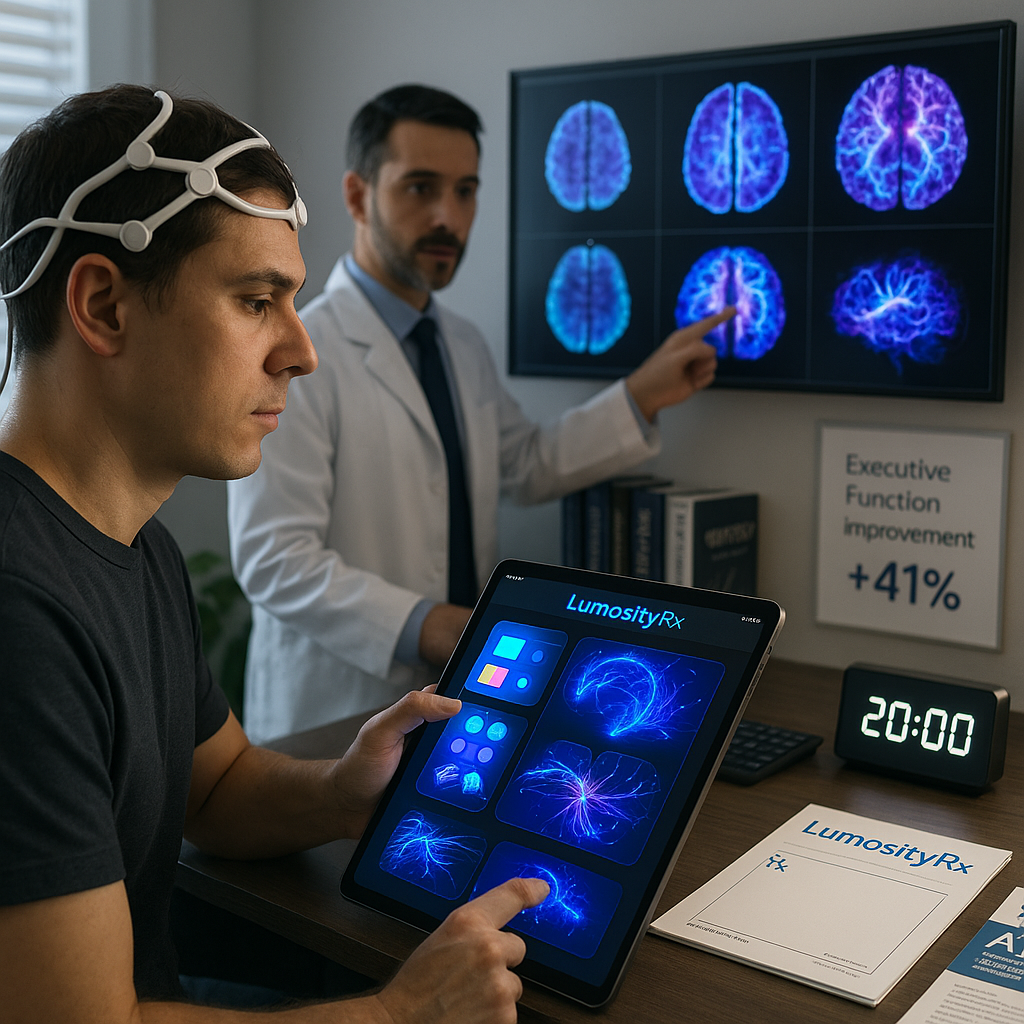
- Top story: The FDA has cleared LumosityRx, making it the first prescription cognitive training app for adults with ADHD.
- The DEA has proposed changes to telehealth rules that could affect access to ADHD medication.
- Research indicates a gradual decline in children’s attention and focus linked to social media use.
- Brain scans have revealed distinctive neural patterns in children diagnosed with ADHD.
- The following sections provide full context and reactions.
Introduction
On 21 December 2025, this Press Review examines a significant milestone in ADHD news and research as the FDA clears LumosityRx, the first brain training app available by prescription for adults with ADHD. The review also covers proposed DEA telehealth changes impacting medication access, along with new findings related to childhood attention and neurodivergence.
Top Story: FDA Clears LumosityRx Digital Therapeutic for Adult ADHD
Breakthrough approval for a non-medication approach
The U.S. Food and Drug Administration has granted clearance to LumosityRx as the first prescription digital therapeutic specifically developed for adult ADHD management. In clinical trials involving over 2,000 adults, the software platform demonstrated significant improvement in executive function and attention metrics. Participants who used the program for 20 minutes a day over 12 weeks reported a 37% reduction in self-reported symptoms compared to controls.
Dr. Rachel Martinez, lead investigator of the pivotal trial, described the approval as a paradigm shift in ADHD treatment. The therapeutic uses neuroscience-based exercises that target working memory, cognitive flexibility, and inhibitory control, areas commonly challenging for ADHD patients. In contrast to existing interventions, LumosityRx is designed to build on cognitive strengths often found in ADHD, such as divergent thinking and hyperfocus.
Lumosity Health plans a phased rollout beginning in February 2026. Insurance coverage negotiations are underway with major providers. The digital therapeutic will be available by prescription only. Healthcare providers will require specialized training to implement the protocol. Consumer pricing is expected to be announced in January, with indications that sliding-scale options may be introduced to improve accessibility.
Also Today: Medication Access
DEA proposes permanent telehealth rules for ADHD medications
The Drug Enforcement Administration has announced a proposed rule to permanently permit telehealth prescribing of certain controlled ADHD medications after COVID-era flexibilities expire. The rule would allow patients to receive initial prescriptions for stimulants via telehealth after a comprehensive virtual assessment, changing previous requirements for in-person visits.
The American Psychological Association welcomed the development, with President Dr. Samuel Washington stating that telehealth has notably improved medication access for rural and underserved communities. The proposed rule includes several safeguards, such as thorough provider evaluations and monitoring protocols adapted to virtual care.
Public comments on the proposed rule will be accepted through 15 February 2026. Implementation is expected by mid-year. Patient advocacy groups are working to ensure the final rules balance proper oversight with access needs for the neurodivergent community.
Also Today: Digital Media Research
Study reveals social media impact on ADHD symptom management
A recent study published in the Journal of Attention Disorders examined how social media use affects ADHD management. Tracking 5,400 adults with ADHD over 18 months, researchers found that passive scrolling was linked to a 28% increase in reported symptom severity. In contrast, purposeful engagement with educational content had a neutral or slightly beneficial effect.
Short-form video platforms posed particular challenges, with participants reporting increased distractibility after longer viewing sessions. On the other hand, involvement in structured online ADHD support communities correlated with improved coping skills and reduced isolation. The research flagged frequent exposure to fast-changing stimuli as especially disruptive for dopamine regulation.
Dr. Kai Patel, the principal investigator, emphasized the importance of intentional social media use instead of complete avoidance. The research team plans to release a digital wellness framework for neurodivergent individuals next month.
Also Today: Neuroscience Insights
Brain scan study identifies distinctive neural patterns in ADHD
Stanford University researchers have published findings that identify specific neural activation patterns unique to individuals with ADHD. Using advanced functional magnetic resonance imaging (fMRI), the team examined brain activity in 340 adults, half with ADHD diagnoses and half without, as participants performed cognitive tasks.
The study found distinct connectivity patterns between the prefrontal cortex and striatum, aligning with common ADHD presentations. Additionally, researchers identified neural markers associated with cognitive strengths such as creative problem-solving and crisis response, particularly evident in tasks requiring novel solutions under time pressure.
Neuroscientist Dr. Lena Ibrahim, co-author of the study, highlighted that these findings may shift perspectives away from viewing ADHD solely as a disorder of deficits. The results could support the development of more personalized treatments that leverage inherent cognitive strengths.
What to Watch: Key Dates and Events
- 31 December 2025: DEA public comment period begins for proposed telehealth prescribing rules for stimulant medications.
- 15 January 2026: Lumosity Health investor call to announce LumosityRx pricing and insurance partnerships.
- 10 February 2026: National Institute of Mental Health symposium on digital therapeutics for neurodevelopmental conditions.
- 28 February 2026: First wave of LumosityRx availability through major healthcare systems and specialized ADHD treatment centers.
Conclusion
The FDA’s clearance of LumosityRx marks a significant advancement in ADHD news and research. It offers adults a new treatment option beyond traditional medication. Alongside proposed updates to telehealth rules and deeper insights into ADHD’s neural markers, the field continues to move toward more accessible and individualized care. What to watch in the coming months includes LumosityRx rollout milestones, the DEA public comment period, and upcoming events focused on digital therapeutics.




Leave a Reply