

Key Takeaways
Optimizing your home environment is a genuine game-changer for ADHD minds facing daily clutter and persistent distractions. Strategic adjustments to lighting, organization, and sensory features can turn household chaos into clarity. By shaping your living space intentionally, you foster focus and well-being, building an environment that truly works for your brain. As you explore practical strategies, keep these core takeaways in mind:
- Design spaces that work with your brain: ADHD-friendly layouts use open zones, clear visual cues, and reduced clutter to simplify finding essentials and tuning out distractions.
- Let lighting boost your mood and focus: Natural light enhances attention and energy. Where possible, position workspaces by windows or use soft, indirect LEDs to minimize fatigue.
- Control sensory overload with mindful materials: Choose gentle textures, limit background noise, and opt for calming colors and fabrics to reduce overwhelm and improve sustained focus.
- Prioritize visible, simple, and accessible storage: Open shelves, labeled bins, and daily “drop zones” make organization a low-friction habit so you spend more time doing, less time searching.
- Protect your work zones: Use visual markers or subtle dividers to define focus areas. Keeping workspaces distinct from relaxation zones helps your mind switch tasks with less resistance.
- Make decluttering a daily habit: Small, routine resets (like a 2-minute tidy) cultivate lasting order and minimize overwhelm, ensuring organization is sustainable for ADHD.
- Personalize for your sensory profile: Tailor your environment to suit your unique triggers and preferences, such as introducing fidget tools, blackout curtains, or background music to enhance focus.
By creating environments that align with your cognitive needs, not arbitrary standards, you gain control over clutter, nurture greater focus, and transform your home into a source of energy rather than exhaustion. Let’s take a closer look at actionable changes that deliver the biggest wins for ADHD minds.
Introduction
Living in a space that drains your energy or constantly distracts you isn’t a personal failing. For ADHD minds, environmental design holds the key to bridging the gap between struggle and calm, between endless clutter and real clarity.
Small changes (like shifting your desk to a window, switching to open bins, or curating your sensory input) can transform your home into an ally for your brain. If you’ve ever lost precious time searching for keys or found it impossible to keep workspaces and relaxation areas separate, ADHD-friendly strategies can provide the breakthrough you need.
Together, we’ll explore how optimizing lighting, organization, and sensory design can empower you to tame distractions and create a home that supports your best self, every single day.
Creating Zones That Work With Your Brain, Not Against It
ADHD transforms your relationship with your environment. Thoughtful zones aren’t about style alone. They let your home support your brain’s unique operating system.
The Power of Designated Activity Zones
Without physical and visual boundaries, your home can feel like a blur. Work, rest, and play all happening in the same space. This lack of contextual cues leads to cognitive overload, as your brain struggles to switch between activities.
To reclaim focus and lower overwhelm, develop distinct zones:
- Work zone: Carve out a dedicated space reserved for concentration and productivity, ideally away from household traffic and distractions.
- Relaxation zone: Design a cozy, clutter-free area with minimal stimulation where your mind can rest and recharge.
- High-energy zone: Create space for movement, creative bursts, or music, allowing your brain to reset during restless moments.
- Low-sensory zone: Designate a peaceful retreat for moments when overstimulation hits, equipped with soft textures, muted lighting, or calming colors.
You do not need a sprawling home to set boundaries. Room dividers, different types of lighting, color-coded decor, or simply rearranged furniture can define zones in even the smallest apartments.
Transition tip: Whenever you move between zones, use a short ritual (such as stretching, deep breathing, or verbally announcing a shift). This helps your brain recognize new contexts, making it easier to change gears.
Ultimately, you’re not aiming for perfection, but for functional, low-friction environments. The best ADHD-friendly zones work with your habits instead of piling on extra demands.
Strategic Lighting: More Than Just Brightness
Lighting is one of the most underappreciated tools for managing ADHD, directly impacting sensory comfort, focus, and even sleep stability.
Natural Light Optimization
Sunlight doesn’t just make spaces look better. Natural daylight has been shown to lift mood, boost cognitive performance, and support attention regulation. These are vital benefits for anyone with ADHD.
Maximize natural lighting by:
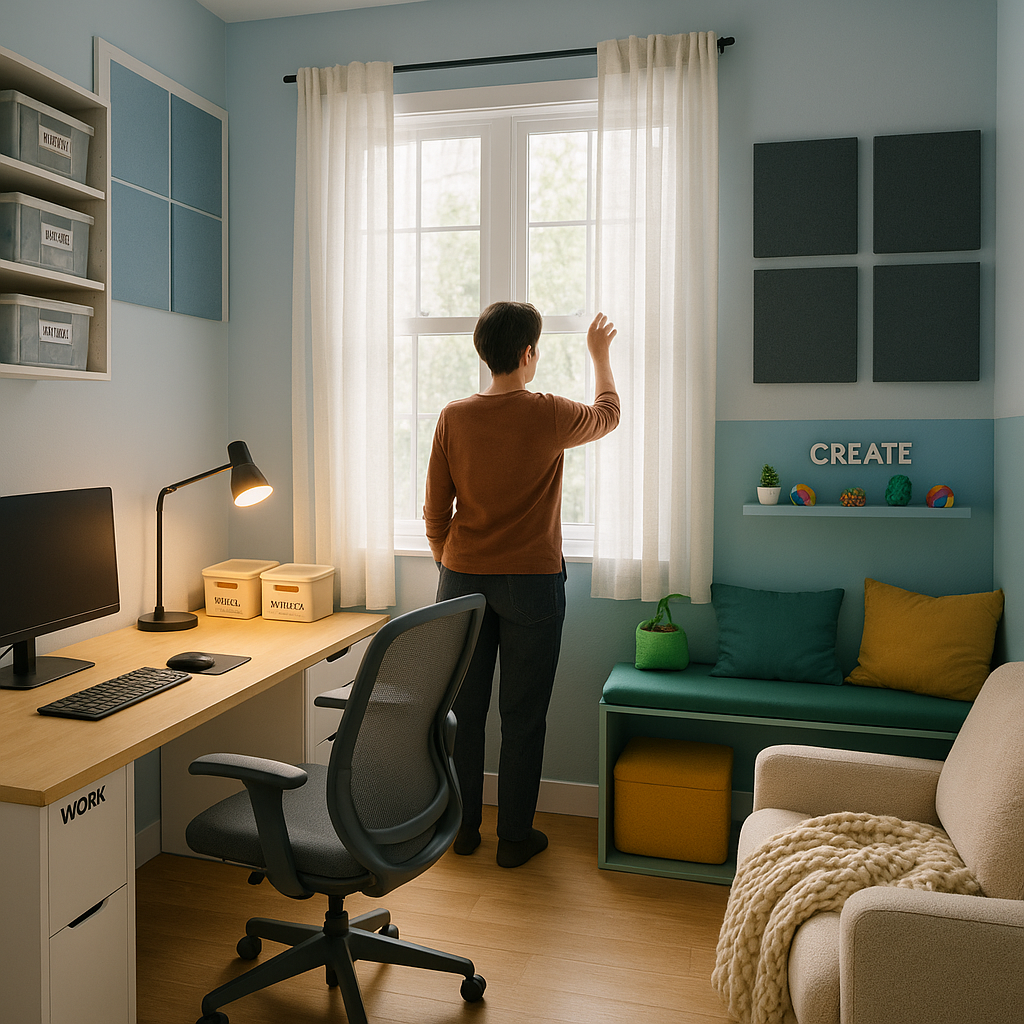
- Arranging your main desk or workspace near windows to harness morning and midday light
- Using sheer curtains to diffuse bright sun without dimming the room
- Painting walls with soft, light colors (like gentle whites or airy blues) to reflect and spread daylight
- Keeping window panes spotless to allow in the maximum amount of light
If you’re prone to light sensitivity or glare, consider adjustable blinds and anti-glare computer screens. These allow you to enjoy the benefits of natural light without discomfort.
Artificial Lighting Solutions for Focus and Rest
Artificial lighting fills the gaps when natural light is scarce. Unfortunately, many common fixtures, especially harsh fluorescents, can cause distraction, eye strain, or headaches for ADHD minds.
Upgrade your spaces with:
- Full-spectrum LED bulbs: Closely mimic daylight, supporting sustained energy and reducing sensory fatigue.
- Dimmable fixtures and lamps: Enable fine-tuning of brightness levels to match your needs throughout the day.
- Task lighting: Use directional desk lamps for focused tasks, keeping the activity in visual “spotlight.”
- Warm ambient lighting: In relaxation zones, opt for gentle, golden glows to cue your brain that it’s downtime.
Smart lighting systems that automatically adjust through the day help regulate circadian rhythms, supporting better sleep cycles. This is often a pain point for ADHD.
Your lighting needs will fluctuate based on energy levels, tasks, and even emotional state. Equipping your home with several adjustable options allows you to respond in real time.
Visual Noise Reduction: Decluttering for the ADHD Mind
ADHD brains have a unique relationship with their surroundings. Every visible item is a potential distraction, siphoning off finite attention.
Rethink Visibility: Hidden Storage Solutions
While design magazines glorify open shelving and artful displays, visible collections can be overwhelming for ADHD. Each item in your line of sight competes for mental bandwidth, nudging your brain to bounce between tasks.
Advantageous alternatives include:
- Closed cabinets and drawers: Hide away non-essentials, creating calm visual backdrops.
- Dual-purpose furniture: Beds, ottomans, or benches with hidden compartments help clear surfaces.
- Uniform, labeled bins: If open shelves are unavoidable, use matching opaque containers with clear labels to mute visual chaos.
- Organizers for interiors: Drawer dividers and container systems maintain order behind closed doors, keeping you efficient without clutter.
The goal is to create “visual rest zones,” spaces where your eyes (and mind) can land without being hijacked by to-do reminders.
Decluttering Systems That Stick
Traditional approaches to tidying up rarely succeed for ADHD folks, because they rely on one-time marathons or complex rules. Instead, build routines that minimize friction and decision fatigue:
- 10-minute declutter: Set a short timer to tackle one small category or surface. This leverages time-blindness, turning tidying into a quick win.
- The container method: Assign a strict home for each item type. Once a bin is full, something must be removed before adding more, keeping clutter naturally in check.
- Functional value first: Evaluate items based on, “Does this help me function daily?” rather than sentimental value alone.
- Triggered resets: Pair simple tidy routines with other habits (after meals, before bedtime, or when entering a room) to reset spaces consistently.
True order isn’t about magazine-worthy minimalism. It’s about creating a manageable, supportive environment with less cognitive drag.
Sensory-Friendly Modifications: Taming Overwhelming Stimuli
The ADHD experience is often colored by heightened sensitivities to sound, touch, and other sensory details that others overlook. Your home should feel like a safe retreat, not a source of daily overwhelm.
Sound Management: From Chaos to Calm
Filtering background noise is a real challenge with ADHD. What’s faintly noticeable to some can lead to spirals of distraction.
Tame your soundscape by:
- Installing simple fabric acoustic panels or tapestries to dampen echo
- Using white noise machines to mask jarring, random sounds
- Keeping a pair of noise-canceling headphones handy for deep work
- Opting for rugs, plush curtains, and upholstered chairs to absorb sound naturally
- Reducing notification pings and upgrading appliances to low-noise models where possible
Recognize that silence isn’t always best. Many people with ADHD thrive with consistent ambient sounds (think rain tracks, soft instrumental playlists, or gentle background chatter).
Texture and Touch: Comfort for Focus
Uncomfortable textures can distract or agitate more than you might realize.
- Invest in comfortable, ergonomic seating for work zones
- Add weighted blankets or soft throws to relaxation spaces for calming tactile input
- Provide easy-to-access fidget items in your primary zones to channel restlessness productively
- Make temperature control accessible (fans, heated pads, or personal AC units) so you can adapt quickly to changing needs
Modifying for sensory comfort is highly personal. Treat your space as an ongoing experiment, adjusting fabrics and features until your home genuinely feels like a sensory haven.
Smart Storage Systems: Finding Without Frustration
When you have ADHD, the challenge of “out of sight, out of mind” can lead to forgotten bills, missing essentials, and daily frustrations. Smart storage is all about balancing visibility and organization so you don’t lose track of what matters.
Storage Solutions That Work for ADHD
To keep your mental load light and avoid overwhelm:
- Use transparent containers only for high-use items so essentials are always visible
- Incorporate labels with words and pictures, making it quick to identify contents at a glance
- Apply color-coding to organize by family member, project, or category, speeding up the hunt for what you need
- Set up “drop zones” (hooks, trays, or bins) near entry points for must-have items like keys, wallets, or important documents
- Schedule periodic “zone audits” on key storage areas to remind yourself what you have and what needs replenishing
Balance is everything. Too much visibility creates chaos, too little creates confusion and frustration.
Remember: The best system is the one you’ll actually use, not the one that looks good on Pinterest. Ease of access, flexibility, and personal relevance are your real priorities.
Conclusion
Building an ADHD-friendly home isn’t about rigid minimalism or picture-perfect organization. It’s about designing a living system that adapts to the realities of your mind. Thoughtful activity zones, smart lighting, visual rest, and sensory-aware adjustments all work in concert to lower day-to-day friction and energize your routines.
Your home becomes more than shelter. With intentional tweaks, it transforms into a crucial partner for growth, creativity, and sustainable productivity. Whether you’re a freelance creator seeking sanctuary for big ideas, a busy parent juggling endless tasks, or a professional on a mission to unlock your full potential, these environmental changes have power far beyond the aesthetic.
Looking forward, challenge yourself to reimagine your living space not as a fixed blueprint, but as a customizable toolkit for your neurodivergent strengths. Experiment boldly, stay curious, and remember: the most valuable environments are the ones that help you thrive, just as you are. What small shift can you make today to bring your home one step closer to celebrating your unique brilliance? The next era of focus, well-being, and true support awaits, crafted for, and by, your own remarkable mind.


Leave a Reply