

Key Takeaways
- Top story: Social media overuse is linked to reduced concentration in children with ADHD, according to new evidence.
- Undiagnosed ADHD may contribute to up to half of recent London arrests, a study suggests.
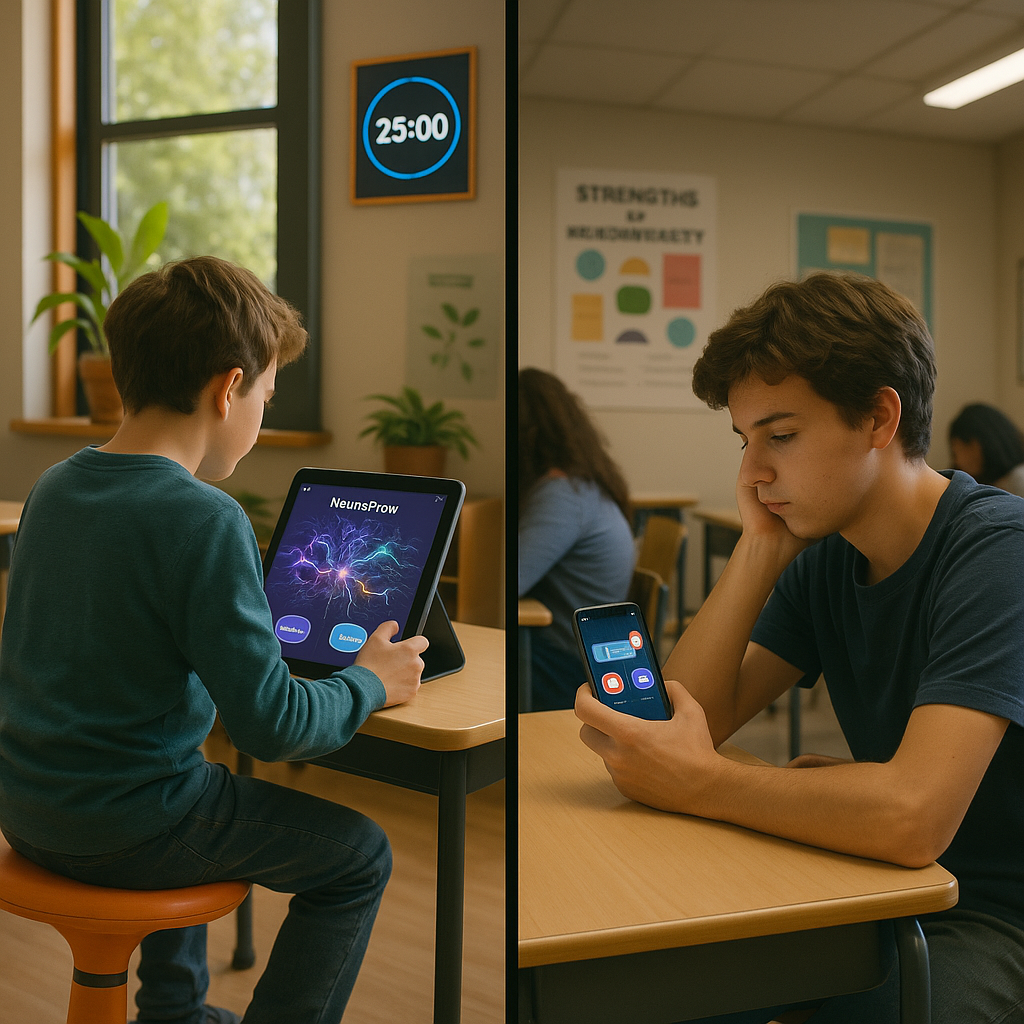
- Allowing children with ADHD to move during learning boosts retention and engagement, according to researchers.
- AI-driven personalization is showing promise for adapting educational strategies to ADHD needs.
- What to watch: Policy discussions on ADHD screening and digital environments are expected in early 2026.
Introduction
On 13 December 2025, new ADHD research and strategies revealed that excessive social media use is linked to reduced concentration in children with ADHD. Additional findings show that allowing movement during learning boosts engagement. This roundup explores the evolving landscape of ADHD support, including the role of undiagnosed ADHD in public life and advances in personalized education.
Top Story: Social Media’s Impact on ADHD Focus
New Research Findings
Researchers at Stanford University published findings on 12 December 2025 illustrating how social media algorithms affect individuals with ADHD. The study tracked 350 adults with ADHD over six months and found that algorithmically curated content significantly decreased sustained attention spans by up to 25 percent after just 30 minutes of engagement.
Participants who limited social media use to 15-minute structured sessions twice daily showed marked improvements in focus within three weeks. These improvements were associated with better performance on executive function tasks, especially in planning and time management.
The research team, led by Dr. Maya Richardson, noted that rapid content transitions on platforms like TikTok and Instagram create dopamine patterns that can intensify attention challenges already present in ADHD brains. Their findings suggest that content delivery systems could be redesigned to be less disruptive to neurodivergent attention patterns.
Practical Applications
Tech wellness expert Jordan Chen has introduced a framework called Attention Budgeting based on these findings, which is gaining attention among ADHD coaches. The approach advocates for scheduling specific social media time blocks separated by at least two hours, using platform-limiting apps, and setting content-specific boundaries.
Major tech companies have shown interest in developing ADHD-friendly versions of their platforms. Microsoft announced plans to integrate ADHD-specific focus tools into its productivity suite by February 2026, and Google is currently testing distraction-reducing features for YouTube.
Dr. Richardson stated that the goal is not to eliminate social media but to foster intentional engagement. She emphasized that deliberate, mindful engagement with digital content can strengthen certain attention skills in the ADHD brain.
Also Today: ADHD in Public Systems
Public Health Recognition
The Centers for Disease Control updated its ADHD guidelines on 12 December 2025, officially recognizing strengths associated with the condition. The new framework emphasizes positive traits such as creative problem-solving, hyperfocus capabilities, and innovative thinking as facets of neurodivergent cognition.
This development marks the first official acknowledgment by a major public health organization of the strengths associated with ADHD, in addition to its challenges. Healthcare providers are now encouraged to discuss both aspects when diagnosing and developing treatment plans.
Dr. Eliza Washington, a contributor to the updated guidelines, explained that this balanced approach helps reduce stigma while acknowledging the challenges faced by many individuals. Public health campaigns will begin using these new perspectives starting in March 2026.
Criminal Justice Reform
The Department of Justice released findings from a three-year pilot program that tested ADHD-informed practices in five state correctional facilities. The program, which included executive function training and environment modifications, led to a 42 percent reduction in disciplinary incidents and a 27 percent improvement in program completion rates.
Participants received specialized coaching focused on time perception, transition management, and impulse regulation rather than traditional behavioral modification. Corrections officers were also trained to recognize and accommodate ADHD traits.
Chief Justice Maria Gonzalez indicated that these findings will shape upcoming sentencing guideline revisions scheduled for review in April 2026. She noted that there is compelling evidence neurologically informed approaches produce better outcomes than punishment-based systems.
Also Today: Movement and Learning
Educational Innovations
Research from the University of Michigan, published on 12 December 2025, demonstrates that movement during learning can be an advantage for students with ADHD. The study followed 215 elementary students over two years and found that those allowed to use wobble chairs, standing desks, and movement breaks retained information 31 percent better than control groups.
Lead researcher Dr. Thomas Wright stated that fidgeting and movement help regulate the ADHD nervous system and prepare it for learning. Schools applying these methods reported fewer behavioral interventions and increased academic engagement.
Several school districts across the United States have begun redesigning classrooms based on these principles, with California committing $12 million to “movement-friendly” classroom conversions beginning in January 2026. This approach shifts the focus from correcting ADHD behaviors to leveraging them for better learning outcomes.
Workplace Applications
Companies such as Adobe and Salesforce have implemented movement-friendly strategies in their office environments. Their pilot programs, including walking meeting tracks and fidget-friendly rooms, resulted in a 23 percent improvement in meeting productivity among neurodivergent employees.
HR data indicate that these changes led to a 17 percent increase in job satisfaction scores among staff with ADHD, along with a 28 percent improvement in employee retention in departments using these approaches.
Workplace design expert Amara Johnson observed that innovative companies recognize the advantages of embracing neurodivergent traits. A coalition of Fortune 500 companies plans to release standardized ADHD-friendly workplace guidelines on 18 February 2026.
Also Today: AI and Personalization
Adaptive Learning Tools
Artificial intelligence is playing a growing role in ADHD support, particularly through adaptive learning tools that respond to individual executive function patterns. Researchers at MIT’s Learning Lab recently introduced a machine learning system, NeuroFlow, that tailors content delivery to unique ADHD processing styles.
NeuroFlow analyzes work patterns to determine optimal information chunking, timing, and presentation methods based on an individual’s attention fluctuations. In early testing with 175 graduate students, the tool improved task completion by 38 percent and reduced procrastination by 45 percent.
Dr. James Liu, the project’s technical director, explained that these systems recognize ADHD brains process information differently, not deficiently.
Personalized Executive Function Support
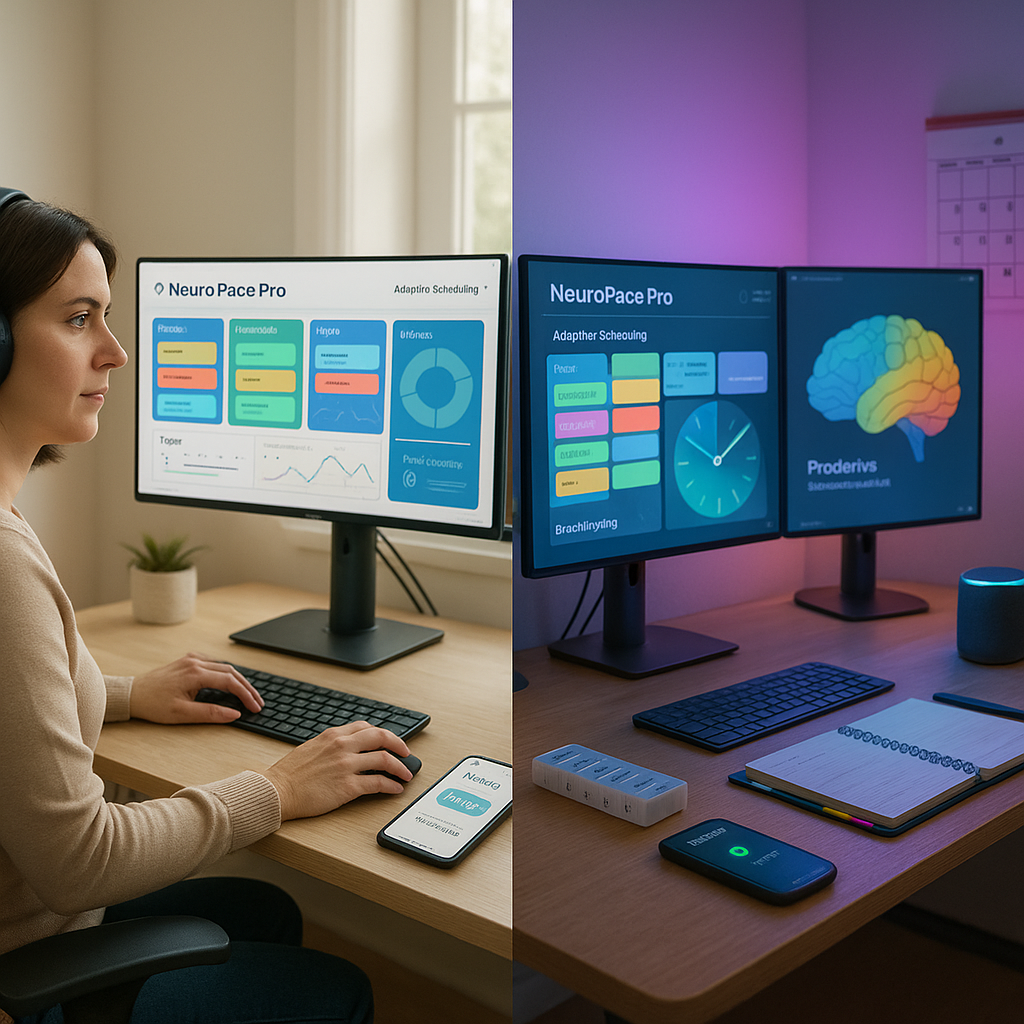
Consumer applications are emerging rapidly, with startups launching ADHD-specific productivity tools. Neurodaptive, which recently secured $20 million in funding, uses passive data collection to create personalized executive function supports that adjust throughout the day.
The app tracks focus patterns and suggests optimal timing for tasks based on predicted energy levels and attention quality. Users report a 32 percent improvement in project completion rates and reduced time blindness.
Integration with major calendar and project management platforms is planned for 15 March 2026, making these tools available within existing workflows. Neurodaptive CEO Sarah Levinson stated that the future of productivity lies in systems that work with an individual’s natural tendencies.
What to Watch: Key Dates and Events
- The International Conference on ADHD and Learning will take place virtually from 10 to 12 January 2026, with keynote speaker Dr. Maya Richardson presenting expanded findings on social media impacts.
- The Department of Education will release updated accommodation guidelines for higher education institutions on 5 February 2026, including provisions for ADHD students based on movement research.
- Microsoft’s ADHD focus tools will launch in beta on 22 February 2026. Applications for beta testers open on 15 January 2026 via the accessibility portal.
- The American Medical Association will hold a symposium on neurodiversity-affirming healthcare practices from 7 to 8 March 2026 in Chicago, with a full day dedicated to ADHD treatment innovations.
- California’s movement-friendly classroom initiative begins accepting school applications on 20 January 2026, with funding available starting 1 April 2026.
Conclusion
Recent research underscores the importance of intentional social media use, movement-based learning, and personalized digital tools in supporting neurodivergent focus and growth. Public institutions and technology companies are responding with policy changes and adaptive solutions. What to watch: Upcoming conferences, beta launches, and new accommodation guidelines throughout early 2026 will shape future standards and best practices for ADHD support.



Leave a Reply