

Key Takeaways
-
Ditch the stillness. Embrace movement as mindful fuel. Traditional meditation often asks ADHD brains to be still, which can set many up for frustration or failure. Instead, movement-based practices such as walking meditations, dance, or stretching redirect restless energy into focus, helping you ground your attention without resisting your natural wiring.
-
Bite-sized beats boredom. Short bursts trump long sessions. Extended mindfulness sessions can quickly lead to zoning out or heightened restlessness. Incorporating brief, 1 to 3-minute practices throughout your day keeps engagement high and allows you to reboot your attention whenever needed, making mindfulness both accessible and sustainable.
-
Sensory grounding becomes your anchor. By engaging multiple senses (through mindful fidgeting, touching objects, or tuning into ambient sounds), you bring scattered thoughts into the present, creating instant calm amid chaos. These sensory anchors are especially effective for fast-moving ADHD minds.
-
Immediate feedback rewires attention gently. Mindfulness practices that provide instant sensory or emotional feedback (like breath pacing tools, tapping, or mindful doodling) reward rather than penalize wandering attention. This approach helps retrain your brain to reconnect without shame or self-criticism.
-
Mindful environments support new habits. Designing spaces with sensory cues, such as textured objects, calming lights, or subtle background sounds, transforms your everyday surroundings into mindfulness triggers. This makes it easier to access calm, even during busy moments.
-
Micro-practices build real habits while limiting self-judgment. ADHD-friendly mindfulness works best when integrated into daily life. Small, repeatable actions (rather than solemn commitments to stillness) make it easier to develop consistency, reduce overwhelm, and support emotional regulation in realistic ways.
Unconventional mindfulness isn’t about squeezing yourself into someone else’s mold. It’s about meeting your mind right where it is. Now, let’s dig into practical, creative strategies for neurodivergent brains to discover genuine calm—through movement, moments, and more.
Introduction
If sitting still and “clearing your mind” seems impossible, you’re not alone. Classic mindfulness advice can feel tailor-made to trip up ADHD brains. In reality, finding genuine calm often demands movement, sensory engagement, and quick bursts of focused attention. That’s pretty far from the meditation clichés that leave many neurodivergent minds feeling restless and discouraged.
Unconventional mindfulness for ADHD is not about forcing yourself into silence or stillness. Instead, it’s about building everyday practices that honor your need for motion and stimulation. Techniques like mindful fidgeting, walking meditations, and bite-sized, sensory-driven attention practices help you work with your brain rather than against it.
Let’s explore the practical and energizing strategies that shift mindfulness from a struggle into a reliable source of calm, empowering you to tap into your ADHD strengths and transform daily moments into mindful wins.
Why Traditional Mindfulness Often Fails ADHD Brains
For people with ADHD, traditional mindfulness instructions sometimes sound impossible. Being told to “empty your mind,” “focus solely on your breath,” or “sit still for 20 minutes” is often a recipe for frustration because these are precisely the things that ADHD brains struggle with most.
Conventional mindfulness practices are typically crafted for neurotypical minds. They demand prolonged attention, minimal movement, and the gentle redirection of thoughts, which can be exceptionally daunting for those with ADHD. This disconnect can trigger a discouraging cycle. You attempt mindfulness hoping to find calm, but the practice itself stirs restlessness. You may walk away feeling like you’ve failed, not just at meditation, but at managing your own brain.
The real issue isn’t you. It’s the method. Research into neurodivergent mindfulness highlights that ADHD brains need unique avenues to reach focus and calm. Your desire for stimulation, movement, and novelty is not an obstacle; in fact, it is a guide to more effective mindfulness practices.
The Neurological Mismatch
ADHD brains process dopamine differently than neurotypical brains. Most traditional meditation styles fail to deliver enough stimulation to activate attention networks. If a mindfulness practice feels boring, it isn’t stubbornness. It’s simply your brain seeking adequate engagement.
Many individuals with ADHD describe classic meditation as agitating or even stressful. One person compared it to “trying to hold a beach ball underwater while someone yells ‘relax!’” Fighting your brain’s natural preferences can create additional tension rather than relief.
Fortunately, when mindfulness is redesigned to align with your brain’s need for stimulation and novelty, it can become a powerful tool for emotional regulation and focus. The goal is to find practices that provide just enough engagement, yet still nurture present-moment awareness.
So, while traditional mindfulness isn’t inherently wrong, it’s not ideally suited for every mind. As we move into alternative approaches, remember that effective mindfulness for ADHD may look and feel unique. Your path to calm might involve movement, brief sessions, or creative activities that aren’t always considered “meditation” in traditional circles.
Movement-Based Mindfulness: Meditation in Motion
For ADHD brains, movement can be the most direct route to mindfulness. Rather than seeing movement as a distraction, these practices use physicality as a strength to channel energy and foster focus.
Walking Meditation with Attention Anchors
A typical walking meditation may be too slow or lack enough structure for ADHD minds. Instead, try this approach:
- Pick a walking route filled with varied scenery or textures.
- Choose an attention anchor (such as counting red objects, focusing on the feeling of your feet on the earth, or noticing the breeze).
- Set a timer for 5 to 10 minutes to give the practice clear boundaries.
- When your attention drifts, welcome it back to your anchor without judgment.
The combination of movement, sensory variety, and concrete focus points delivers the stimulation your brain needs, transforming a simple walk into a grounding practice.
Mindful Fidgeting Techniques
Fidgeting is often misunderstood as the opposite of mindfulness. Reframed intentionally, it becomes an effective grounding tool:
- Select a fidget item with interesting textures or resistance (like a stress ball, putty, or textured rings).
- Commit to exploring the sensations: temperature, softness, pressure, and movement.
- When your mind wanders, acknowledge it, and gently redirect your attention to how the object feels.
Turning this natural tendency into a conscious practice lets you use fidgeting as a gateway to present-moment awareness. As one participant put it, “Using fidgeting for mindfulness instead of fighting it was life-changing.”
Rhythm-Based Movement Practices
Rhythm can be incredibly regulating for ADHD brains. Consider these approaches:
- Create repetitive beats using a drum or household object, syncing your breath or focus with the pattern.
- Try gentle, repetitive movements like rocking, small bounces on a yoga ball, or rhythmic swaying.
- Use music with a strong, consistent beat as your focal point, letting your body move freely.
These methods infuse reliable rhythm and motion into your attention practice. They work especially well during periods of high restlessness when traditional seated mindfulness is tough to access.
By embracing movement with intention (not just as nervous energy but as a mindful practice), you transform motion into a source of focus and calm.
Multisensory Grounding: Engaging Attention Through the Senses
When your thoughts are racing, engaging more than one sense at a time can serve as a “pattern interrupt,” bringing your awareness rapidly back to the present. Multisensory approaches deliver the novelty and physical engagement ADHD brains crave, while anchoring attention in concrete experience.
The 5-4-3-2-1 Technique, ADHD-Style
The classic grounding exercise asks you to find 5 things you see, 4 you can touch, and so on. To make it engaging for ADHD minds:
- Turn it into a mini scavenger hunt, seeking out new colors, shapes, or textures each time.
- Physically interact with objects (pick up, squeeze, or rub them for tactile feedback).
- Say what you notice aloud, adding auditory engagement.
- Challenge yourself to spot subtle cues, like the faintest smell or the smallest movement.
By layering movement and multiple sensory channels, this variation keeps you actively engaged, helping anchor your focus during overstimulation or anxiety.
Temperature Contrast Practices
Sudden temperature changes create rapid and unmistakable sensory feedback, instantly capturing attention:
- Hold ice cubes or a cold drink and observe the shifting sensations as your hands warm them.
- Alternate between warm and cold water when washing your hands, monitoring the transition.
- Briefly apply something cool (such as a chilled bottle) to your skin to reset focus.
- Try the “5-5-5” reset: Five seconds of cold water, five intentional breaths, five seconds noticing your heartbeat and muscle response.
Such temperature-based exercises are fast-acting, gently nudging your nervous system toward calm, making them excellent for use during periods of overwhelm or sensory overload.
Sound Bathing for ADHD Brains
Sound can become a powerful anchor when used mindfully:
- Use resonant objects like singing bowls, tuning forks, or bells. Notice how sound evolves from start to finish.
- Tune into physical sensations (how the vibrations move through your hands or body).
- Create your own sounds by humming, tapping, or playing an instrument, focusing on each tonal shift.
Many report that sound-based practices “capture” restless thoughts in a positive way, making stillness feel less intimidating.
Multisensory grounding works because it turns attention toward what is tangible and novel, offering ADHD minds a place to land when thoughts threaten to spiral.
Remember, success isn’t measured by a totally clear mind, but by having practices that invite your attention back (again and again) without judgment.
Micro-Mindfulness: Brief Practices for ADHD Attention Spans
Lengthy meditation sessions may feel impossible, but that doesn’t mean mindfulness is out of reach. Research and lived experience show that ultra-short, high-impact “mindfulness snacks” are far more effective for ADHD attention spans.
One-Minute Mindfulness Intervals
Sprinkle these micro-practices throughout your day to keep attention sharp:
- Doorway Reset: Each time you cross a threshold, pause, take three slow breaths, and notice your surroundings. This marks a mental shift as well as a physical one.
- Notification Pause: When your phone vibrates, use the interruption as a cue to ground yourself with a single mindful breath before responding.
- Red Light Breather: At traffic lights or other natural pauses, bring your attention back to your breath or the sensations of your body in the moment.
These bite-sized rituals fit seamlessly into your routine, making mindfulness less about finding extra time and more about harnessing existing transitions.
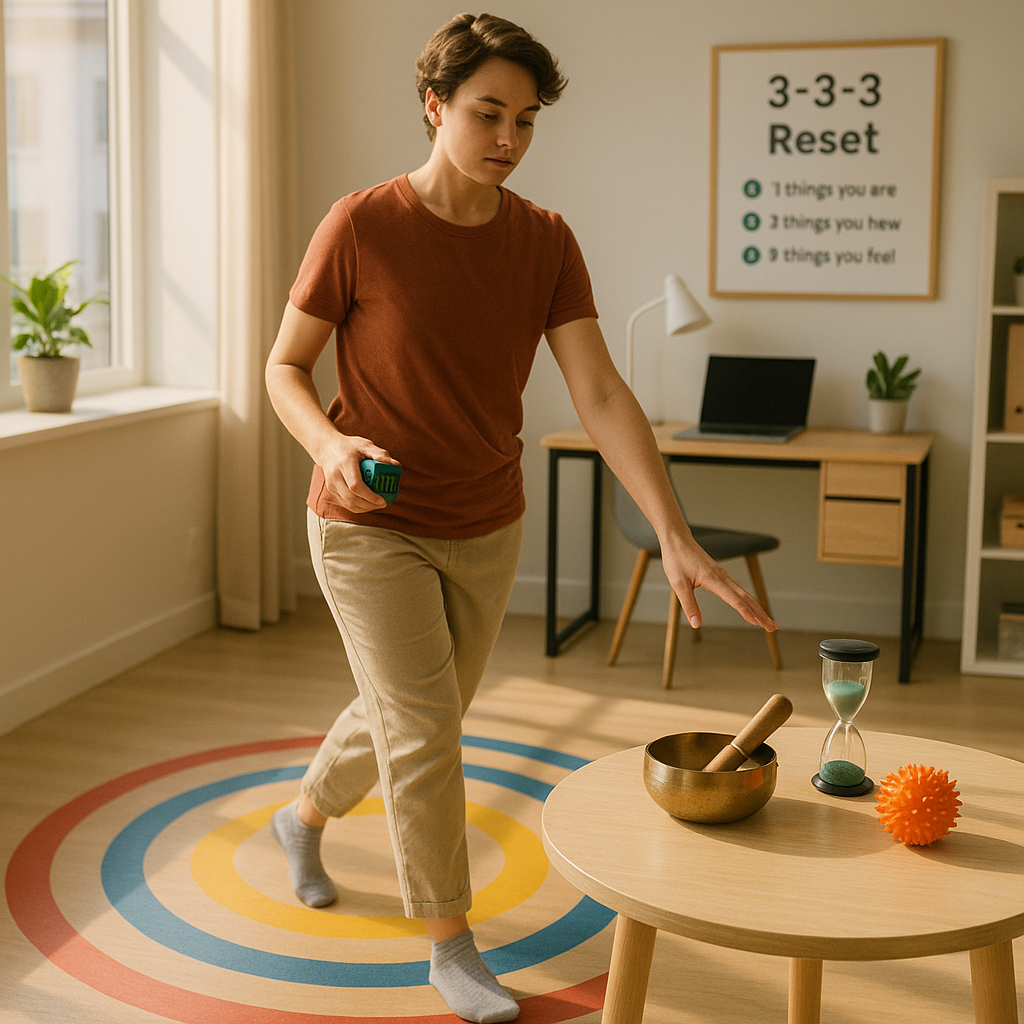
The 3-3-3 Reset
A fast, portable reset for busy or overwhelmed moments:
- Name three things you see (be specific).
- Take three slow, deliberate breaths, slightly lengthening each exhale.
- Move three body parts mindfully (roll your shoulders, wiggle your toes, or stretch your hands).
By integrating visual, respiratory, and kinesthetic channels, this quick technique activates focus, helps break cycles of overwhelm, and fits into virtually any situation.
Conclusion
For neurodivergent minds, especially those with ADHD, traditional mindfulness is often not just ineffective. It can feel alienating. The strategies in this guide flip that narrative. Movement, multisensory grounding, and ultra-brief micro-practices turn mindfulness into an experience tailored to the lively wiring of ADHD brains, making it truly accessible and sustainable.
This adaptive approach matters deeply. It doesn’t force serenity onto a restless mind, but instead amplifies its strengths: transforming distraction into redirection, fidgeting into focus, and endless curiosity into present-moment engagement. When you give yourself permission to practice mindfulness on your own terms, stress relief and emotional equilibrium become real, reachable outcomes.
Looking to the future, as more neurodivergent individuals and professionals recognize the value of ADHD-friendly mindfulness, there is immense potential for reshaping not only personal wellbeing but workplace culture, education, healthcare, and community support. Those who embrace flexible, creative, and sensory-based methods will lead the movement to redefine calm, resilience, and focus (not by conforming, but by innovating).
So the next time you feel scattered or overwhelmed, remember: your version of mindful attention might look different, but it is no less powerful. The real question is not if you can be mindful, but how you will adapt the practice to unlock your unique brilliance. Let your brain lead the way, and discover what true, sustainable calm feels like (movement, curiosity, and all).



Leave a Reply