

Key Takeaways
ADHD profoundly shapes the creative process, offering advantages that go far beyond stereotypes of distraction or disorder. When viewed through the lens of lived artistic experience, this article reveals how traits like hyperfocus, non-linear thinking, and impulsivity are not just obstacles to be managed, but untapped superpowers. These characteristics can fuel extraordinary waves of innovation, insight, and originality.
- Hyperfocus unlocks immersive creative bursts. When an ADHD brain becomes captivated by an idea, hyperfocus can dissolve distractions, generating deeply absorbing flow states that propel projects forward with remarkable speed and depth.
- Non-linear thinking sparks breakthrough originality. ADHD disrupts conventional, step-by-step thinking patterns, allowing for unexpected connections, inventive problem-solving, and artistic expression that breaks through the ordinary.
- Impulsivity fuels spontaneous artistic decisions. Traits often labeled as impulsive can enable bold choices, rapid experimentation, and creative risk-taking, all of which result in fresh, vibrant artwork.
- Creative blocks are dynamic, not permanent. Rather than viewing inconsistent productivity as failure, artists with ADHD can learn to trust their energy cycles, harnessing periods of momentum and practicing self-compassion during quieter times.
- Adapting process beats forcing routine. Traditional routines rarely align with the ADHD mind; developing flexible workflows, custom rituals, and adaptable schedules empowers neurodivergent creatives to work in harmony with their natural rhythms.
- Harnessing ADHD goes beyond managing symptoms. Embracing neurodivergent traits lets artists move away from mere coping methods and toward transforming these qualities into unique creative strengths. This is a hidden advantage often overlooked by standard advice.
These insights flip the typical ADHD narrative, reframing difference as a potent source of creative energy. In this article, discover firsthand stories, actionable strategies, and a renewed perspective on how neurodivergent minds can thrive in the art world and beyond.
Introduction
What if traits often dismissed as distractions were actually the driving force behind your best creative work? For many artists with ADHD, creativity emerges not in spite of their neurodivergence, but precisely because of it. The result is not chaos, but kinetic bursts of inspiration and innovative art that reshapes expectations.
Drawing on real-life experience, we journey inside the ADHD creative process to explore the immersive power of hyperfocus, the imaginative leaps of non-linear thinking, and the fearless momentum of impulsive artistic moves. By reframing traits like fluctuating energy and impulsivity as genuine advantages, we unlock strategies and mindsets that help neurodivergent creators thrive.
Let’s step into the vibrant world of an artist with ADHD, where difference is not a hurdle, but a catalyst for resilience, originality, and artistic brilliance.
When Hyperfocus Becomes a Superpower
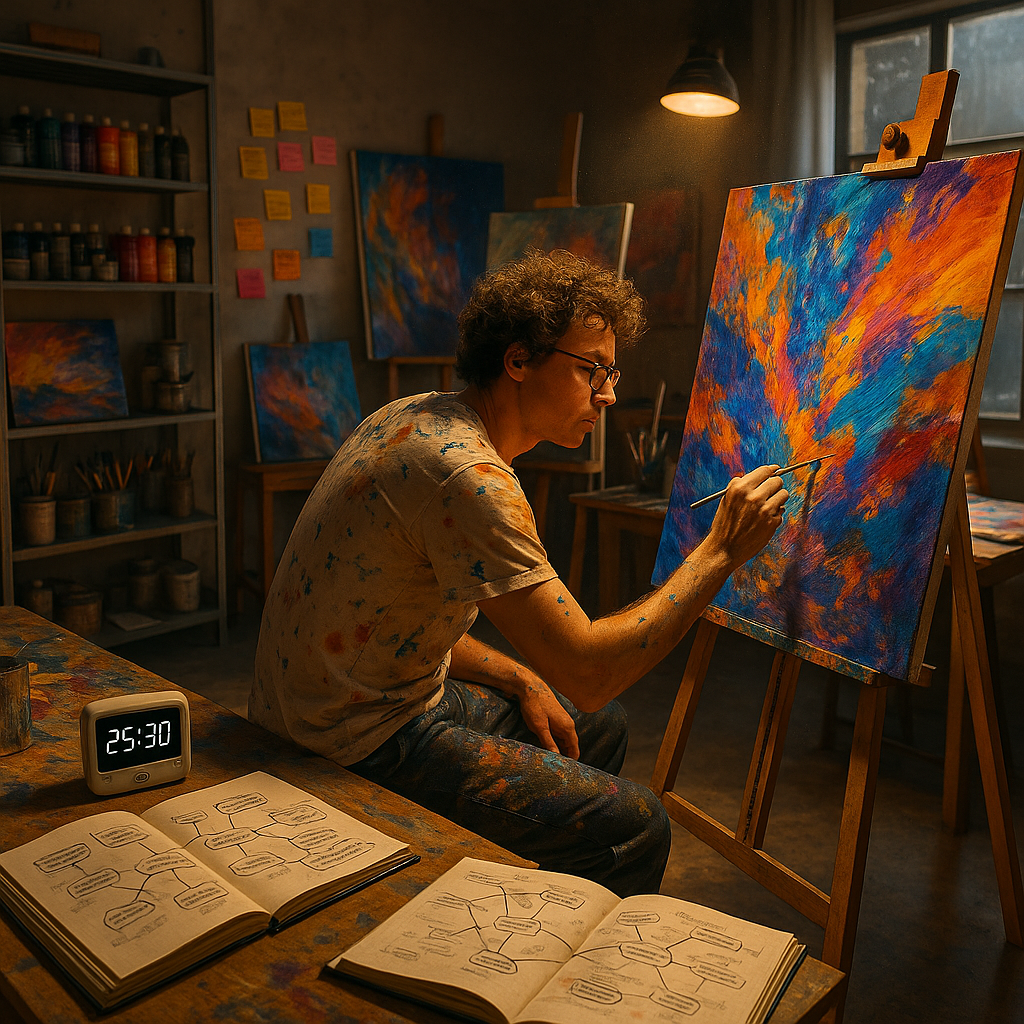
ADHD hyperfocus is more than a side effect of neurodivergence. It is the core engine that drives my creativity. When I enter this state while painting, time ceases to exist. A session that might seem fleeting to others can last hours for me, completely absorbing my attention and energy. My latest mixed-media collection emerged from a marathon 14-hour session. Hunger and fatigue faded into the background as I was wholly consumed by the process.
This experience is common among ADHD artists. Many describe hyperfocus as a gateway to their highest creative output, where unfiltered expression takes center stage. Neurologically, this is tied to dopamine, an elusive neurotransmitter the ADHD brain constantly seeks. When an activity consistently delivers dopamine, hyperfocus locks in with a tenacity that few neurotypicals regularly experience.
The distinction between hyperfocus and hyperfixation is critical. While hyperfocus propels creative progress, hyperfixation may lead to unproductive loops or perfectionism. I’ve learned to channel hyperfocus by:
- Setting tangible reminders in my creative space to help me check in with my physical needs
- Using visual timers that provide gentle, peripheral cues rather than demanding my attention
- Developing entry and exit rituals for creative states, helping me shift gears intentionally
What once felt uncontrollable now feels more like a tool. One that I can summon with increasing reliability and self-acceptance. Instead of seeing hyperfocus as a disruptive force, I treat it as my most valuable creative asset.
The true magic unfolds when I honor my brain’s rhythm, allowing these deep work intervals to shape my process on their own terms. This supportive approach naturally leads to a creative style that embraces complexity, which is especially evident in how I approach new ideas.
The Non-Linear Creative Process
Every creative journey I take bends and twists in unexpected directions. Although formal training emphasized a linear progression (conceive, refine, complete), my ADHD mind leaps between seemingly unrelated concepts, making room for discovery and surprise. What I once thought of as distraction has become a hallmark of my creative process.
My studio celebrates this organized chaos. I work on multiple canvases at once, rotating as my interest shifts. What might look like unfinished work to an outsider often leads to sudden breakthroughs. A technique abandoned one day might become the solution to a challenge on another project a week later. Instead of a step-by-step flow, my process is a sprawling network of interconnected ideas.
Tangential Thinking as a Creative Catalyst
What others dismiss as “going off on tangents,” I recognize as “exploratory thinking.” These side journeys often spark my most original ideas. Recently, a landscape painting transformed into an abstract depiction of memory, triggered by a spontaneous recollection from childhood.
To nurture this, I keep a “rabbit hole journal” that captures interesting detours. What seems random in the moment frequently reveals hidden patterns and connections when I revisit my notes. Over time, I recognize that the journey forms a tapestry of creative thought.
Pattern Recognition Across Diverse Fields
My ADHD brain excels in seeing patterns between unrelated domains. A documentary on coral reefs inspired a textile experiment, while an insight from physics reshaped my approach to visual composition. This ability stems partly from what scientists call “default mode network” activity. That’s the background processing that takes over when the brain isn’t focused on a single task.
To make the most of this talent, I immerse myself in wide-ranging influences: books on design, biology, mythology, and beyond fill my studio. This diversity fuels the sparks that connect seemingly disparate dots, ensuring my work remains fresh and inspired.
This non-linear approach isn’t just about jumping from idea to idea. It lays the groundwork for overcoming creative blocks and cultivating resilience. Next, let’s explore how another misunderstood ADHD trait (impulsivity) can serve as a creative ally.
Impulsivity as Creative Advantage
For a long time, I blamed my impulsiveness for incomplete projects and uneven production. Everything changed when I began redirecting this energy into deliberate, mindful experimentation.
When I allow myself to follow creative impulses without judgment, I silence the inner critic that stifles so many artists. This doesn’t mean ignoring discipline, but rather channeling my impulsivity into purposeful risk-taking. The effect is subtle but transformative.
For example, the opening piece of my recent exhibition began with a spontaneous decision to splash coffee across a blank canvas. What might have seemed like a distraction became the foundation of my collection’s centerpiece. The unexpected textures opened up entirely new directions.
Some practical ways I harness this creative energy include:
- Holding “yes, and” sessions, granting myself permission to follow every impulse for a set time
- Placing gentle constraints to provide structure, turning impulsivity into productive exploration
- Quickly documenting fleeting ideas to revisit when the opportunity arises
Through these strategies, impulsivity becomes a wellspring of originality. I no longer strive to force my creative process into a mold, nor do I dismiss the energy that drives my best work.
This purposeful approach to impulsivity complements yet another dimension of ADHD: emotional intensity. Let’s examine how deep feelings become powerful creative fuel.
Emotional Intensity and Artistic Expression
The emotional world of my ADHD mind is rich and unpredictable. Feelings often arrive intensely, shaping my perspective and my work. Before understanding my neurodivergence, this intensity felt overwhelming or even shameful. Embracing it, I now recognize it as the secret ingredient behind my most impactful art.
Rejection sensitive dysphoria (RSD), a common aspect of ADHD, amplifies reactions to criticism or perceived judgment. While this can be challenging, it also grants deep access to authentic emotional experiences, which infuse my artwork with relatable, visceral energy.
Transmuting Emotional Overwhelm Into Art
Instead of suppressing emotion, I transform it through creative practice:
- Mapping emotions physically (drawing their presence before translating them into art)
- Initiating “emotion-first” sessions, where feeling determines both subject and medium
- Setting aside safe spaces to process difficult emotions through experimental creation
These methods don’t erase emotional challenges, but they turn vulnerability into resonance. My recent exhibition about loss, for example, was born from processing grief after my father’s death, connecting with viewers going through similar journeys.
Empathy as a Driver of Creative Intelligence
Another benefit of emotional intensity is heightened empathy. The innate ability to understand and share in others’ feelings shapes the characters in my narrative work and helps me predict how different visuals will affect viewers. The result is art that feels alive and deeply personal.
Viewers frequently share how my pieces “speak directly” to them. This is not just a happy accident, but a direct consequence of the emotional authenticity my ADHD brain brings to every project.
Understanding and leveraging emotional intensity is vitally linked to systematizing the creative process. The next step in thriving as an ADHD artist is to build personalized, supportive systems.
Building Creative Systems That Work With ADHD
Traditional productivity advice rarely fit my unique wiring. Only after I stopped forcing myself into standard structures did I find sustainable creative momentum.
My current routine is based not on rigid daily practice, but on embracing natural cycles. I work in focused bursts followed by intentional rest. This respects my brain’s intrinsic rhythm, rather than battling it.
Environment Design Tailored for ADHD
The organization of my workspace directly reflects the needs of my mind:
- Open shelving keeps materials visible and accessible, reducing the risk of out-of-sight, out-of-mind
- Clearly defined stations divide my studio by task, supporting seamless transitions between projects
- Dedicated areas for stimulation and concentration support different phases of creativity
- Anchors like water bottles and standing desks encourage body awareness during prolonged sessions
These adaptations took time and experimentation, but they empower me to sustain motivation and focus. The process also builds self-compassion, acknowledging that different brains require different solutions.
Technology as a Creative Partner
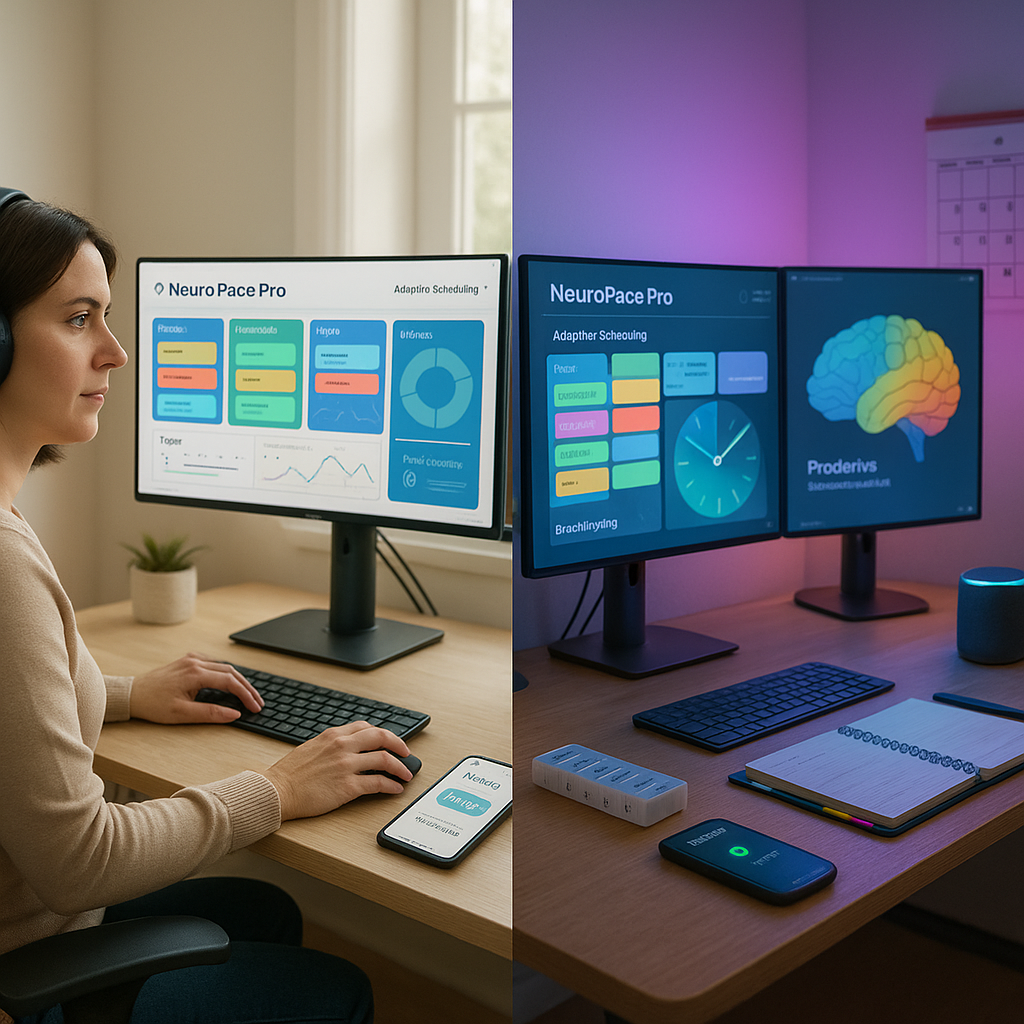
Digital tools provide vital support for managing executive function challenges:
- Voice-to-text apps capture ideas without the friction of writing
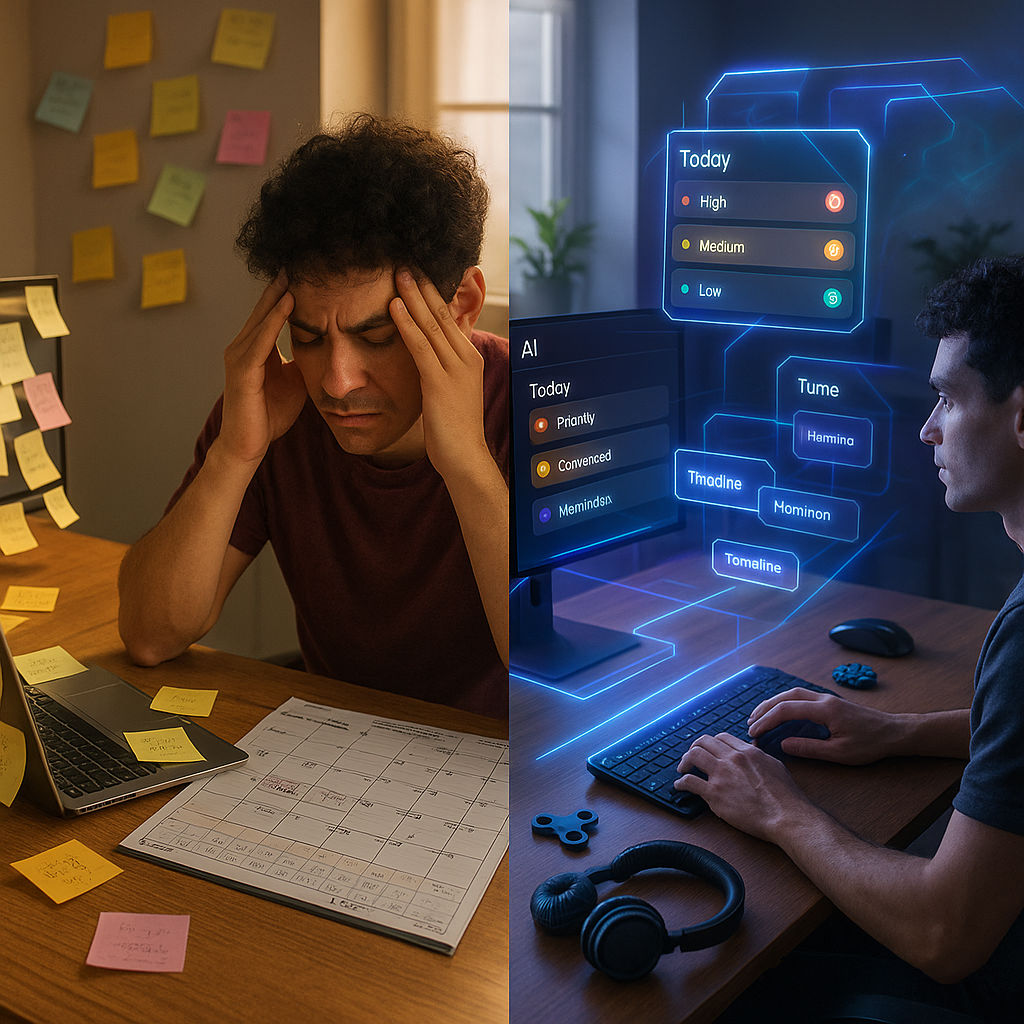
- Visual scheduling transforms time management into something my brain can see and act on
- Automated reminders and task management protect creative energy for making, not administration
- AI-powered organization tools (such as automated file sorting or search assistants) keep my systems in place with minimal upkeep
Technology doesn’t replace the human element. Instead, it removes obstacles, creating space for inspiration and flow.
Most importantly, I’ve learned that the real foundation of a flourishing creative life isn’t any specific tool or tactic, but a philosophy of self-acceptance and realistic expectation-setting. Sustainable success for neurodivergent creatives relies on designing systems that celebrate, rather than suppress, difference.
Finally, the journey is richer and more resilient with community and collaboration, reminding every neurodivergent creator that their story is shared.
Conclusion
ADHD-driven creativity stands out precisely because it operates differently. When artists reframe hyperfocus as a superpower, embrace non-linear thinking, and direct impulsivity and emotional depth into their work, they transform social misconceptions into their greatest strengths. Rather than aiming for rigid conformity, successful neurodivergent creators develop custom systems, draw wide inspiration, and use technology as a scaffold for their originality.
This approach doesn’t just defy the narrative of “coping” or “fixing” ADHD. It redefines what creative brilliance looks like. As more artists and creative communities embrace these realities, the story of ADHD in art is being rewritten: moving from stigma to celebration, and from misunderstanding to empowerment.
Looking forward, the opportunity (and challenge) lies in building environments, resources, and cultural mindsets that empower every neurodivergent creator to work in alignment with their unique operating system. The future of art, innovation, and creative impact will belong to those who not only accept neurodiversity, but champion its transformative potential. For any individual navigating this journey, the crucial question is no longer, “How can I fit in?” but, “How boldly can I shape the world with the way my mind works?”


Leave a Reply