

Key Takeaways
- AI tools designed for neurodivergence: New productivity apps support focus, structure, and creativity, aligning with how ADHD and autism brains work best.
- Automation reduces burnout risk: Automating routine tasks helps conserve mental energy and break cycles of overwhelm.
- Strength-first approach: Tools amplify neurodivergent strengths (pattern recognition, deep focus) instead of trying to “fix” deficits.
- Scalable systems for solopreneurs: Automation and AI assistants enable freelancers and founders to grow businesses without added chaos and stress.
- Practical, lived-experience solutions: ADHDink and similar platforms use real-world insights to design tools that work with, not against, neurodivergent brains.
- More innovations on the horizon: Expect smarter AI aids and consulting services tailored for neurodivergent professionals as demand grows.
Introduction
AI-powered productivity apps are transforming work for neurodivergent professionals by turning overwhelm into opportunity. Automation and systems designed for ADHD, autism, and creative minds help entrepreneurs and freelancers harness strengths like hyperfocus and rapid idea generation. Tools built from lived experience, such as those from ADHDink, are reshaping productivity and enabling sustainable business growth in fast-paced environments.
How AI Productivity Apps Are Changing Neurodivergent Workflows
AI productivity tools are revolutionizing work management for neurodivergent professionals by adapting to natural thinking patterns rather than forcing conformity. These applications use artificial intelligence to recognize variable attention spans, fluctuating energy levels, and unique processing styles common among people with ADHD, autism, and other neurodivergent conditions.
Traditional productivity systems usually assume consistent focus and linear workflows, which many neurodivergent people find challenging. AI-powered alternatives offer dynamic scaffolding, adjusting support in real time to bolster executive function or step back during periods of hyperfocus.
As a result, these tools help create work environments that support neurodivergent brains instead of working against them. With ongoing technological advancements, the gap between neurotypical-focused systems and truly inclusive productivity solutions is finally starting to close.
Turning Neurodivergent Traits Into Advantages
Many AI tools now acknowledge that neurodivergent traits often accompany significant strengths that can be amplified with the right support. Non-linear note-taking, visual mapping options, and flexible organization systems help users harness creative connections and innovative thinking patterns.
Hyperfocus, the ability to deeply concentrate on engaging tasks, becomes particularly effective when paired with AI tools that minimize distractions during productive periods. Similarly, divergent thinking and pattern recognition abilities can thrive when supported by visual organization tools that mirror natural thought processes.
These applications do not merely accommodate differences. They actively leverage neurodivergent traits as professional assets. The shift toward strength-focused technology marks a major change from earlier approaches that aimed to “fix” or mask neurodivergent characteristics.
Top AI Tools for Different Neurodivergent Styles
For ADHD and Variable Focus
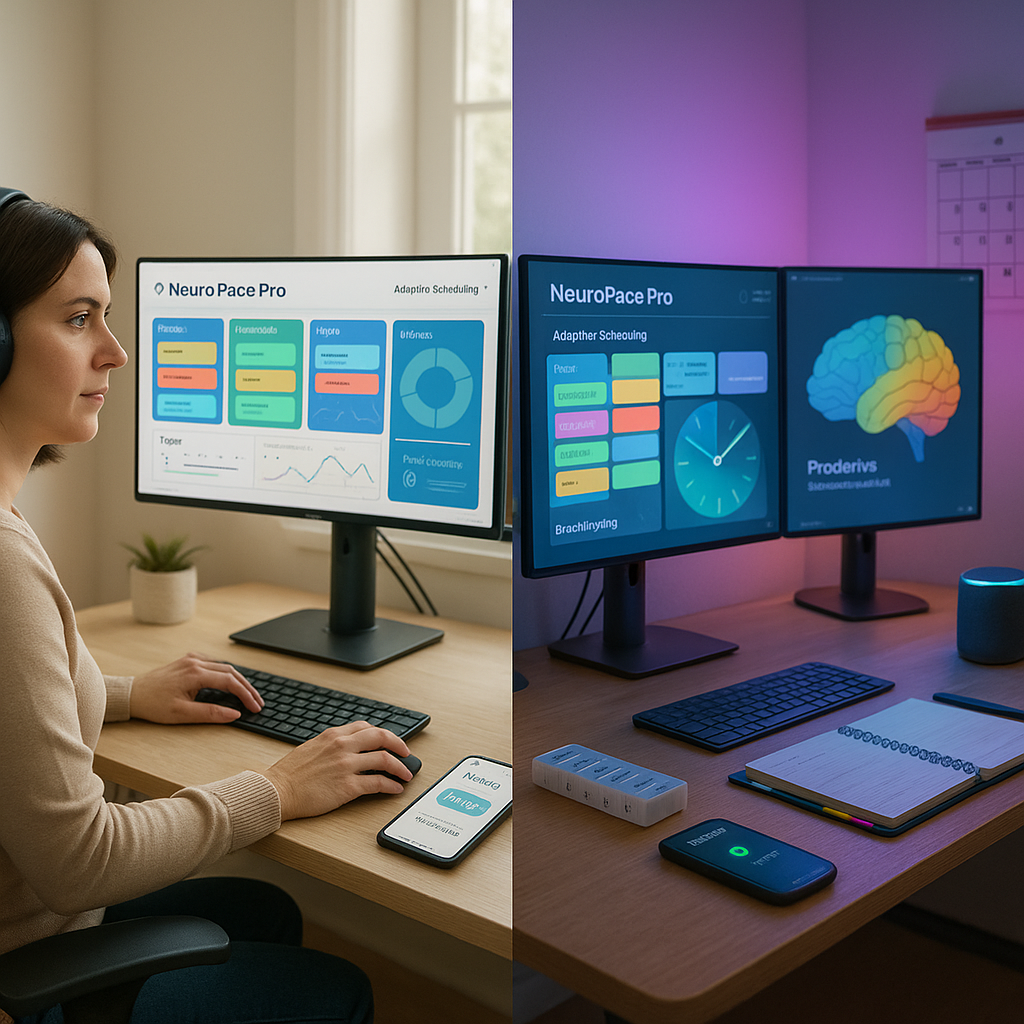
Tools like Motion AI and Timely use artificial intelligence to create adaptive schedules that respond to energy fluctuations throughout the day. These applications monitor work patterns and automatically adjust deadlines and task ordering based on detected focus levels.
Voice-to-text platforms such as Otter.ai and Speechify convert verbal processing strengths into written output, reducing the executive function burden of getting thoughts onto the page. Gamified task managers like Habitica and TickTick turn mundane responsibilities into engaging challenges thanks to dopamine-based reward systems.
For Autism and Processing Preferences
Visual workflow tools including Miro and Notion AI offer customizable environments that address various sensory and information processing needs. These platforms provide multiple ways to organize the same information (visually, textually, or categorically) so users can interact with content in their preferred format.
AI writing assistants like Jasper and Writer help with social communication by suggesting tone adjustments, flagging potential misinterpretations, and offering alternative phrasing options. For those with sensory sensitivities, apps such as Brain.fm and Focus@Will generate AI-optimized sound environments to improve concentration and block distractions.
Real-World Success Stories
Marketing consultant Alex Chen credits Motion’s AI task manager with transforming their client workflow management. Chen explained that prior to using Motion, they would hyperfocus on one client or feel overwhelmed by juggling multiple clients. The AI recognized their patterns and rescheduled tasks when plans went off track.
Software developer Mira Patel found that Notion AI’s flexible organization system allows her to use her autism-related pattern recognition strengths. She said it lets her organize information in ways that make sense for her brain, helping her find connections between projects that might otherwise be missed.
Freelance writer Jordan Taylor uses a mix of voice-dictation software and AI editing assistants to work around dyslexia challenges. Taylor noted that dictating first drafts and letting AI refine the work transformed writing from a struggle into an enjoyable process.
Implementation Strategies for Maximum Benefit
Begin with a targeted approach by identifying your main workflow friction points rather than overhauling everything at once. Choose one or two AI tools that address specific challenges and integrate them gradually into existing routines.
Customize notification settings, visual interfaces, and methods of interaction to suit your sensory preferences and attention patterns. Many neurodivergent professionals benefit from creating distinct work environments for different modes (one setup for creative work and another for detailed tasks).
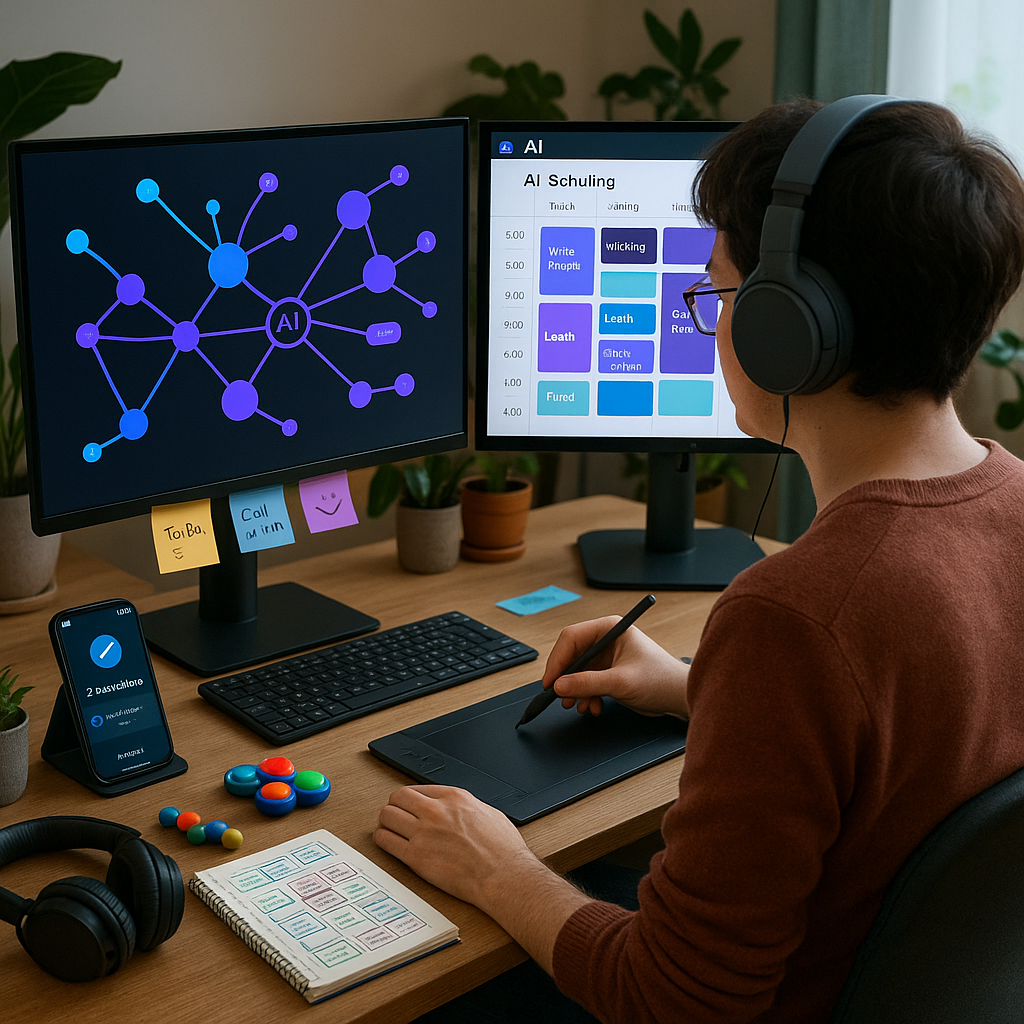
Pair AI tools with accommodations that address physical and sensory needs. Digital solutions are most effective when complemented by supportive environmental adjustments, such as proper lighting, comfortable furniture, fidget tools, or noise-canceling headphones.
Potential Challenges and Workarounds
Privacy remains a significant concern when AI productivity tools learn from user behavior. Protect sensitive information by separating systems for personal and professional tasks, regularly reviewing privacy settings, and researching company data practices before committing to a platform.
Technology dependence can become an issue during outages or when without reliable internet access. Simple backup solutions like paper notebooks or offline apps can temporarily fill gaps when primary tools are unavailable.
Learning curves vary widely across AI platforms. Seek tools with strong onboarding resources, such as video tutorials, neurodivergent-focused templates, and accessible customer support that fits your communication style.
What’s Next in Neurodivergent Productivity Tech
Several major technology companies have announced upcoming AI features specifically designed around neurodivergent cognitive patterns. For example, Microsoft’s 2023 productivity suite updates include customizable focus modes based on self-reported ADHD symptom patterns and adaptive reminders.
Wearable technology integration is another emerging area. Companies are developing systems that detect stress and concentration levels to offer real-time support, with features that adjust the environment or provide interventions before overwhelm sets in.
Personalization capabilities are advancing quickly as AI systems learn individual work patterns. Future tools are expected to adapt not just to diagnosed conditions but to each person’s unique cognitive profile, creating truly individualized productivity environments.
Expert Recommendations for Choosing the Right Tools
Dr. Maya Williams, a neuropsychologist and workplace accommodation specialist, recommends solutions that align with your specific strengths. She stated that the best AI productivity tools for neurodivergent professionals do not just compensate for challenges; they actively leverage natural thinking patterns.
Technology accessibility consultant Raj Patel suggests evaluating how each tool supports task transitions. Patel noted that many neurodivergent people experience difficulty starting or switching tasks and advises seeking applications that provide scaffolding during these transition points.
Career coach Sophia Martinez advises starting with a 14-day evaluation period for any new productivity system. Martinez recommends documenting both measurable improvements and qualitative experiences, paying close attention to reductions in stress as well as increases in output.
AI Ethics Specialist Tim Johnson encourages users to consider the long-term impact of algorithmic assistance. Johnson advises choosing tools that enhance capabilities rather than replacing unique thought processes. The goal should be to augment natural abilities, not create dependency.
Conclusion
AI-driven productivity tools are transforming how neurodivergent professionals harness strengths and reduce workplace barriers, shifting the focus from correcting challenges to unlocking innovative potential. As personalizable features and supportive integrations expand, digital workflow accessibility is steadily improving. What to watch: anticipated updates from major tech companies and the rollout of adaptive features, such as Microsoft’s planned focus modes, signal further inclusive advances ahead.



Leave a Reply