

Key Takeaways
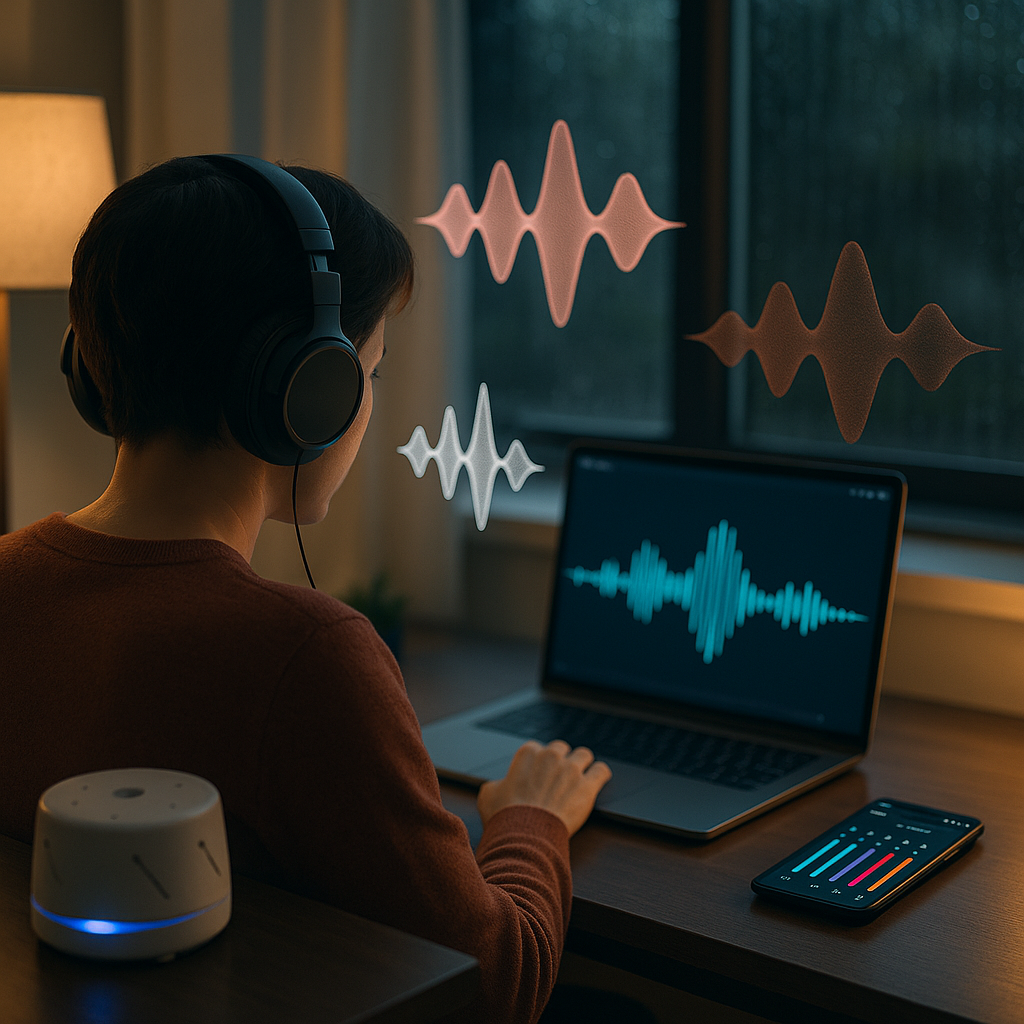
- Transform chaos into calm with customized soundscapes. App-generated backgrounds like white noise, rainfall, or ambient nature sounds help block out overwhelming distractions, creating a personal zone where ADHD minds can flourish.
- Smart gadgets adapt to your unique workflow. Adaptive headphones and ambient sound machines sense shifts in your environment and dynamically adjust noise levels, helping you stay focused whether you are brainstorming, working, or on the move.
- Playful experimentation drives your focus formula. There is no one-size-fits-all solution; today’s ambient sound tools let you mix, layer, and fine-tune audio, so you can discover what best fuels your attention and keeps your mind in flow.
- App-driven audio routines help organize digital chaos. Many modern focus apps now include built-in scheduling, reminders, and automated ‘focus sessions’ that seamlessly blend sound therapy with scheduled breaks, bridging the gap between good intentions and consistent routines.
- Seamless integration puts sound at the heart of your routine. Leading sound solutions can sync with calendars, task managers, and even smart home devices, allowing noise control to become a central and automated part of your daily life, not just an afterthought.
- Sound becomes an ally, reframing distraction as usable energy. By learning to manage their auditory environment, individuals with ADHD can transform external chaos from a trigger into a driver for sustained focus and creative flow.
With the right technology and a willingness to experiment, managing your auditory environment shifts from a daily challenge to a strategic strength. Let’s explore the most effective apps, gadgets, and creative sound experiments that empower neurodivergent minds (including yours) to move from scattered to supercharged.
Introduction
Your brain is not broken. It is uniquely brilliant, especially when you adjust your surroundings to match your frequency. For many people living with ADHD or other neurodivergences, finding the right background sounds can mean the difference between feeling scattered and locking into a powerful state of flow. Science supports this: carefully chosen audio does not have to be a distraction. In fact, it often serves as an essential tool for gaining clarity, boosting energy, and regaining control of your space.
Ambient sound apps and adaptive gadgets have evolved far beyond the old-fashioned white noise machines or static playlists. Today, these tools sense the noise around you, shape it, and empower you to experiment with curated soundscapes ideal for your mind. Rather than battling against noise, imagine using it as a customized tool to support your strengths. Now, explore the latest in noise control technologies and playful sound experiments that turn distraction into your personal advantage.
The Science of Sound and the ADHD Brain
Understanding the relationship between ambient sound and focus in ADHD is not just about anecdotal experience; it is rooted in neurobiology. The ADHD brain manages dopamine and norepinephrine differently, which directly shapes the way environmental sounds impact attention and self-regulation. When you understand these dynamics, the potential of sound as a support tool becomes clearer.
How Ambient Sound Shapes Neurodivergent Attention
ADHD brains often operate with lower baseline dopamine levels. This state creates a steady drive to seek out stimulation, which is where thoughtfully applied sound comes in.
- Optimal Arousal Theory: ADHD minds function best within a specific stimulation range. Too little stimulation leads to boredom, while too much brings on overwhelm. Finding your sweet spot is key.
- Stochastic Resonance: Science shows that a certain level of background noise can enhance the brain’s ability to process important signals, helping to filter out distractions and sharpen focus.
- Predictable Auditory Input: Consistent and predictable background sounds give the ADHD brain a stable audio landscape. This steadiness can reduce the drive to seek new, distracting stimulation, making it easier to stay on task.
Research from the Journal of Cognitive Neuroscience found that moderate ambient noise (about 70 decibels) can boost cognitive performance for people with attention challenges. The right amount of background sound provides stimulation without overwhelming the senses, helping to optimize sustained focus.
White Noise, Pink Noise, and Brown Noise: Which Fits Your Brain?
Not all ambient sounds impact ADHD brains in the same way. Each “color” of noise offers distinctive properties that appeal to different attention styles.
White Noise: This sound encompasses all audible frequencies at equal intensity, and is similar to static, a fan running, or rushing air.
- Best for: People who need complete masking of environmental disruptions.
- ADHD benefit: Forms a consistent audio barrier that prevents sudden, unexpected noises from interrupting focus.
Pink Noise: Heavier in low and mid frequencies, pink noise resembles rainfall or leaves rustling.
- Best for: Those who find white noise too sharp or grating.
- ADHD benefit: This natural, soothing sound often calms anxiety and eases focus challenges.
Brown Noise: Even deeper and richer, brown noise brings more low-frequency energy, sounding like a roaring waterfall or distant thunder.
- Best for: Deep work, meditation, or people highly sensitive to sound fluctuations.
- ADHD benefit: Many ADHDers report that brown noise provides a weighty, enveloping effect, quieting mental static and promoting deep concentration.
Its effectiveness is highly individual. A survey of 500 adults with ADHD by ADDitude Magazine found that 62% preferred brown noise for focus tasks, 24% chose pink noise, and 14% relied on white noise. This clear diversity underlines the importance of experimenting to find your own sonic match.
Top Ambient Sound Apps for ADHD Focus
The market offers an impressive variety of digital solutions designed specifically for neurodivergent attention needs. These range from simple, user-friendly noise generators to sophisticated, customizable sound environments.
Mobile Apps That Go Wherever You Do
Today’s mobile applications give you powerful sound-control tools in your pocket:
-
MyNoise (iOS/Android)
-
Key features: Highly customizable frequency sliders let you fine-tune every aspect of sound, creating personalized profiles for focus, creativity, or rest.
-
ADHD advantage: You can tailor each soundscape to different contexts, helping reduce the decision fatigue of picking new tracks.
-
Unique perk: Includes “superstimulus” settings made to engage neurodivergent minds.
-
Brain.fm (iOS/Android/Web)
-
Key features: AI-generated music is scientifically engineered to enhance brain synchronization and focus.
-
ADHD advantage: Its patented technology is tested for attention support, evolving subtly to avoid becoming monotonous or distracting.
-
Unique perk: Soundscapes adapt over time to match your attention needs.
-
Endel (iOS/Android/Mac/Windows)
-
Key features: Automatically adapts the audio environment to your activity, time of day, or even real-time biometric data from wearables.
-
ADHD advantage: Minimizes choices and automates ‘what to listen to’ for effortless routine support.
-
Unique perk: Integrates seamlessly with Apple Health and other devices for a truly personal experience.
-
Dark Noise (iOS)
-
Key features: Quick access to more than 50 high-quality ambient sounds with a clean, distraction-free interface.
-
ADHD advantage: Simplifies selection, making it easy to activate your desired sound instantly.
-
Unique perk: Offers powerful widgets and shortcuts for fast, frictionless use.
Which app is best depends on your attention style and daily workflow. If you crave variety to stave off boredom, apps like MyNoise are ideal. For those who struggle to make repetitive decisions, Endel’s automation may be the game-changer.
Desktop Applications for Deep Work and Creative Flow
Longer work sessions often mean needing more robust desktop solutions with advanced features:
-
Noisli (Web/Chrome)
-
Key features: Combines multiple sound elements (like rain, thunderstorms, and forest sounds) allowing you to save and reuse favorite mixes.
-
ADHD advantage: Reduces setup time with saved combinations for different tasks and moods.
-
Unique perk: Built-in focus timer pairs soundscapes with proven productivity techniques.
-
Focus@Will (Web/iOS/Android)
-
Key features: Creates curated music channels matched to your brain profile and focus style.
-
ADHD advantage: Personalizes recommendations using a quick quiz, tracking your top focus boosters.
-
Unique perk: Includes a productivity tracker so you can see which sounds help you most.
-
SoundSource (Mac)
-
Key features: Gives you granular control over audio signals in individual apps.
-
ADHD advantage: Lets you shape the audio environment for each software you use (Zoom, Spotify, web browser, etc.).
-
Unique perk: Enables quick switches and enhancements without pausing your workflow.
Desktop programs often support deeper analytics, longer session controls, and more advanced audio mixing. All of these help you optimize your environment as you learn what works.
Ambient Sound Hardware and Gadgets
Although digital apps are flexible, there are times when reliable hardware offers superior sound quality and removes digital temptations altogether. Investing in the right device can become a true game-changer for neurodivergent professionals.
Dedicated White Noise Machines: Reliable and Distraction-Free
These purpose-built devices offer consistent, high-quality sound without the interruptions of phones or computers:
-
LectroFan Evo
-
Cost: $50-$60
-
Features: 22 sound options, including a variety of white, pink, and brown noise settings.
-
ADHD edge: Non-looping sound files mean no audible patterns to distract your brain.
-
Ideal for: Home offices and professional workspaces.
-
Yogasleep Dohm Classic
-
Cost: $45-$50
-
Features: Generates sound using real air movement (offering a random, natural noise experience).
-
ADHD edge: Mechanical production ensures non-repetitive, organic sound.
-
Ideal for: Sound-sensitive users who dislike electronic reproduction.
-
Sound+Sleep High Fidelity Machine
-
Cost: $80-$100
-
Features: Adaptive tech senses environmental changes and adjusts accordingly.
-
ADHD edge: Increases masking power as new distractions arise during your session.
-
Ideal for: Shared apartments, busy offices, or anywhere unpredictable noise is an issue.
Standalone machines remove the temptation to multitask or check notifications and deliver richer, distraction-free sound quality.
Headphones, Earplugs, and Wearables Built for Neurodivergent Focus
The way sound is delivered can be as impactful as the sound itself. Consider these devices for attention support:
-
Bose QuietComfort Earbuds II
-
Cost: $280-$300
-
Features: Top-tier active noise cancellation with individualized fit.
-
ADHD edge: CustomTune adapts to your ear shape for precise noise blocking.
-
Best for: Busy environments demanding total control.
-
Sony WH-1000XM5
-
Cost: $350-$400
-
Features: Class-leading ANC, plus “speak-to-chat” that pauses your audio for brief conversations.
-
ADHD edge: Seamlessly transitions between deep work and social engagement.
-
Best for: Open offices, coworking spaces.
-
Loop Earplugs
-
Cost: $20-$35
-
Features: Earplugs that decrease noise volume but retain environmental awareness.
-
ADHD edge: No charging, maintenance, or tech dependency.
-
Best for: Users needing balance between isolation and situational awareness.
-
AfterShokz OpenComm (Bone Conduction)
-
Cost: $150-$180
-
Features: Delivers sound through bones, leaving ears completely open.
-
ADHD edge: Eases sensory sensitivities and prevents occlusion discomfort.
-
Best for: Those with tactile aversion or heightened sensitivity to traditional earbuds.
Hardware solutions can be especially powerful in fields like healthcare (where practitioners need non-intrusive background sound for stressful shifts), education (supporting focused study and test taking), and finance (reducing open-office distractions during high-stakes analysis). Even legal and marketing professionals use these tools to stay centered during research or creative sprints.
Conclusion
Harnessing the power of sound is not just a life hack for ADHD. It is a research-backed strategy for transforming focus, energy, and calm across all neurotypes. By understanding the distinct ways different sounds interact with the ADHD brain, you can move beyond endless trial and error and toward crafting an auditory environment that genuinely sustains your attention and creativity.
Success comes when you experiment, iterate, and adapt, knowing there is no universal solution. Embrace apps, gadgets, and routines that make life easier and lean into personalized experimentation to discover what resonates for you. In today’s world, where environmental chaos is constant, curating your own soundscape is a radical act of self-advocacy and empowerment. It redefines how you work, learn, and live. You are not broken. With the right mix of tech-savvy tools and creative strategies, you can turn daily distractions into fuel for brilliance.
Looking forward, those who master their sensory environment will not just survive the noise. They will turn it into a competitive edge. Whether you are scaling a business, refining your workflow, or simply seeking peace in a busy world, the real question is not if you will adopt these advancements, but how creatively you will use them to thrive on your terms.


Leave a Reply