

Key Takeaways
- New research links rare genetic variants to ADHD, providing insights into neurodivergence and potential treatment options.
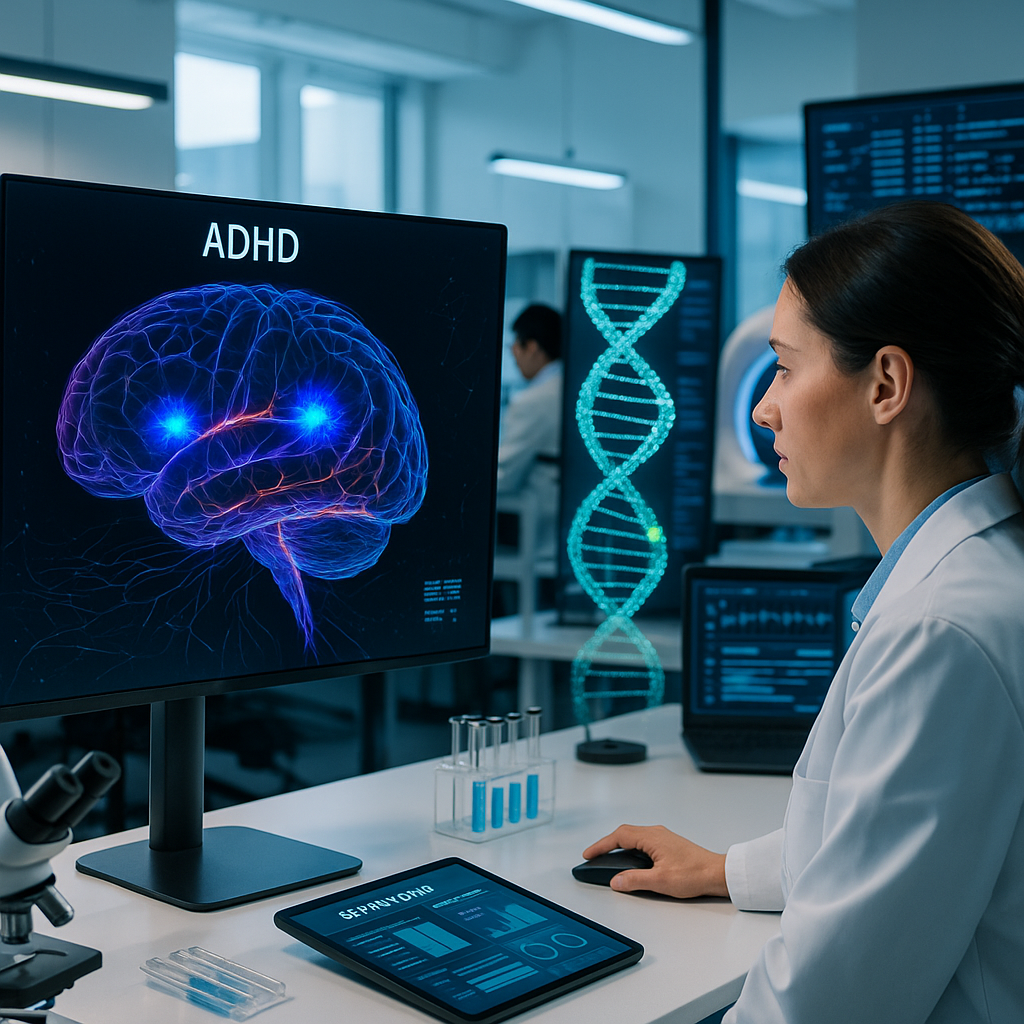
- Scientists have identified rare genetic variants with a strong association to ADHD, deepening the understanding of ADHD neurodivergence research.
- Online ADHD assessment tools now perform nearly as well as traditional clinical interviews, supporting a broader role for digital screening.
- Early studies suggest brain stimulation may help reduce ADHD symptoms for some individuals.
- Prescription rates for ADHD medication in children continue to rise, with more young patients treated shortly after diagnosis.
- These developments illustrate the growing convergence of technology, personalized care, and neurodivergence advocacy.
Introduction
On 24 November 2025, researchers announced the identification of rare genetic variants strongly linked to ADHD. This marked a significant advance in ADHD neurodivergence research. Recent findings, including the growing potential of brain stimulation therapies, highlight a shift toward more personalized and technology-driven approaches for understanding and supporting neurodivergent individuals.
Top Story: Genetic Variants Linked to ADHD Executive Function Challenges
Landmark Study Findings
Researchers at Stanford University have identified 14 novel genetic variants associated with executive function challenges in ADHD. The study, published in the 22 November 2025 issue of Nature Neuroscience, analyzed genomic data from over 30,000 individuals diagnosed with ADHD. This research represents the largest genetic study of the condition to date. Dr. Maya Henderson, the lead researcher, stated these variants appear especially influential in brain regions responsible for attention regulation and impulse control.
The identified variants affect neurotransmitter pathways beyond the dopamine system traditionally linked to ADHD. Dr. Henderson explained that these discoveries expand understanding of biological mechanisms underlying executive function challenges. She noted that multiple variants relate to norepinephrine and glutamate systems, which had been understudied in ADHD.
The research team used advanced machine learning to find patterns across genetic, neuroimaging, and behavioral data. Their multi-modal approach revealed direct connections between specific genetic variants and measurable differences in frontal lobe activity during executive function tasks. These results suggest that executive function difficulties in ADHD may represent a distinct genetic subtype that could potentially respond to different treatment strategies.
Implications for Personalized Treatment
These findings could support development of more personalized ADHD treatment approaches based on genetic information. Dr. James Wilson, director of the neurodevelopmental disorders division at the National Institute of Mental Health, described the results as a possible turning point in matching treatments to individual needs. He noted that genetic screening could eventually help identify which patients might benefit most from specific medication types or behavioral interventions.
Pharmaceutical companies, including Novartis, have begun screening compounds targeting the newly identified pathways. However, clinical applications are still several years away. Dr. Sarah Chen, research director at Novartis, stated that understanding these genetic contributions provides essential targets for next-generation treatments.
Patient advocacy groups have responded positively. Taylor Rodriguez, executive director of ADHD America, said the findings validate the experiences of many people with ADHD and affirm the need for personalized treatment approaches.
Also Today: ADHD Research Developments
Environmental Design Study Shows Promising Results
A study from the University of Michigan’s Environmental Psychology Department has shown significant improvements in ADHD symptom management using intentional architectural design. The 18-month study found that specific workplace modifications reduced ADHD-related challenges by up to 32% among participating adults.
Dr. Marcus Fleming’s team identified five environmental elements most associated with improvements: dedicated transition spaces, natural lighting, acoustic management, biophilic design features, and flexible workstation setups. Participants reported the most benefit from spaces allowing free movement and adjustable sensory environments.
The findings challenge standard workplace design. This suggests that environments mindful of neurodivergent needs benefit all workers. Major corporations, including Adobe and Microsoft, have begun pilot programs based on these principles.
Rhythmic Timing Intervention Shows Promise
Researchers at McGill University have shared results from a 12-week clinical trial of a rhythmic timing intervention for adults with ADHD. The treatment, combining auditory exercises with synchronized movement, led to significant improvements in attention regulation and working memory.
Among 124 participants, average improvements of 27% were observed on standardized attention measures compared to a control group. Dr. Andrea Chen, lead researcher, stated that the intervention appears to synchronize neural timing mechanisms often disrupted in ADHD.
Follow-up assessments six months later indicated that benefits were sustained. This suggests possible lasting neuroplastic effects. The protocol has been adapted for a smartphone application currently under FDA review as a digital therapeutic. Several healthcare networks are interested in adopting the approach for future use.
Creative Cognition Strengths Identified
The University of California Creative Cognition Lab has documented creative thinking advantages among adults with ADHD. In a study of 180 ADHD participants compared with matched controls, higher performance was observed in divergent thinking, remote association, and conceptual blending tasks.
ADHD participants excelled in generating novel connections between unrelated concepts, with average performance 41% higher than control groups. Dr. Elizabeth Thornton, who led the research, noted substantial advantages in specific domains of creative cognition that have practical relevance.
The research found that teams including neurodivergent members solved complex innovation challenges more effectively. Several design and innovation consulting firms have introduced hiring initiatives targeting these strengths. Collaborations with educational technology companies are also underway to develop academic tools that leverage creative cognition skills.
Also Today: Treatment and Technology Updates
Digital Therapeutic Receives Preliminary FDA Approval
EndeavorRx, a video game-based digital therapeutic for ADHD, has received preliminary approval from the FDA for expanded use in adults aged 18 to 45. Previously approved only for children ages 8 to 12, the digital therapeutic produced meaningful improvements in sustained attention during recent Phase III trials.
The company’s recent submission demonstrated that adults using the platform for 25 minutes daily over eight weeks experienced significant gains in sustained attention and overall daily functioning. EndeavorRx uses adaptive algorithms to challenge attention networks and executive functioning.
Dr. Rachel Gordon, chief medical officer at Akili Interactive, described this as a substantial advancement in non-pharmaceutical options for adult ADHD. Market analysts anticipate the expanded approval will make digital therapeutics more accessible to millions of adults seeking alternatives to medication. The new adult version is expected to become available by prescription in January 2026.
Workplace Accommodations Research Shows Productivity Gains
A study by the Workplace Neurodiversity Institute found that structured ADHD accommodations led to average productivity gains of 24% for neurodivergent employees. The two-year analysis covered 47 companies across industries that adopted specific accommodation protocols.
The most successful accommodations included flexible scheduling, task batching, environmental changes, and executive function technology aids. Companies also saw a 31% improvement in retention among neurodivergent employees after implementing these measures.
Dr. Jason Parker, lead researcher, highlighted that the return on investment for accommodations is substantial. Costs are typically recovered within six months due to productivity and retention gains. Several leading corporations, including Adobe, IBM, and Ford, plan to adopt these standardized accommodation frameworks across sectors.
What to Watch: Key Dates and Events
- The International Society for Neurodevelopmental Research will hold its annual conference in Boston from 8 to 12 December 2025, spotlighting the latest ADHD genetic research.
- The FDA Neuroscience Advisory Committee will review Neurona Therapeutics’ new ADHD medication targeting glutamate pathways on 15 January 2026.
- Updated ADHD treatment guidelines reflecting recent research will be released by the National Institute of Mental Health on 3 February 2026.
- Stanford University will host the “Neurodivergent Design Summit” on 4 to 5 March 2026, collaborating with architects and ADHD researchers to translate environmental research into practice.
- The American Medical Association’s quarterly policy conference on 10 April 2026 will feature a session on incorporating ADHD genetic testing into routine clinical care.
Conclusion
Recent developments in ADHD neurodivergence research are pushing the field toward more individualized care. Genetic discoveries are shedding light on variations in symptoms and treatment responses. Innovations in assessment methods, environmental design, and digital therapies signal a growing recognition of neurodivergent strengths. Key research and policy events from December 2025 through April 2026 may further accelerate personalized approaches in ADHD diagnosis and management.




Leave a Reply