

Key Takeaways
- Build micro-structured routines for flexibility and focus: Design mini routines and daily anchors that match your fluctuating energy and motivation. This approach supports executive function and unleashes creativity without the rigidity of traditional schedules.
- Personalize your digital toolkit to defend against distraction: Select ADHD-friendly tools such as app blockers, focus timers, and cloud note apps that align with your own attention patterns. Avoid one-size-fits-all setups and let your digital environment evolve with your needs.
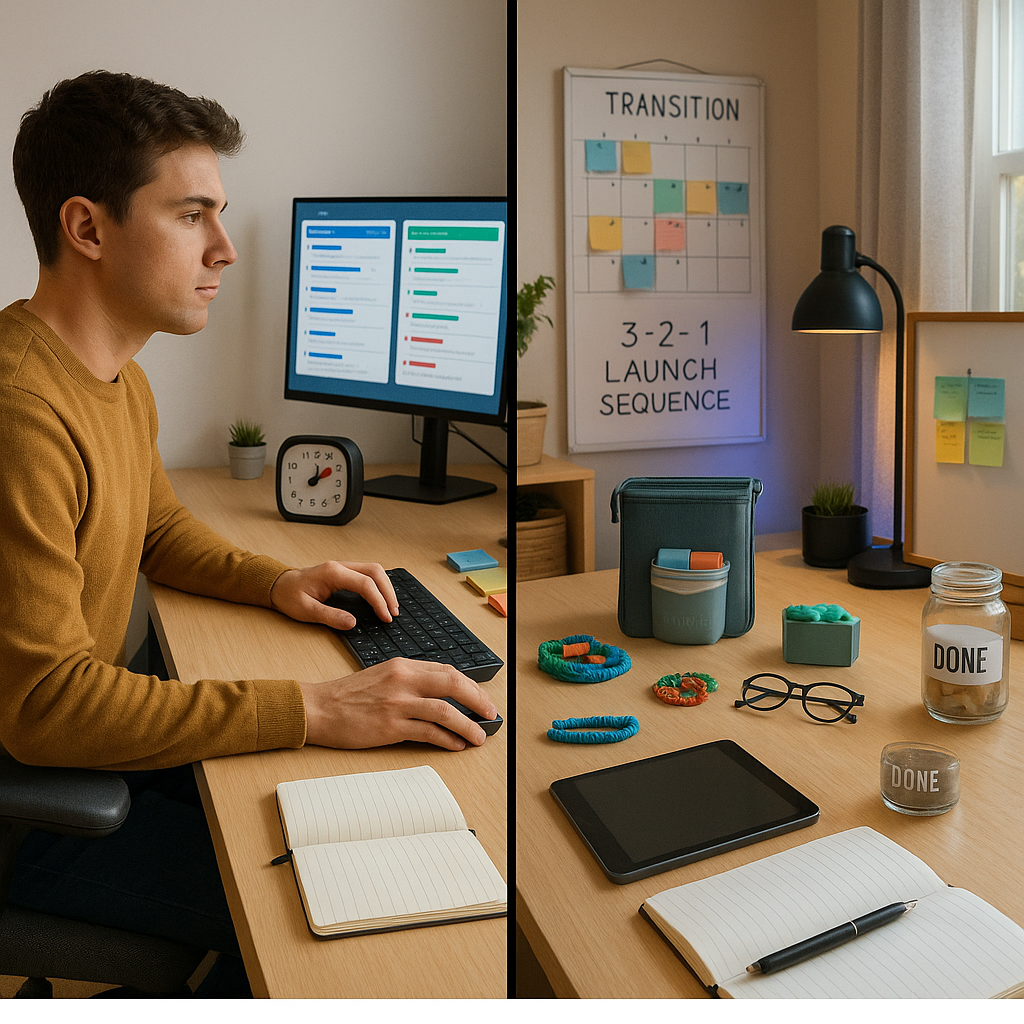
- Engineer your environment for clarity, not just quiet: Shape your workspace with cues (such as visual timers, color coding, and tactile objects) and make ergonomic upgrades. These elements signal “work mode” and reduce both sensory overload and the temptation to drift off task.
- Communicate proactively to shape hybrid workflow expectations: Set boundaries and clarify your preferred response times, meeting formats, and methods of asynchronous collaboration. Champion neurodivergent-friendly communication norms to minimize friction and prevent misunderstandings.
- Embrace dynamic focus strategies over rigid time management: Use a combination of techniques (like time blocking, body doubling, and “sprint and rest” cycles) to maintain momentum. Respect your attention rhythms instead of fighting against your brain’s natural operating system.
- Turn remote freedom into an ADHD superpower instead of a saboteur: See flexibility as an asset. Customize your workflow, experiment with what works, and celebrate small wins. This mindset transforms unpredictability into a driver of creative energy.
- Address both ADHD and remote work challenges with layered systems: Recognize that generic productivity advice falls short. Combine personalized digital, physical, and social supports to meet the unique demands of neurodivergent remote workflows.
These strategies honor both the strengths and realities of ADHD in remote and hybrid environments. They help you create sustainable focus, seamless workflows, and genuine productivity tailored to your unique mind. In the sections below, we delve deeper into each approach, providing concrete tools, actionable routines, and examples to help you put neurodivergent brilliance front and center.
Introduction
Remote and hybrid work can feel like a double-edged sword for professionals with ADHD. The freedom they offer is exciting, yet that same flexibility often opens the door to overwhelm, distraction spirals, and routines that unravel before lunch. If your workspace switches between home and office (or multiple locations in a single week), the old advice about productivity no longer fits. Tools that promise universal solutions can actually make things harder by forcing you to fight your natural patterns.
To thrive in remote or hybrid roles with ADHD, you need systems that are deeply tailored: micro-structured routines, adaptive technology, and communication strategies that actually meet your needs. This article explores how to turn remote flexibility into an ADHD advantage, layering practical tools, focus strategies, and workspace upgrades to build clarity and authentic productivity that grow with you.
Building Personalized Routines
The Neuroscience of Structured Routines
Traditional work environments provide external structure—set hours, physical transitions, and predictable cues. These help guide ADHD brains through the day. Remote and hybrid work often strip these away, making self-imposed routine not just helpful but essential. The prefrontal cortex, responsible for executive functions like planning and self-regulation, can function differently in ADHD brains. Thus, building routines becomes a way to externalize what the brain has trouble holding internally.
Consistent micro-structured routines help form new neural pathways, gradually reducing the cognitive effort required to start tasks and switch contexts. Repetition builds automaticity. For instance, a reliable morning startup sequence doesn’t just signal “time to work”; it triggers brain chemistry that boosts focus and motivation. These “habit stacks” counter decision fatigue and create a reliable launchpad to productivity.
Daily Anchors and Transition Rituals
Strong anchors at different points in your day can provide much-needed stability.
Morning Anchors:
- The 3-2-1 Launch Sequence: Three deep breaths, select two priority tasks, and choose one reward for finishing them.
- Environmental Activation: Open curtains, adjust lighting, and use a special mug for your morning drink to signal the start of work.
- Digital Boundary Setting: Spend ten minutes prepping your status, shutting down distractions, and opening only essential apps.
Transition Rituals:
- Home-to-Office Bridge: Create identical core routines at home and in the office (same playlist, same drink, same task review). This helps ease the context switch.
- Task Context Switching: Take five-minute breaks between different types of work (stand and stretch, change your music, or clear your desk).
- Location Transition Buffer: Schedule half-hour buffer periods before and after commutes to reorient mentally.
Physical Consistency Example:
An ADHD business consultant uses matching sets of fidget tools at home and work. Opening the container signals it’s time to focus. This kind of physical anchor creates a strong, context-agnostic mental cue.
Adapting to ADHD Energy Fluctuations
ADHD attention and energy vary more dramatically than most productivity models anticipate. Instead of battling through these cycles, tailor your schedule to harness your natural rhythms.
Energy Mapping Exercise:
- Briefly check in on your focus, energy, and mood each hour for a week.
- Spot your peak focus windows and energy dips.
- Group tasks to match these patterns.
Practical Implementation:
- Assign deep work to your “hyperfocus windows.”
- Reserve admin or low-stakes tasks for lower-energy times.
- Build in microbreaks (5–10 minutes) after high-concentration tasks.
- Develop a “rescue routine” for days when starting anything feels impossible.
A software developer with ADHD reports:
“I’m sharpest from 9-11am and 3-5pm, but always hit a wall after lunch. Now I save meetings and emails for my 1-2pm slump and focus on coding during my high-energy periods. My output jumped by a third once I paired my workflow to my brain.”
Managing Home-Office Transitions
Hybrid work introduces both opportunities and friction. ADHD minds appreciate variety, but inconsistency can erode productivity without careful support.
Location-Specific Advantages:
- Office Days: Prioritize collaboration, meetings needing face time, and equipment-dependent tasks.
- Home Days: Deep dive into long-term projects and solo focus where interruptions are fewer.
Consistency Tools:
- Mirror your digital workspace across locations (same desktop organization and bookmarks at home and at the office).
- Use “transition kits” (a bag or box with must-have items) to stay ready wherever you are.
- Create routines that work in any location, not ones tied to a specific desk.
Visual Schedule Strategy:
Calendar color-coding anchors you visually. For example, blue for home days, green for office days. This instantly cues your brain to expect a given context and routine.
True routine for ADHD isn’t about rigidity. It’s about intentional, flexible systems that both adapt to your needs and keep you anchored. Personalized routines set the stage. Next, we’ll see how digital tools can scaffold, reinforce, and simplify these systems.
ADHD-Friendly Productivity Tools
Digital Scaffolding for the ADHD Brain
Digital tools can serve as external executive functions, supporting you where ADHD typically brings challenges. However, not all tools are created equal for neurodivergent users. The best ones are visually clear, reduce cognitive friction, and allow flexible organization.
Task Management Platforms:
- Notion: Highly customizable, lets users display info as kanban boards, calendars, or lists. This is ideal for matching shifting attention styles.
Tip: Display just your key projects on the dashboard to prevent overwhelm. - TickTick: Blends task lists, Pomodoro timers, and habit tracking. Quick task entry is perfect for catching fleeting ideas.
ADHD Advantage: Visual time-blocking helps combat time blindness. - Todoist: Uses natural language entry and lets you break big goals into bite-size subtasks.
Example: One user color-codes tasks by required energy: red for max focus, green for “brain-on-autopilot” chores.
Focus Support Tools:
- Freedom: Simultaneously blocks distracting apps and sites across all your devices.
- Forest: Turns focus sessions into a gamified experience (grow trees as you work).
- Krisp: Filters background noise from calls, which is critical for anyone sensitive to auditory distractions.
Time Visualization:
- Timeular: A physical time tracker that tangibly reinforces time awareness. It’s a game-changer for ADHD.
- Clockify with Visual Timer: Offers countdown timers and time tracking in one place.
A marketing professional shared:
“Time tracking felt pointless until I realized it proved I actually accomplished more than I thought. Reviewing my app’s logs turned my inner critic off and motivated me to keep going.”
Integrating Digital and Analog Systems
Hybrid systems that blend digital convenience with analog tactile elements often work best for ADHD minds.
Hybrid Methods:
- Paper Planning + Digital Alerts: Plan your day on paper but let your phone prompt you when to start tasks.
- Whiteboard + Digital Details: Track major projects on a wall but keep all deadlines and documents digital.
- Bullet Journal + Digital Calendar: Capture brainstorms and to-dos in a flexible notebook but keep appointments and reminders synced online.
Transition Tips:
- Block off ten minutes daily to sync handwritten notes into your main digital platform.
- Use apps that can scan and digitize your written notes in seconds.
- Maintain tags or labels that work in both your analog and digital realms.
Touch-Digital Blend:
- Print your top three daily priorities and physically check them off.
- Move a tangible token or object after completing major tasks to mark progress.
- Place completed task notes into a “done” jar as visible proof that you’re moving forward.
Preventing Tool Overload
Too many productivity systems create a new layer of friction for ADHD users. Keep your workflow lean and sustainable:
Minimum Viable System:
- Start with the essentials (just what you need to function daily).
- Stick with a basic setup for at least three weeks before adding extra features.
- Expand only after you’re comfortable and confident with your current tools.
- Audit your toolkit every month or quarter and let go of unused apps.
Integration is Key:
Favor tools that automatically connect (calendar synced with task list, project manager linked to communication platforms). Use automation integrations (like Zapier) to reduce the need for manual updating. When possible, choose software from the same ecosystem to keep your systems streamlined.
Conclusion
Lasting productivity for ADHD minds in remote and hybrid environments is built on more than just good intentions. It requires intentional systems, flexible routines, and thoughtfully chosen tools that serve your brain instead of working against it. Root your day in daily anchors that sync with your rhythms, use digital scaffolds and tactile triggers to guide yourself through tasks, and favor minimum viable complexity over feature-hoarding.
At its core, sustainable success isn’t about conforming to mainstream productivity standards or forcing yourself into frameworks that stifle your strengths. It’s about building an adaptive workflow that scales with your needs, honors your unique operating system, and turns flexibility from an obstacle into your ultimate competitive advantage.
Looking ahead, those who experiment, iterate, and advocate for personalized support (whether in business, creative work, healthcare, or beyond) will lead the way in redefining productivity for the neurodivergent era. The greatest leverage comes not from masking your ADHD traits, but from designing systems that let your mind work at its best. The path forward demands bold authenticity and a willingness to leverage your difference as your brilliance.
Will you build the model that others will follow?


Leave a Reply