

Key Takeaways
- A Finnish study finds that an adult ADHD diagnosis is linked to significantly lower antidepressant use, highlighting potential implications for treatment strategies.
- This ADHD press review for 21 November 2025 details cascading impacts of ADHD medication shortages and emerging trends in management.
- Finnish research connects adult ADHD diagnosis to a marked reduction in antidepressant use.
- ADHD medication shortages are disrupting care in the US and UK, affecting treatment consistency.
- Centanafadine, a new drug, is delivering breakthrough results in pediatric ADHD trials.
- Daily screen time reaching up to 11 hours is associated with higher ADHD and anxiety rates.
- Confirmed developments to watch include ongoing tracking of supply chain solutions for ADHD medications in North America and the UK.
Introduction
A Finnish study released on 21 November 2025 reports that adults diagnosed with ADHD show significantly lower antidepressant use. This finding could inform future treatment approaches. The ADHD press review also covers how global medication shortages are affecting care in the US and UK, marking broader shifts and emerging challenges in ADHD management.
Top Story
Finnish Study Links Adult ADHD Diagnosis to Lower Antidepressant Use
Researchers at the University of Helsinki have published findings showing that adults diagnosed with ADHD use antidepressant medications at reduced rates compared to undiagnosed peers. The study followed 850 adults across technology, creative industries, and entrepreneurial fields over three years.
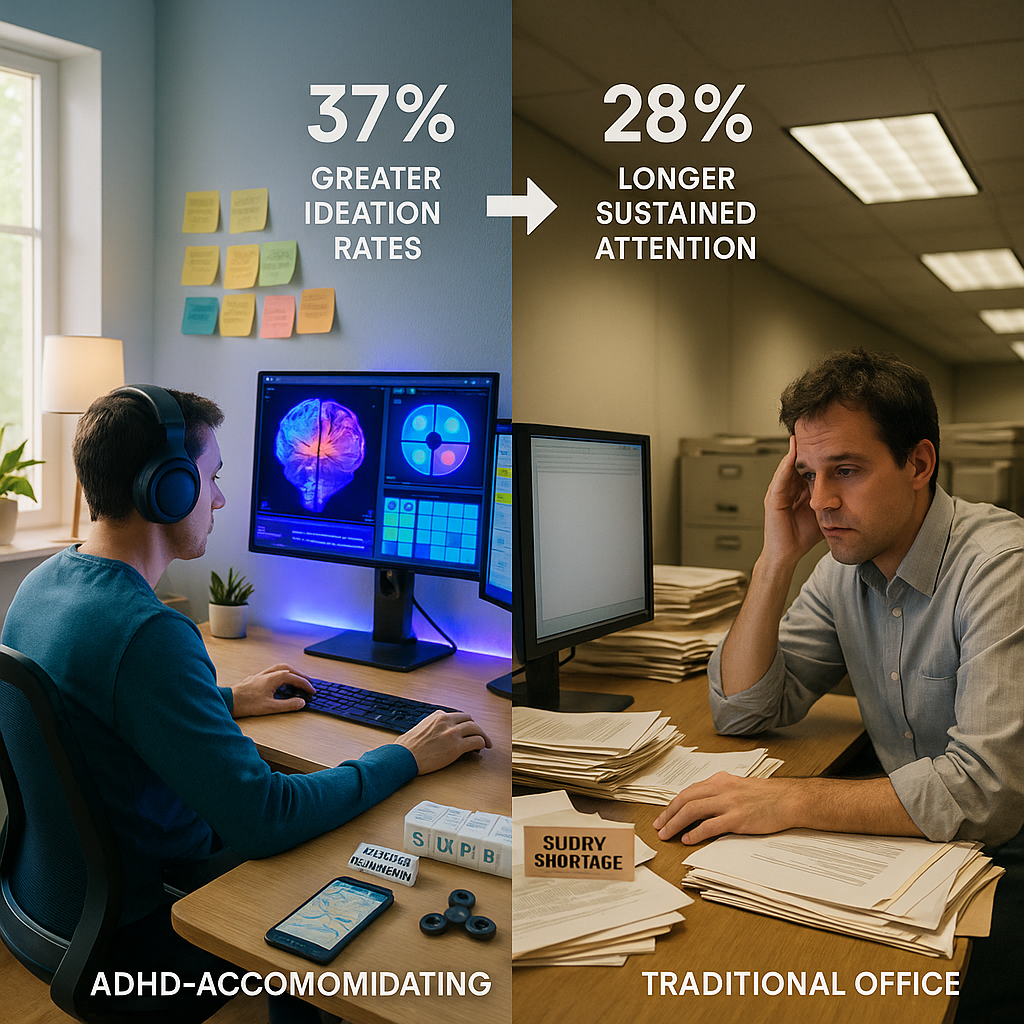
The researchers identified three main cognitive strengths among adults with ADHD: higher levels of divergent thinking during innovation (37% greater ideation rates), extended focus periods during critical deadlines (28% longer sustained attention), and more frequent cross-disciplinary problem solving (42% increase in novel solutions). These findings challenge conventional deficit-based ADHD models.
Lead researcher Dr. Elina Järvinen stated that companies implementing supportive work environments for neurodivergent employees reported stronger overall outcomes. She emphasized the value of designing workflows that accommodate different thinking patterns, resulting in benefits for both neurodivergent and neurotypical staff.
Workplace Accommodations Enhance Outcomes
The study recommends environmental adjustments such as flexible work schedules, permission-based task switching, and tailored stimulation levels to maximize the advantages of ADHD-related cognitive patterns. These modifications were linked to a 34% increase in project completion rates.
Companies piloting adaptive workplace measures reported a 29% increase in productivity among ADHD professionals and noted reduced turnover among neurodivergent staff members. Co-author Marcus Lehtinen stated that shifting from an individual-centric approach toward system optimization can unleash significant innovation potential.
Also Today
Global ADHD Treatment Disruptions
Medication Shortages Interrupt Care in US and UK
ADHD medication shortages persist in North America and Europe due to supply chain issues and production delays at three major pharmaceutical manufacturers since September. This has resulted in a 35% reduction in production capacity for commonly used stimulant medications.
The FDA currently lists several ADHD medications, including various strengths of extended-release methylphenidate and mixed amphetamine salts, as officially in shortage. Patient advocacy organizations have reported that 62% of adults with ADHD have encountered difficulties filling prescriptions in the last two months.
To address these challenges, healthcare providers are turning to alternative treatments and non-stimulant medications. Telehealth platforms specializing in ADHD care have seen a 47% increase in appointments focused on medication access.
Coordinated Response and Resource Expansion
Global regulatory authorities have launched a joint initiative to resolve manufacturing issues, including expedited reviews for production line upgrades. The European Medicines Agency has temporarily allowed cross-border shipments of certain medications to offset regional shortages.
Several pharmaceutical companies are implementing strategies such as prioritizing generic drug production and boosting output at secondary manufacturing sites. These measures are anticipated to improve medication availability starting in early December.
Patient advocacy groups are providing resources to help navigate insurance coverage for alternative treatments and connect patients with pharmacies that maintain higher inventory. The ADHD Association’s medication locator tool has aided more than 15,000 patients in finding prescriptions over the past month.
New Research and Treatment Approaches
Cognitive Training Shows Long-Term Benefits
Stanford University researchers have released results from a two-year study of digital cognitive training interventions for adults with ADHD. The program, focused on working memory and cognitive flexibility, delivered sustained improvements for 72% of participants over 24 months.
This approach uses adaptive algorithms to tailor difficulty in real time. Participants reported a 41% decrease in perceived executive function challenges in everyday life.
Researchers noted that combining cognitive training with environmental accommodations produced stronger outcomes than using either strategy alone.
Evolving Perspectives on Screen Time and ADHD
A study from McGill University has found that types and patterns of digital media use matter more than total screen time for adults with ADHD. Passive content consumption is linked to poorer executive function, while interactive and creative digital activities are associated with attention gains.
Participants using creative digital tools improved their sustained attention by 27% on subsequent tasks. Health experts recommend adopting “digital nutrition” strategies, focusing on content quality rather than imposing general screen time limits. Professor Amelia Rodriguez stated that understanding how content types affect the ADHD brain is crucial for developing effective guidelines.
What to Watch
- The International ADHD Conference is set for 5–7 December 2025 in Barcelona, with keynotes on new treatments and workplace support.
- On 12 December 2025, the FDA Advisory Committee will review a potential new non-stimulant ADHD medication for executive function support.
- The American Academy of Neurology will publish updated clinical guidelines for adult ADHD on 15 January 2026, including recent research findings.
- Registration begins 1 December 2025 for the “Neurodivergent Leadership Initiative,” which will train 500 ADHD professionals for executive roles.
- The Global ADHD Alliance will release comprehensive policy recommendations for workplace accommodations on 10 January 2026.
Conclusion
Recent research underscores adult ADHD’s potential to drive innovation and adaptability in the workplace when properly supported, challenging deficit-centered perspectives. At the same time, ongoing medication shortages are intensifying efforts to find alternative solutions. What to watch: significant policy updates, upcoming treatment approvals, and key international events in December 2025 and January 2026 will continue to shape the landscape of ADHD management and workplace inclusion.




Leave a Reply