

Key Takeaways
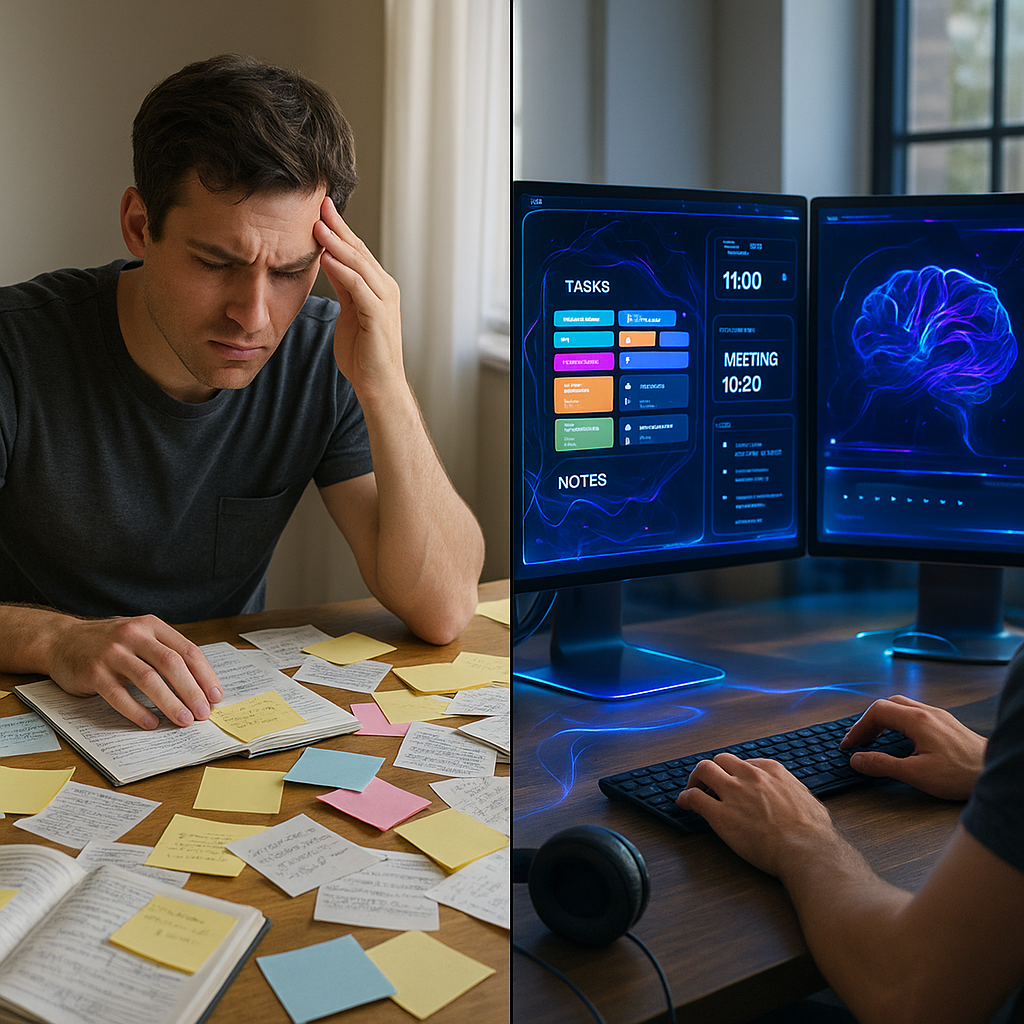
- AI tools transform quirks into strengths. Custom productivity apps help channel hyperfocus and creativity into productive output, reducing chaos and burnout.
- Tailored automation eases overwhelm. Automated reminders, workflows, and AI scheduling lighten daily executive function demands and free up mental energy for big-picture thinking.
- Authentic design based on lived experience. Tools like ADHDink were created by and for neurodivergent minds, offering practical solutions that align with natural tendencies.
- Focus on empowerment, not correction. The goal is to build systems that unlock individual brilliance and competitive advantage, rather than “fixing” ADHD.
- Scalable systems support business growth. These solutions adapt as neurodivergent solopreneurs and creatives expand, preventing stress from rising as they scale.
Introduzione
AI-powered productivity tools are transforming work for neurodivergent professionals, especially those with ADHD and autism. These tools help turn natural strengths such as hyperfocus and creativity into business assets. As custom apps and automation address distraction and overwhelm, more individuals are channeling their unique minds into deep work, innovation, and sustainable growth. This shift is redefining effective focus in modern workplaces.
Come gli strumenti AI trasformano le sfide della funzione esecutiva
AI productivity assistants help compensate for executive function challenges common among neurodivergent professionals. These tools manage the cognitive load of planning, prioritizing, and time management. This support reduces the mental energy drain typically experienced by those with ADHD and autism.
Unlike traditional systems that demand rigid adherence to complex workflows, AI tools adapt to natural thinking patterns. This flexibility allows neurodivergent professionals to remain organized without fighting against their brain’s instincts.
Task management AI can break down overwhelming project lists into clear, actionable steps, prompting users at the right times instead of requiring constant self-reminding. The outcome is less decision fatigue and more reliable follow-through.
Voice assistants and dictation tools utilize verbal processing strengths, converting rapid thoughts into organized text before those thoughts are forgotten.
Gestione personalizzata della concentrazione tramite AI
AI focus tools now provide personalized distraction management based on individual brain patterns and preferences. Unlike generic “productivity hacks,” these tools learn which factors help or hinder specific attention styles.
Smart noise-canceling headphones with AI filter out specific disruptive sounds while allowing important cues to remain audible. This approach benefits those with sensory processing differences.
Attention analytics track peak productivity periods and reschedule deep work to match those natural focus windows. As workplace researcher Dr. Maya Rodriguez stated, the technology is “finally adapting to us instead of forcing neurodivergent people to adapt to neurotypical expectations.”
Context-switching assistants establish buffer zones between tasks, reducing the typical 23-minute focus recovery period after interruptions. This improvement is valuable for those with attention regulation challenges.
Potenziamento della memoria e gestione delle informazioni
AI memory augmentation tools act as external memory, complementing strengths in creative thinking and pattern recognition. These systems capture and organize information without taxing working memory.
Automatic meeting transcription and summarization tools enhance professional conversations for people with auditory processing differences. Important details are preserved, even during the cognitive juggling act of listening, processing, and note-taking.
Knowledge management AI connects ideas across projects, leveraging a tendency toward non-linear thinking found in many neurodivergent professionals. What was once considered “scattered thinking” now becomes a competitive advantage.
Smart documentation assistants make retrieving information intuitive and contextual, reducing the executive function effort required to remember where and how details were stored.
Regolazione emotiva e supporto decisionale
AI tools now deliver real-time emotional regulation support, assisting neurodivergent professionals in managing workplace stress triggers, such as meetings and presentations. These assistants offer subtle prompts in high-pressure moments.
AI-powered decision frameworks reduce analysis paralysis by structuring complex choices, while preserving user agency. This balance suits neurodivergent thinkers who excel at seeing multiple possibilities but may struggle to finalize decisions.
Communication assistants can suggest tone adjustments and clarifications, addressing social challenges while maintaining authentic expression. As software developer Alex Chen explained, these tools “don’t try to make us communicate like neurotypicals. They help us be understood while staying true to our thinking style.”
Routine-building AI adapts to personal energy fluctuations rather than imposing rigid schedules, enabling sustainable productivity systems that align with natural dopamine cycles.
Storie di successo e implementazione
Financial analyst Jamie Park increased project completion by 68% using an AI productivity system that turned scattered notes into structured action plans. Park observed that the AI does not judge an unconventional process but simply helps organize the output.
Remote teams at Flexwork Technologies reported a 35% increase in neurodivergent employee satisfaction after adopting AI communication tools. These tools reduced the need for real-time meetings and enabled asynchronous deep work.
Creative professional Sam Rodriguez uses AI to transform periods of hyperfocus into structured deliverables. Rodriguez noted the ability to enter a flow state without worrying about time or missing important details, as AI manages transitions back to structured work.
Small business owner Jai Patel combined multiple AI assistants to design a system that supports fluctuating attention and energy. Patel emphasized building a business model around strengths in innovative thinking and problem-solving rather than resisting natural brain patterns.
Scegliere gli strumenti AI giusti per il tuo cervello neurodivergente
Selecting AI productivity tools based on compatibility with your thinking style is more effective than picking popular options or long feature lists. The best results start by identifying your executive function strengths and challenges.
Begin with a single tool that addresses your biggest pain point instead of overhauling your entire system at once. This gradual method helps prevent overwhelm and ensures sustainable adoption.
Seek customizability so tools can be tailored beyond preset templates. The most supportive AI tools offer flexible frameworks for diverse neurodivergent needs.
If menus and settings create decision fatigue, consider natural language interfaces. Voice-controlled AI is often more accessible for those who process information verbally rather than visually.
Conclusione
AI productivity tools are changing how neurodivergent professionals handle focus, organization, and communication by highlighting strengths rather than pushing conformity. This technology-driven approach supports tailored workflows, transforming past frustrations into practical advantages for projects and teams. Cosa tenere d’occhio: aggiornamenti continui da parte degli sviluppatori AI che ampliano funzionalità pensate per stili di lavoro neurodivergenti.



Leave a Reply