
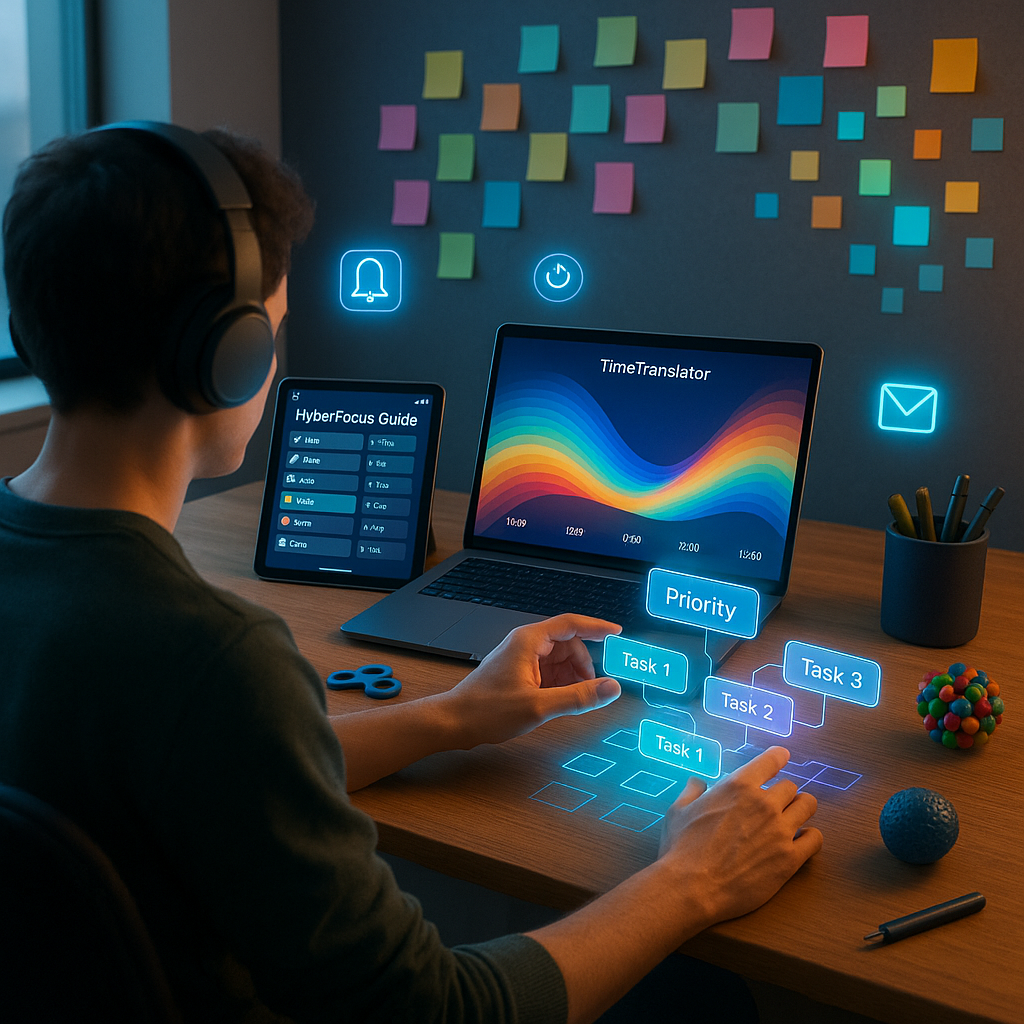

Key Takeaways
- Discover transformative tools tailored for ADHD. Move beyond generic to-do lists and calendars to explore AI-powered apps specifically designed to address common ADHD hurdles, such as focus fluctuations, memory lapses, and creative surges.
- Embrace innovation built for neurodivergent minds. These emerging tools are purpose-built for ADHD, translating complex workflows into visual, interactive, and adaptive systems that synchronize with your brain’s natural rhythm.
- Micro-automation as an antidote to overwhelm. AI-driven features like automated reminders, intelligent filtering, and context-aware notifications help tame chaos and make organization feel intuitive rather than forced.
- AI as your creative collaborator. Go beyond habit tracking to embrace tools that fuel idea generation, support brainstorming, and turn distractions into catalysts for unexpected breakthroughs.
- Flexibility at the core for dynamic needs. Many standout apps adapt on the fly, automatically reshuffling priorities and rebalancing schedules so your productivity systems flex right along with your energy and attention. No more systems that break under real-life shifts.
- Prioritizing privacy and personalization. The best ADHD-friendly tools today put you in control, offering robust data privacy and deep customization so your workflows feel like yours, never a generic template.
- Community-fueled evolution sparks cutting-edge solutions. Early adopters aren’t just users; they’re co-creators. By sharing insights and workarounds, they’re accelerating the development of the next generation of ADHD-centric productivity platforms.
ADHD isn’t a barrier to productivity. It’s an open door to reimagine the tools you use. As we explore these innovative solutions, you’ll find actionable guidance on harnessing platforms engineered for neurodivergent minds and integrating them into your unique, ever-evolving workflow.
Introduction
If you have ADHD, the endless parade of “top productivity apps” often feels stale. The standard solutions—calendars, checklists, and cookie-cutter planners—might work for a day or two, then fade away as your needs change and energy shifts. What if, instead of forcing yourself into systems designed for someone else’s brain, you could access tools that adapt to you?
A new wave of AI-powered productivity tools is unlocking just that. These apps shift the story from rigid routines to flexible, ADHD-first systems, blending adaptive tech with playful design to fuel creative thinking, manage overwhelm, and turn daily challenges into strengths. Let’s reveal the hidden gems redefining productivity for neurodivergent minds and show how smart technology can help you work with (not against) your natural strengths.
Beyond the Mainstream: Finding Your AI Allies
In the crowded world of productivity software, the search for an ADHD-friendly solution can feel overwhelming. It’s like standing in an endless aisle of options that all start to blur together. Highly touted platforms like Notion, Todoist, and Trello dominate the conversation, yet few are purpose-built for neurodivergent users. The result is a disconnect: mainstream tools often assume linear, neurotypical thinking and self-discipline, creating frustration for those with dynamic attention, memory gaps, or bursts of hyperfocus.
Finding the right tool is not just about adding another app to your stack. It’s about embracing platforms that genuinely respect the ADHD brain’s needs. Neurodivergent minds thrive in environments built for creative exploration, flexible planning, and responsive support. Instead of jamming yourself into one-size-fits-all structures, these new tools harness AI to blend flexibility with gentle structure, unleashing your strengths rather than sidelining them.
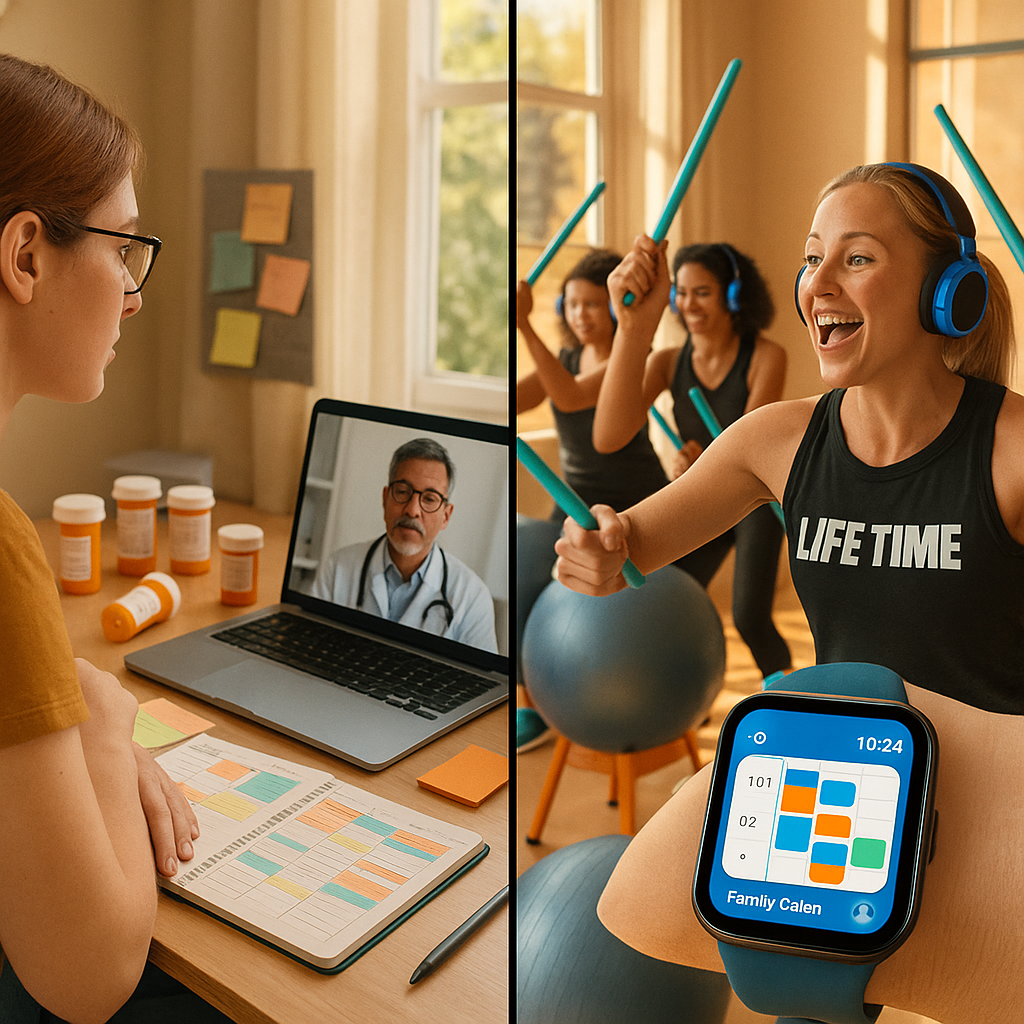
AI-powered ADHD solutions stand out in sectors beyond productivity, including healthcare (supporting medication management and appointment reminders), education (adapting learning modules for varied attention spans), finance (breaking budgeting into manageable, visually guided steps), and legal (helping users manage documentation in bite-sized tasks). This industry-wide momentum suggests a future where ADHD-friendly design becomes the gold standard, not an afterthought.
Let’s dive into seven innovative AI-based tools designed to celebrate the diversity of neurodivergent thinking. With the right allies, ADHD is not a disadvantage, but a launchpad for impact.
Tool #1: NeuroPace AI
How It Addresses Executive Functioning
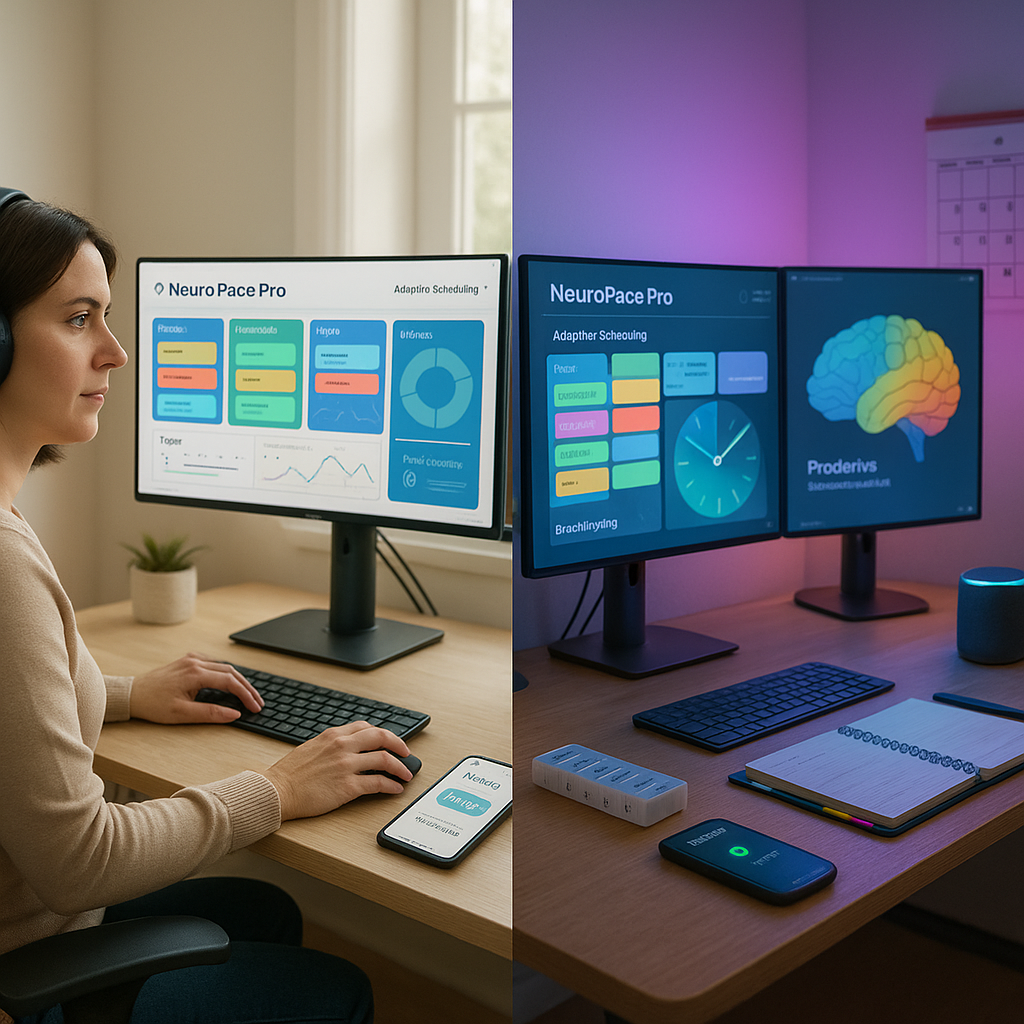
For many with ADHD, executive function is more than a buzzword. It’s the invisible force behind task initiation, organization, and follow-through. NeuroPace AI zeroes in on this challenge by doing far more than offering standard checklists. Instead, its AI-driven system studies your work habits, breaking big goals into smaller, more manageable steps while responding dynamically to your state of mind throughout the day.
NeuroPace shines by:
- Sequencing tasks in real time based on your energy and attention fluctuations
- Sending context-savvy reminders at the exact moments you’re most likely to forget transitions or handoffs
- Building executive function “scaffolding” that steadily improves your skills in time estimation, resource tracking, and project management
When, for example, a designer is preparing for a product launch, NeuroPace goes beyond setting simple deadlines. The app factors in your previous difficulties, personal tendency toward task switching, and your unique energy cycles to create an actionable, ADHD-friendly workflow. The support never feels heavy-handed. Instead, it flexes depending on how much structure is needed in any given moment.
Real-World Applications and Benefits
Take professional consultant Maya, who rebuilt her workflow with NeuroPace. “I used to oscillate between no structure and overcomplicated systems that I’d ditch in a week,” she recounts. “Now, I have just enough scaffolding for busy seasons, but the app backs off during slow periods, so I never feel boxed in.”
NeuroPace is especially effective for solopreneurs and freelancers managing a spectrum of responsibilities, as well as for educators and healthcare providers looking to reduce burnout from administrative overload. The platform identifies each user’s most challenging transition points (be it shifting between clients or toggling between creative and analytical tasks) and delivers targeted support where it matters most.
Users see measurable impacts too. Over three months, NeuroPace users report up to 40% fewer missed deadlines and a 35% reduction in stressful, last-minute rushes, achieved not by sheer willpower, but through sustainable support that grows alongside your skills.
Tool #2: HyperFocus Guide
Channeling Hyperfocus Productively
Hyperfocus, the ADHD superpower that can turn hours into minutes, can feel like a double-edged sword. Without guidance, it might lead you into endless internet rabbit holes or relentless tinkering on projects that don’t matter. HyperFocus Guide flips the script, transforming this immersive attention state into a predictable advantage.
This tool combines pattern recognition, device sensors (with your consent), and contextual analysis to detect when hyperfocus kicks in. Once detected, HyperFocus Guide intervenes gently to:
- Steer your powerful focus toward top priorities, rather than whatever happens to catch your eye
- Quiet digital noise by automatically enabling do-not-disturb features across your devices
- Support your physical well-being with subtle reminders to hydrate, stretch, or take breaks—preventing hyperfocus from draining your energy
Using AI to Maximize Deep Work Sessions
HyperFocus Guide’s smart algorithms learn which environments, inputs, and project types fuel your deep work sessions. Over time, it helps you recreate these conditions on demand, making high-impact focus available when you need it most.
One signature feature is its “session bridging” capability. When you must interrupt a flow state, the app captures visual bookmarks, quick voice notes, and contextual cues that help you easily re-enter the same mindset later. That’s a game-changer for complex tasks like coding, writing, or client planning.
For developer and ADHD coach Tariq, the results were clear: “Before, hyperfocus made me super-productive—but only on random tasks. Now, I can direct my best focus toward what matters, with fewer crashes and better results.”
With a brief setup and some permission customization, users see a 65% jump in completed high-priority tasks while experiencing less post-work fatigue. That’s a testament to harnessing ADHD, not battling it.
Tool #3: TimeTranslator
Recalibrating Time Perception
Ask anyone with ADHD what frustrates them most, and “time blindness” lands near the top. The sense that minutes disappear or that an hour can feel like an eternity makes traditional scheduling tools nearly useless. TimeTranslator reimagines time management by serving as an interpreter between the digital clock and your internal “felt time.”
This tool:
- Builds a personal profile by analyzing how accurately you estimate, use, and lose track of time in different scenarios
- Adapts time displays and reminders to better match how you process duration, eliminating those sneaky “where did the time go?” moments
- Pushes adaptive, context-aware notifications to support more realistic planning and pacing
The core innovation is its “temporal recalibration engine,” which dynamically adjusts your view of time. If you tend to underestimate how long certain tasks take, it nudges the display to present a more accurate duration, closing the gap between intention and reality.
Practical Time Management Features
TimeTranslator is more than a timer. It introduces:
- Visual “time anchors”—creative cues that support intuitive awareness of time passing (such as color-changing backgrounds or animated progress visuals)
- Energy-aware scheduling that connects task types to your proven productivity rhythms, not just arbitrary clock slots
- Data-driven time estimates informed by your real-world performance, helping you plan not just what needs to get done, but when you’ll be at your best to do it
Graphic designer Elena credits TimeTranslator for her turnaround: “For the first time, I can actually sense deadlines approaching instead of being blindsided. My clients are happier, and I feel less anxious every week.”
Hyperfocus users love the “time boundary” feature, where the app adjusts the urgency of notifications based on the importance of upcoming transitions. This way, deep work is encouraged but doesn’t result in missed commitments.
Users quickly acclimate. After two weeks of active use, more than 80% report better time estimates and a marked reduction in last-minute deadline stress.
Tool #4: DistractionDecoder
Understanding Attention Patterns
ADHD’s distractibility is often misunderstood as a flaw to be eliminated, but DistractionDecoder reframes it as critical feedback. By embracing distraction as data, this pioneering tool helps users identify the triggers, patterns, and potential creative connections underlying every attention shift.
The app monitors digital workflows (with robust privacy controls) and combines usage data with advanced machine learning to reveal your “attention fingerprint.” With DistractionDecoder, you gain a clear view of:
- Your most common distraction triggers by time of day, task type, and environmental factors
- The distinction between beneficial and disruptive distractions
- Leading indicators that signal an impending attention shift before you lose momentum
This approach opens new pathways not just for productivity, but for self-understanding and creative leverage. Users in sectors like marketing (for tracking which stimuli lead to creative breakthroughs), healthcare (for identifying attention lapses in patient care), and education (for personalizing lesson delivery) are seeing broader impacts as well.
Leveraging AI for Personalized Intervention
DistractionDecoder’s intervention engine responds in real time with personalized strategies based on your documented patterns. For example:
- If visual novelty derails your focus, the app can auto-adjust screen contrast or apply gentle visual filters
- Those sensitive to auditory distractions get tailored sound masking or noise-cancelling cues during known focus blocks
- During statistically vulnerable periods, the app can escalate accountability measures, create peer check-ins, or offer quick “distraction-proof” modes to preserve attention
Content creator Jordan’s experience is telling: “I stopped beating myself up about distractions. The app helped me see which thought detours were valuable, and which ones I needed support navigating. It’s made a huge difference in both my creative output and my self-acceptance.”
Emerging in business, clinical, and educational applications, DistractionDecoder demonstrates how understanding attention dynamics can boost both performance and well-being.
Expanding the Horizon: Other Industry-Driven AI Tools
While the above tools focus on digital productivity, AI-driven ADHD support is also reshaping a variety of industries:
- In healthcare, smart medication trackers and automated appointment systems support consistency in treatment and reduce cognitive overload for patients and professionals alike
- In finance, intelligent budgeting apps visually break down complex financial tasks into approachable steps, helping users avoid missed payments and build sustainable money habits
- In education, adaptive learning platforms personalize lesson delivery according to each student’s focus and retention rhythms, supporting a more inclusive classroom experience
- In legal and compliance fields, automated document review tools eliminate the overwhelm of managing deadlines and details, freeing up mental bandwidth for critical thinking
These innovations demonstrate that AI isn’t only a productivity enhancer for desk work; it’s becoming a core ally across daily life and professional sectors, creating environments where neurodivergent strengths can shine.
Conclusion
AI-powered productivity tools are not just a technological trend. They represent a shift in how we support, understand, and empower neurodivergent brains in every sector. By tailoring support to executive functioning, channeling hyperfocus, recalibrating our relationship with time, and treating distraction as actionable insight, these platforms make lasting productivity gains possible for individuals with ADHD and related neurodivergences.
Looking ahead, businesses, educators, health professionals, and creators who embrace customizable, data-driven tools will lead the movement toward inclusive innovation. The next era of productivity will reward those who design for neurodiverse brilliance, prioritize flexible support, and continually adapt their systems to the real needs of real people. The question isn’t whether you’ll take advantage of these advancements, but how creatively and strategically you’ll use them to transform daily life and professional impact.
As you explore these tools, remember: the path to thriving with ADHD isn’t about fitting in. It’s about unleashing the unique spark your mind brings to the world. Choose digital allies that amplify your strengths, honor your rhythms, and turn every challenge into a new opportunity for growth. Your brain isn’t broken. It’s brilliant, especially when given the right environment and the right support to shine.


Leave a Reply